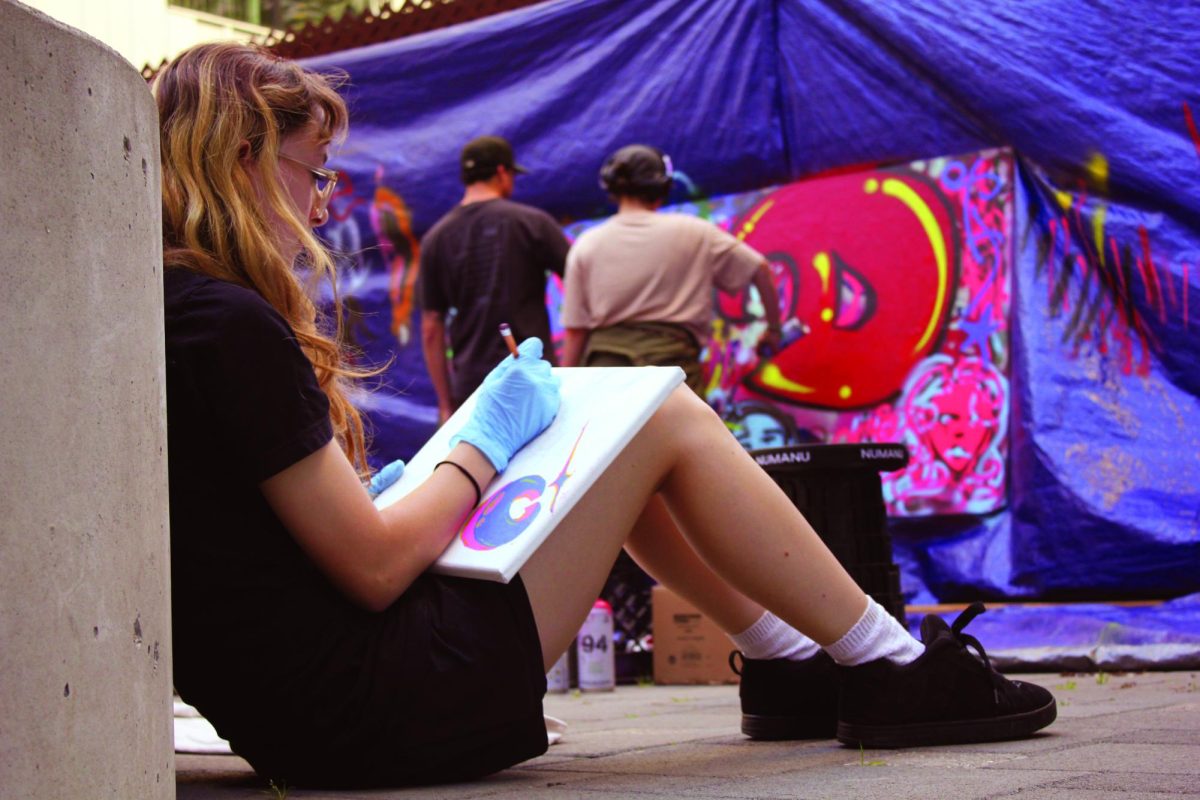
San Francisco is known to be one of the most diverse cities in America, yet there is a widely underrepresented group often left out of its historical fabric.
Despite the smaller population, Armenians have been living in the Bay Area since the late 1800s after coming to the Bay to escape the Armenian Genocide, and it’s residents have increased since. While there aren’t many Armenians in San Francisco, they can be found in different corners of the city: the Krouzian-Zekarian-Vasbouragan (KZV) Armenian School on Brotherhood Way, the Mt. Davidson Cross near Miroloma, or La Mediterranee on Fillmore Street.
Armenian culture can be found in many corners of San Francisco: in restaurants, churches and monuments. Take a look at some popular Armenian spots to hit around the city below or click here to view the map.
It wasn’t until 1915, where the Turkish Ottoman Empire committed genocide against the Armenians that California began to see more Armenians immigrating over. Most of them settled in Fresno, but San Francisco has slowly gained a noticeable community. Yet, the presence of Armenian culture at SF State has changed within the past few years.
Zepyur Kasparian, a communications major at SF State, was previously a part of the Armenian Student Association before it dissolved after lack of recruitment. “We used to have lots of Armenian students at State, like, from the ’70s, ’80s, ’90s, 2000s, but recently the last 10, 15 years, I would say, there’s been a trend of a lot of NorCal Armenian students going South,” said Kasparian. She highlights that fewer Armenians are coming to northern California, and the ones who do typically head to Berkeley or Stanford. “Nobody really comes to State as much.”
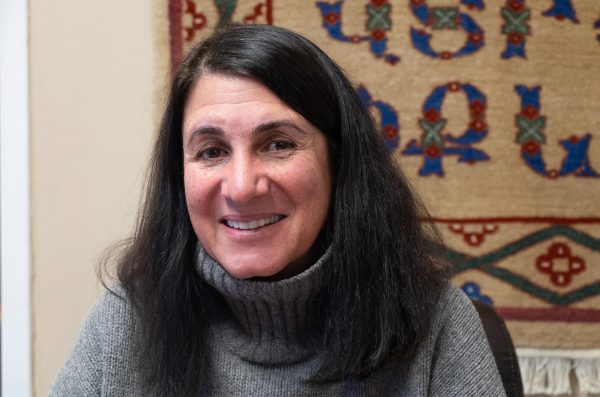
Around the places in the city that encapsulate Armenian history and culture, education is the one aspect that lacks recognition. The KZV Armenian school is the only Armenian school in Northern California and only provides education up to the 8th grade. “We need to teach our next generation who they are, who they belong to, and who are their ancestors and what’s the history behind it,” said Grace Andonian, the current principal of KZV Armenian School.
The students at KZV create projects that explore their ancestors and the regions of Armenia that they came from, which churches they belonged to and reflect on why they fought for so many years. Andonian even has her students sing the national anthem of Artsakh, a region in Armenia that is rooted with deep history and culture of the Armenian people, but is now under the control of the Azerbaijans.
Andonion wants her students to recognize the importance of Armenia despite it now being such a small territory. “[Armenians] don’t do PR enough. We don’t voice our concerns enough,” said Andonian. “The youth plays a big role nowadays. You need to voice to your school that your culture, your history, your language is as important as our other languages.”
Making A Change
In 2020, the Wall Street Journal declared SF State as one of the top five best colleges in terms of having the most diverse racial and ethnic backgrounds among their students and faculty. SF State currently has five departments under its College of Ethnic Studies, one being the department of Race and Resistance Studies which focuses on the study of forms of resistance and struggles directed at social justice. However, until recently, the only class related to any sort of Armenian culture or history was created by a student.
Due to the absence of Armenian studies at the school, Kasparian decided to make a change and created the Armenian Awakening in Literature and History as an Experimental College Course (EXCO). EXCO classes are student-led courses that allow for creative and diverse subjects to be taught, typically ones that relate to students’ academic and personal interests.
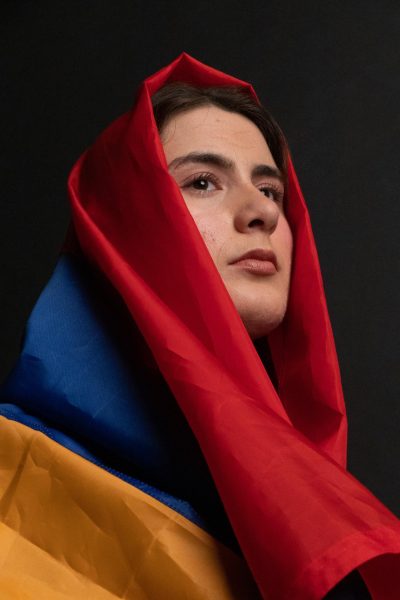
The inspiration behind the class came around the annual commemoration of the 1915 Armenian Genocide that happens on April 24. “When you learn about Armenian history, or things like that, just in popular media, the first thing that comes up is the genocide,” said Kasparian. “I didn’t like how anything that we get attention for is just really sad and like victims.”
Kasparian teaches her class based around part one of the novel “Zartonk,” or “Awakening” in English. She aims to teach students about history in a more personal way; one that isn’t “boring textbook format.”
Out of the handful of students Kasparian has in her class, none of them are Armenian. Mia Soto, an English literature major, joined the class despite not being Armenian or even having met any before, and found it was more intriguing than she anticipated. “I think anyone who has even just the mere interest of learning, I think, would find something enjoyable about this class,” said Soto. “So to be introduced with this great novel … it certainly has made me more intrigued to learn more about more Armenian authors out there.”
Soto expressed how much she enjoyed Kasparian’s teaching practices and that she wishes there was more involvement both in and towards the Armenian community. She mentioned implementing more classes relating to Armenian studies, which will create a deeper understanding of the culture. “It does show a degree, I think, of the human experience that unfortunately isn’t covered through San Francisco all the time.”
Armenian’s Legacy at SF State
Before Kasparian decided to teach her class, she was a part of the Armenian Student Association, which hosted cultural events and often tabled on campus to recruit Armenian students. The association started with five people and, despite slowly growing over the course of a couple semesters, it eventually became inactive due to the scarcity of Armenians at the school.
The association’s founder, Henry Agajanov, now works as the Regional Advocacy Coordinator for the Armenian National Committee of America where he focuses on local, state and federal legislative work. His most recent work focuses on the support of genocide awareness in education; he recently advocated for assembley member Henry Stern’s SB-472 bill that provides grants to educators, schools and educational institutions to teach about genocides and the Holocaust.
Agajanov’s push for recognition of the Armenian community stems from his own educational experience as he understands the importance of implementing studies into academic environments. “Teaching about Armenians or Armenian history being offered would be a good example of something the school could do,” he said. “There’s for sure ways that we could be represented more at SF State.”
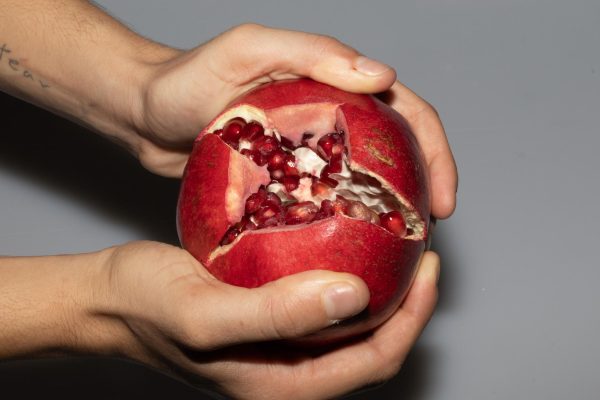
When Agajanov was younger, he attended KZV Armenian school and found that it helped him become more immersed in Hayaren — the phonetic name for Armenian — and acted as a helpful stepping stone into public high school. Despite growing up not speaking Armenian, Agajanov said that KZB aided him to be more prepared as an Armenian American.
“The teachers who taught those classes were very good at teaching people who even don’t know the language that well,” said Agajanov. “That was the main part that’s different, is the language teaching part. I think that’s really important for us as Armenian Americans, you know, like, we’re here, we’re Americans. I mean a lot of us were born here.”
After seeing Armenians being excluded in discussions throughout his high school education, and the deficiency of Armenian studies at the University, Agajanov decided against the business route and led on to fight for more advocacy to return Armenians back to the homeland and for the release of those taken during the genocides.
“I think that’s a real problem especially in colleges,” said Agajanov about the lack of Armenian discourse. “I think they definitely need to include Armenians in all discussions about social justice. We’re a very important part of that equation.”
As an Armenian, one of my ultimate dreams is to visit my homeland and pay homage to my culture and ancestors. While I get to experience real Armenian culture at home, the opportunity to experience it in Armenia is one I long for. Armenia’s rich history shows its perseverance through everything it has been through: Experiencing genocides, diaspora and losing a majority of their homeland. Unfortunately, I haven’t been lucky enough to visit Armenia but, fortunately, my Aunt Anush Chalian has visited six times. She’s a largely involved member of the Armenian community — having previously been on the board for the Society for Orphaned Armenian Relief. Through both her position and experiences, she’s gathered so much knowledge about Armenian history and why our homeland is what it is today. I was able to see through her words as she described the breathtaking visuals of Armenia.
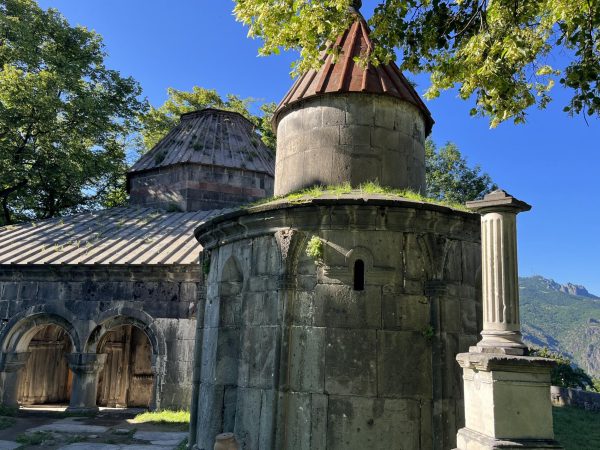
Armenia’s landscape is surrounded by large mountains and is rich in agriculture and diverse in animals. Many historical churches stand tall centuries later, such as the Haghartsin Monastery, pictured to the left. According to the Armenian historian Kirakos Gandzaketsi, the monastery is described as a scientific and cultural center. My aunt explained that these churches have not only represented religion but have represented the government of Armenia, the country’s ability to remain independent, to keep an identity and the ability to build a group of people who are connected through their nation. The building is surrounded by mountains with the Haghartsin stream coming in from the south side. Haghartsin Monastery comes with old legends, one of them telling the story of how priests used to live in the old monastery complexes and watch eagles flying over the dome of the church playing with each other. The name Hagharstin is a combination of “hagh” meaning game and “artsiv” meaning eagle. “When I am in the presence of something so old, I just feel so connected to humanity, to the earth and to really everything,” my aunt told me. “That’s an important feeling.”
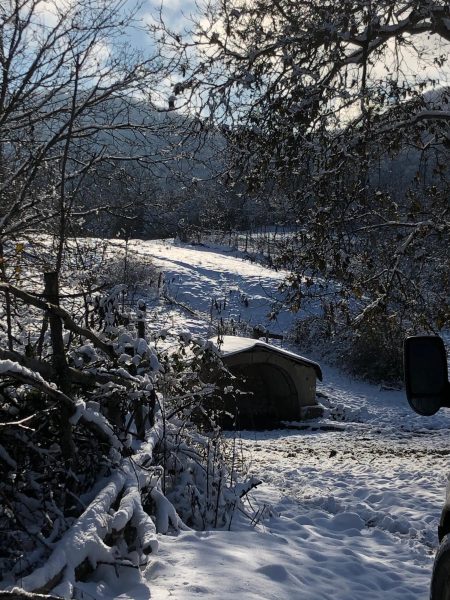
Pictured on the right, the Mrav mountain stands proudly in the distance on a snowy winter day in Armenia. Out of the Mrav Mountain Range, this peak is considered the highest at 3,340 meters. “It’s just so beautiful and breathtaking,” said my aunt. She explained that the mountain represents a message of groundedness in the earth and in the nationhood itself. In this photo, the mountain range can be seen along the road through Bedzor and Stepanakert, the previous capital of Artsakh, going through Eastern Armenia. “We were picking up fish on the border of Armenia and driving them as holiday gifts with huge packages of food and warm clothes for families,” said aunt. She said throughout that whole passage, it’s one whole mountain range. Armenia also is abundant in animals who roam the mountain ranges, such as Red deer, Armenian mouflon, Lynx, and Darevsky’s viper. Other famous mountains are Mount Ararat — which is no longer considered Armenian territory, yet has remained a symbol of the motherland. Mount Aragats is the highest point of Armenia and sometimes referred to as the “Garden of Armenia” due to its lush nature and fragrant flowers. Mount Azhdahak is known for its view of Lake Sevan and the Aragats mountain.
Goumi Shouga market in Yerevan, the capital of Armenia, sells dried fruits, nuts and homemade goods. Yerevan is home to a number of open-air markets where things like spices, vintage rugs, and antique dishware are sold. “People had to preserve fruits and vegetables in the summer for the winter,” said my aunt. “They’re a big part of all our winter celebrations and New Year’s and Christmas Eve.” She explained that this market is where artisan-level dried fruits and nuts are sold, which are called Chir in Armenian. My aunt described how Armenian is very abundant in apricots and figs, especially in the summertime, which is when they are picked and dried out. Some other popular dried fruits are raisins, figs, dates and even sour cherries. For nuts, one of the most popular that is often seen in many Armenian cuisines are walnuts and appear in lots of traditional Armenian sweets, like Gata. Additionally, some traditional markets are also known for selling their own liquor. Although Armenia has progressed to become a more modern city, these traditional markets are a reminder of the ways of local life.
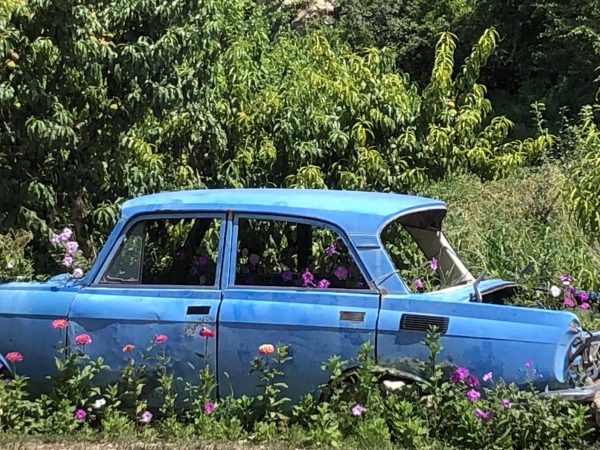
On the left, an abandoned car sits on the road on the way to Artsakh. “I don’t know the story behind this one,” said my aunt. “I don’t know if it’s a sense of humor, whether they have left it or if they had just left it years and years ago.” Inside the car, purple flowers have bloomed where the seats and steering wheel used to be. Armenia is very abundant in flowers and is used in many different cultural aspects: for weddings, birthdays, holidays, and even simply as a welcome gift. “Flowers are huge there,” my aunt said. A popular flower in Armenia is the Forget-Me-Not Flower, also called the Anmoruk, became the official token of the Armenian Genocide in 2015, with each of its five petals representing the continents that Armenians have immigrated off to. The purple color of the petals represents the connection Armenians have with the church and the importance Armenia places on religion. The black center of the flower represents the pain of the victims from the Genocide. The yellow core expresses the justice and recognition Armenians long for.
For my Aunt, going to Armenia means being surrounded by those from similar backgrounds and who share the same appreciation for the scenery. To be able to experience the food, culture, music and scenery of Armenia is what truly connects Armenians to their identities. “My Armenian heritage is such a big part of my life. I love to see how [Armenians] all have some typical behaviors,” my aunt said. “More than that, I just feel connected to thousands of years of history.”