

If there is a notion of a new, unique but historically rooted beverage that’s gained traction in San Francisco, it’s mushroom coffee. Served and marketed as an alternative drink to daily coffee or tea, mushroom coffee’s influence has grown exponentially. According to Grand View Research, the global mushroom coffee market size was estimated at $2.71 billion in 2022. It is projected to reach $4.12 billion by 2030.
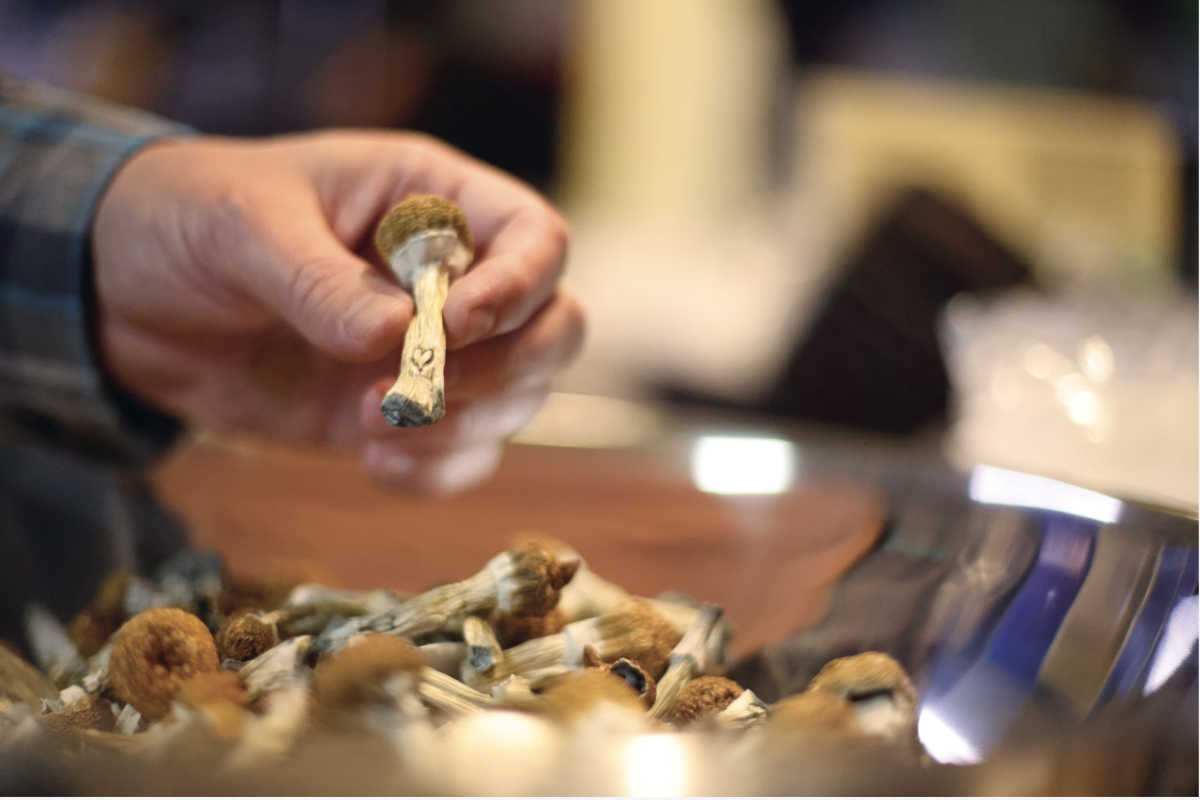
Mushroom coffee combines organic coffee beans with powder made from mushrooms. These particular mushrooms are grouped together in the fungi kingdom as adaptogenic mushrooms. The most common ones found in drinks are lion’s mane, reishi, turkey tail, cordyceps — yes, the same ones from the “Last of Us,” but they don’t turn you into a zombie — and chaga.
Research shows that these mushrooms have various health benefits. In a 2023 article titled, “Mushrooms and Stress Management: Adaptogenic Properties for a Balanced Lifestyle,” Dr. Laura DeCesaris, a health strategist, said that these mushrooms help mitigate stress and support the immune system.
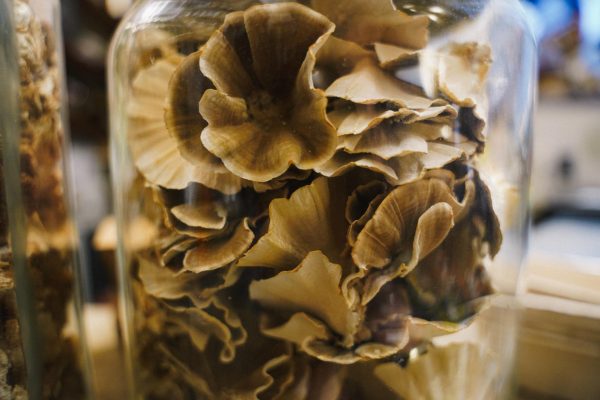
This concept however, is not a recent one. Besides having traditional Chinese and Asian roots, mushroom coffee also traces back to Finnish culture.
An article by Lindsay Warner, published by Harvard Health Publishing, insists the notion behind mushroom coffee is to leverage the health benefits of medicinal mushrooms in a drink. While Warner finds that adding these mushrooms to chai, matcha and coffee, creates a unique blend to drink. The organic mushrooms also make for unique produce sold at farmers markets.
Far West Fungi owner, Ian Garrone, said that farmers markets remain a part of his family history: His grandparents would sell fruit, his parents mushrooms, which allowed him the knowledge to grow and locally source mushrooms. The consumption of these mushrooms is not just an idea he’s trying to package and sell but a part of his family’s lifestyle.
Reflecting on their health benefits, Garrone said that adaptogenic mushrooms, like lion’s mane and reishi, have an allure or a quality that make for a clearer mind.
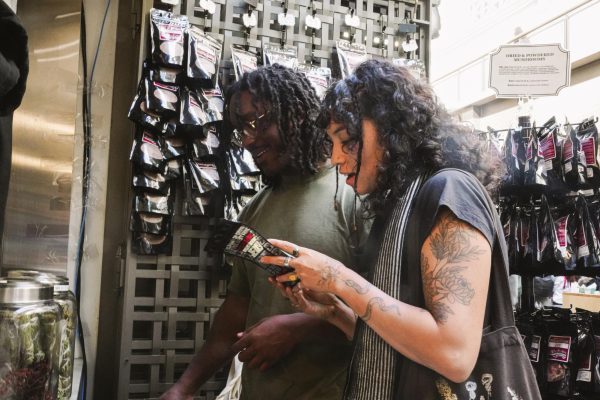
“Our customers have been kind of coming to us from day one looking for mushrooms as a way to boost their immune system. I have heard some wonderful stories about how they have helped,” Garrone said. “Food is medicine.”
But do these mushrooms scientifically and biologically work to create a better immune system in our bodies?
Dennis Desjardin, chief mycologist of Sempera Organics — a company that produces organic mushroom products — notes that “functional fungi” is a more inclusive term than adaptogenic mushrooms. Adaptogens describe plants or fungi that have stress-relieving and calming effects while functional fungi, capable of various benefits like increased cognition, endurance and immune support, encompass the mushrooms found in these beverages, says Desjardin.
Desjardin described how the compounds in functional fungi, specifically lion’s mane, releases in the brain leading to heightened brain function and better performance in cognitive tasks. According to Desjardin, clinical trials discovered that while taking lion’s mane, qualities like recognition of memory and better hand-eye coordination were reflected in cognitively-impaired people with Alzheimer’s and dementia.
The National Library of Medicine references a trial published by Frontiers, “Prevention of Early Alzheimer’s Disease by Erinacine A-Enriched Hericium erinaceus Mycelia Pilot Double-Blind Placebo-Controlled Study.” The study found reductions in cognitive decline in patients with mild Alzheimer’s disease after they followed a 49-week supplementation consisting of three lion’s mane capsules daily.
So, what are the benefits of mushroom coffee?
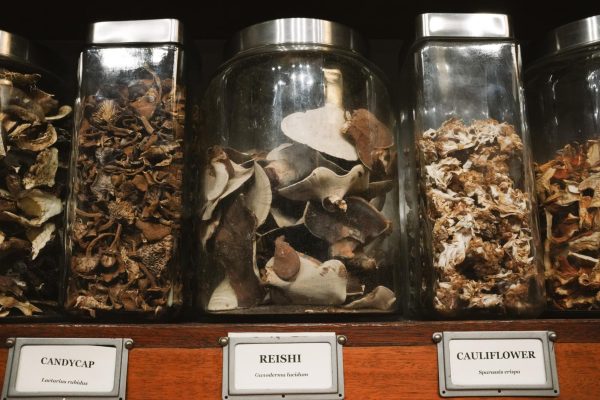
Desjardin clarified that cordyceps seem to mainly benefit performance and endurance. Explaining that they help the body better obtain oxygen and that turkey tail — another type of fungi — is beneficial for the gut. Desjardin adds that chaga can benefit immunology and reishi can enhance mood and, in turn, sleep.
“Each of those species of mushrooms have a slightly different health benefit to them, depending upon the compounds that are in them,” said Desjardin. “All of them are good for antioxidants.”
These health benefits make their way into distinct drinks served in local cafes. Owners from Beloved Cafe and Fueling Station Cafe say the popularity of these drinks lead to their continued production.
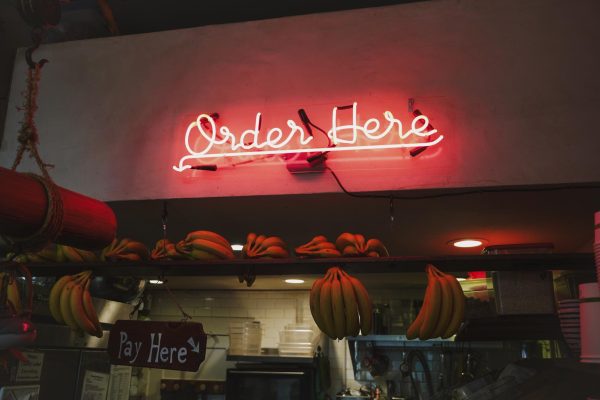
Beloved Cafe, in the Mission District, serves a medicinal mushroom tonic latte. According to their menu, in order to increase bioavailability, the drink consists of chaga, reishi, cordyceps, coriolus, lion’s mane and maitake mushrooms. Manager Jennifer Yaquian said the latte is one of their most popular drinks, sharing that they sell about 42 cups every month.
When Ben Li became the owner of Fueling Station, he chose to keep mushroom drinks on the menu due to their popularity among customers.
Li estimated that the cafe roughly sells five to 10 cups of mushroom coffee or mushroom matcha a day. “I have people that order it regularly. Like every time they walk in, I know what they’re going to order,” said Li.
Mushroom coffee’s presence in the market is not limited to positive feedback. According to Garrone, in the production process, large-mushroom coffee companies may use myceliated grains — a combination of a fungi’s root system and the grain it’s grown on, like oats or rice — instead of using the fruiting bodies, the actual mushrooms, to mix into the coffee.
“When you do that, you’re taking in more grains, or more inflammatories for your body, instead of the actual mycelium,” which may contain more benefits of a mushroom’s structure.
Garrone advises consumers to be aware of what’s on product packaging; one should know/learn the difference between myceliated grains and fruiting bodies. He mentions that if companies have taken the time to incorporate fruiting bodies — actual mushrooms — in their blends, they would disclose so on the packaging. According to the Food and Drug Administration’s Compliance Policy Guide, under Section 585.525, companies must state that they are using myceliated grain if they use mushrooms, as they are both very different things.
Additionally, Desjardin highlights the importance of the growing process: The fungi’s effect in mushroom coffee depends on factors like how it’s grown, the length of time it’s grown for and what substrates it’s grown on.
On average, he said that there’s about two grams of mushroom and four to six grams of coffee in a mushroom coffee blend.
Mushroom infused drinks are certainly gaining momentum and creating conversation about health and lifestyle. Further research may dictate the benefits and uses of functional fungi, but it remains a valuable concept to seek health advantages through food or, in this case, through fungi.





Asha • Jan 9, 2026 at 2:13 am
This is definitely A Break Through for some illnesses especially for Dementia, more research shoukd be done as rampant cases are emerging day by day. Excellent & well written article.