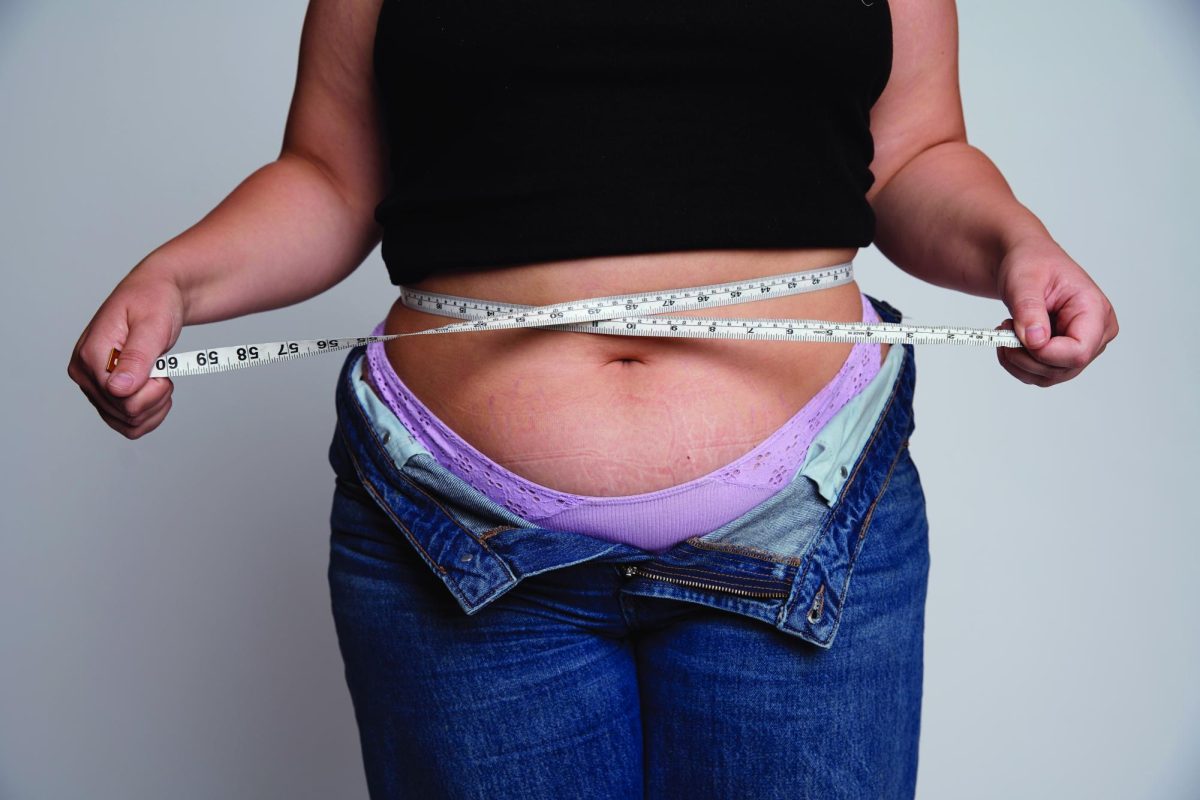
There is a genie who grants a particular kind of wish — one that takes root in adolescence, when bodies begin to change and judgment seeps into every mirror glance. It’s the wish that comes with the recognition of childbearing hips and increasing lower belly fat that protects the uterus. It’s the wish that grows after the body begins to expand, sag and evolve with the decades of body reconfiguration from motherhood. It is that seemingly unattainable and ever-constant wish: to be skinny.
This genie does not live in a lamp. It lives in a bottle, released with a simple click and credit card swipe. Its name is less magical than medical: Glucagon-like peptide 1 receptor agonists (GLP-1s).
When the U.S. The Food and Drug Administration (FDA) approved weight-loss drugs in 2005 to treat Type 2 diabetes; they were meant to regulate blood sugar, metabolism and weight. Two decades later, they’ve taken on a second life — less as medicine, more as cultural phenomenon, fueled by influencers, celebrity endorsements and a growing obsession with getting smaller.
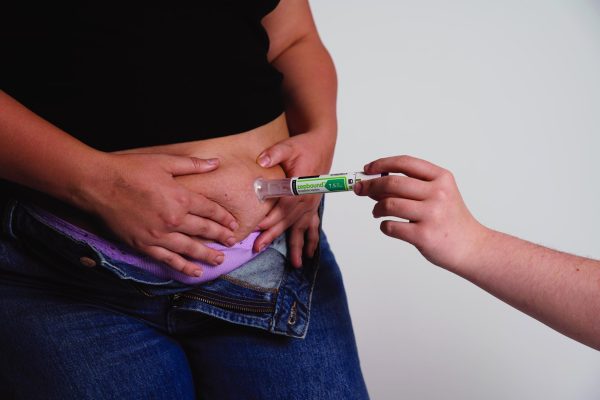
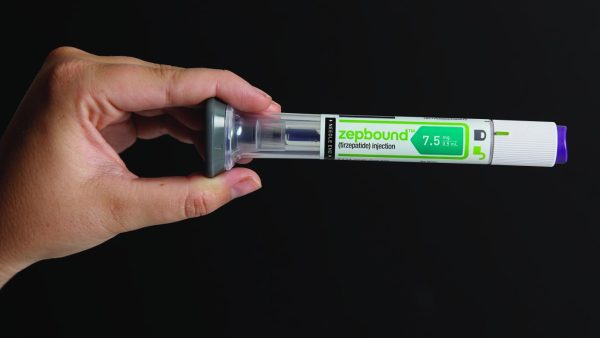
There’s no putting the genie back in the bottle. In 2022, the demand for weight-loss drugs hit an all-time high across the U.S. The FDA put injection products including semaglutide — the receptor found in GLP-1 strains — on its drug-shortage list. Three years later, more than 500,000 providers prescribed weight-loss drugs, according to IQVIA, a major healthcare and data analytics company. Some of the most common FDA-approved brand names are Ozempic and Mounjaro, used to treat Type 2 diabetes, while others like Zepbound and Wegovy are more often used for weight-loss management.
A study published online by the Journal of American Medical Association and led by Stavros Tsipas, et al., found that U.S. spending on GLP-1s surged more than 500% from 2018 to 2023, reaching approximately $71.7 billion. This dramatic rise has pushed the drugs from the pharmaceutical industry into everyday life, turning them into a household name.
The Quest for Beauty
In the U.S., weight stigma — which the National Eating Disorder Association (NEDA) defines as discrimination or negative stereotyping based on a person’s weight — has been a pillar within diet culture, reinforcing values of body image and appearance. The NEDA states that 69-84% of women experience body dissatisfaction and desire to weigh less than they currently are.
“I definitely have had body image issues for a very, very long time,” said Riley Rothschild, a senior at Michigan State University who has been on Zepbound for the past two years to help treat her polycystic ovary syndrome symptoms like weight retention — a hormonal disorder that affects women’s reproductive organs.
Rothschild said her body image concerns have worsened over time since taking weight-loss drugs. Knowing that her body can reach a certain weight, she now feels pressure to maintain a certain size.
“Pretty privilege is definitely a thing,” said Rothschild, recounting the difference in treatment she experienced as a result of fitting in with beauty standards. “It was a lot of people being like, ‘Wow, you look so different. Wow, you look so much better.’”
No longer exclusive to diabetics, dreams of the perfect body are now a reality for millions of Americans. Weight-loss drugs offer low effort, easy access and fast results — a near-perfect formula to succumb to societal ideals.
They come in various forms, including at-home injections or a once-daily pill that can be prescribed by healthcare providers or online after answering a few personal questions. Once cleared, consumers can expect to lose up to 15-20% of their body weight in a year, according to Ro, a leading direct-to-patient healthcare company.
For Rothschild, to receive insurance coverage, there were two avenues presented to her: one, have diabetes; or two, provide a year-long record of nutritionist visits or involvement in a weight-loss program.
“I’ve been doing all this stuff — it hasn’t been a year, and I didn’t want to wait any longer,” she said. “I just started paying out of pocket.” Depending on the dosage, she pays between $400 and $575 per month for her Zepbound prescription. She described having to keep up with jobs and reduce her spending habits to meet payments.
A Desirable Commodity
“Growing up, my stepdad used to always shame me for being overweight, and I had a very, very low self esteem,” said 56-year-old Deborah Ruiz, who has battled diabetes for 23 years. Coming from a “broken family,” Ruiz said food was used to sugarcoat that brokenness. “I just gravitated toward food for comfort. … If I was sad, I would eat. If I was happy, I would eat. Any reason, I would eat.”
Now attending weekly dialysis treatments, and after years of body shame and learning to manage diabetes, she decided to give GLP-1s a try. Initially interested in its weight loss capabilities, Ruiz now relies on her prescribed Ozempic to help manage her blood sugar. GLP-1s can reduce feelings of hunger and regulate glucose management by influencing the brain’s hunger response.
“If someone is weight-biased, they consider that drug cheating, because they feel like it’s a race to be skinny or not skinny,” said SF State professor Gretchen George, who has a doctorate in nutrition and dietetics. “Eating is wonderful. But if you were constantly thinking about food, you couldn’t do your homework, you couldn’t hang out with your friends … it truly does impact their quality of life.”
George praised GLP-1s for helping people who had not experienced success through other treatments for diabetes. “What a powerful drug for the addicted person,” explained George, adding that GLP-1s silence “food noise” and tamp down the desire response that many with disordered eating face.
Result of a Fat Phobic Society
As weight-loss drugs inject their way into a variety of demographics, women’s body image and mental health sit at a crossroads.
“The confluence of capitalism and the ways in which our culture is fat phobic have sort of created the perfect opportunity for this class of drugs to emerge and spread wildly,” said SF State women and gender studies professor Deborah Cohler. Cohler is interested in how communities and bodies relate to different kinds of ideologies of power and how different vectors of power shape the way we think.
Americans are born into ideologies of body conformity. According to NEDA, by age three, children begin to develop body image awareness, and by age six, many girls grow concerned about becoming fat. Social movements like the body positivity movement emerged to combat these narratives.
“There has always been a desire to find a magic pill to allow people to conform to societal expectations,” said Cohler. “I think particularly the people who are femmes or women, get a lot of external media pressure to conform to the thin, ‘fit body’ size and shape.”
According to a 2025 study by the Centers for Disease Control and Prevention, in 2024, more than one in four adults with diagnosed diabetes used an injectable GLP-1. This figure increased between age ranges: Compared to those 65 and older, those aged 18-64 used injectables more. Hispanics had the highest percentage of use at 31.3%, followed by Black non-Hispanics at 26.5%, White non-Hispanic at 26.2% and Asian non-Hispanics at 12.1%.
“I think from such a young age, I’ve always compared myself to other women on social media, specifically body types,” said Samara Gutierrez, a fourth-year SF State student who started Zepbound in July 2025 with the goal of losing weight. “There’s always discourse around women’s bodies, specifically bigger women’s bodies.”
In a 2025 study Published in Body Image and conducted by Charlotte Markey, et al., out of the 225 participants surveyed, those with a higher body mass index, weight concerns, body shame, anti-fat bias and lower body appreciation were more likely to express interest in trying GLP-1 medications.
“To make a gross generalization, in a culture where women are seen as objects, objects have to conform to a certain standard, and there’s a certain hierarchy within that objectification,” said Cohler.
A New Chapter in an Old Cycle

Cohler said that societal expectations of women’s bodies have changed over time and across cultures — Renaissance Italy idolized more voluptuous, fleshy people,1960s England praised the very skinny, Twiggy model, the aesthetic of “heroin chic” was an iconic symbol of the ’90s and Americans continue to obsess over the Kardashians’ physiques, a fixation that started in the late 2000s. Today, skin and bone is back in style, and the magic pill to achieve it is at the world’s fingertips.
For Rothschild, weight-loss drugs have become mainstream. “I feel like it’s normalized,” she said. When she started taking Zepbound, many poked fun at her for succumbing to the latest weight-loss drug, but in 2026, judgement has been overridden with desire — and questions about how to get a prescription without a medical need.
For Gutierrez, Zepbound has improved her mental health, helping her achieve the “look good, feel good” mindset. “I do notice how people approach me more when I’m skinnier than compared to when I’m bigger,” said Gutierrez, who lost 20 pounds on Zepbound.
The connection between media consumption and body dissatisfaction has shown to be a factor in the desire to be thin. A 2021 study by Barbara Jiotsa et al., published in the International Journal of Environmental Research and Public Health, found the widespread use of social media in teenagers and young adults could increase body dissatisfaction and render them more vulnerable to eating disorders.
Of course, none of this is new. Fad diets have been represented in mainstream media over the past century. In the ’20s and ’30s, smoking cigarettes to curb appetites was all the rage, later grapefruit was the ultimate fat-burning hack and post-World War II amphetamines were labeled appetite suppressors. By the 2010s, green-juice cleanses had swept the country — the list goes on.
“We know scientifically there’s a connection between social media use and body dissatisfaction,” said Dawn Clifford, health coach director and professor at Northern Arizona University, who has a doctorate in nutrition science. “It makes sense that it’s just getting worse, and it’s only going to continue to get worse for as long as social media is such a significant part of young adulthood.”
Rather than supporting the use of weight-loss drugs, Clifford and other weight dieticians encourage their clients to explore the dimensions that accompany health and wellness and to nurture a healthy relationship with food, movement and exercise.
‘This isn’t a shortcut. It’s healthcare.’
Twenty-three Grand Slams and four Olympic gold medals later, Serena Williams now reigns as the champion of GLP-1 medications. On Aug. 21, 2025, Williams partnered with Ro on a multiyear campaign. In the press release they stated that together, they will “normalize the use of GLP-1 medication for weight loss and support others on their health journeys.”
Also in the press statement, Williams stated: “‘I trained at the highest level, ate a clean diet, pushed myself, and still, after having kids, my body just wouldn’t respond. I realized it wasn’t about willpower; it was biological. My body needed the GLP-1 and clinical support. … I’m partnering with Ro because if I needed help as a top athlete doing everything at level 10, I know others are struggling too, and everyone deserves access to the treatment they need. This isn’t a shortcut. It’s healthcare.’”
Users like Gutierrez who have seen Williams’ face branded to the medication don’t believe they need to justify themselves for choosing a medicinal path to lose weight. “I think If someone needs to be on it, then go right ahead,” she said. However, Clifford is concerned about the harm that can come from influential celebrities. While their intent might be good, the result could be an increase in weight stigma, disordered eating and weight cycling — which are all harmful to health.
“It’s devastating,” said Clifford, speaking about Williams as the face of Ro. “Anytime medication is being promoted as a positive thing to change body weight, shape or size, then you’re just worsening all of those pieces,” said Clifford.
Athletes are not exempt from the body stigma beast. If anything, their conformity is exacerbated and contingent on their physical capabilities. NEDA reported that 85% of college athletes experience maladaptive eating and weight control behaviors such as bingeing, excessive exercising, dieting, vomiting and abusing weight-loss supplements.
“Not everyone’s going to be the skeletally thin, like Demi Moore,” said George. “We might have people who slim down a lot and are still more muscular looking, but the question is — what is that doing to your psychology?”
Williams is not a lone celebrity in this craze, many throughout Hollywood have spoken about their use of weight-loss drugs — including Oprah Winfrey, Meghan Trainor, Charles Barkely and Kelly Clarkson. Before and after images of their bodies can be found across media outlets, making the game of comparison irresistible.
“I wouldn’t say the drugs are bad or good, but I definitely think put them in the wrong hands and they go down this path of destruction, which we’re seeing in Hollywood now,” said George. “If you see images constantly, it’s impossible for your brain to disentangle from that. So the personal appearance of stress comes from this constant, sort of judging yourself to what’s in front of you.”
As a weight-neutral dietitian, George uses a weight-neutral and health-focused approach to advocate for health equity and food security. Her research includes a study on body dissatisfaction among college students, revealing a correlation between food insecurity and appearance-related distress.
To Starve a Narrative
As society continues to feed the narrative of body standards, the results could be lethal. “Eating disorders are very deadly,” said Clifford. “We’re definitely seeing an increase in eating disorders in the young adult population and the severity, too.” Whether these are linked to the uptick in weight-loss drug consumption has yet to be proven by researchers.
According to NEDA, roughly 30 million Americans will suffer from an eating disorder in their lifetime. Originally stereotyped to the skinny affluent white women, eating disorders are proven to affect all genders, race, age and weight spectrums – even higher amongst the LGBTQ+ community.
“I’m really passionate about educating providers to not make assumptions based on what they see when they treat a patient,” explained Clifford. “I’m not going to recommend the use of GLP-1s for the purposes of weight loss, especially given the side effects and that researchers have found weight regain following discontinuation of use.”
In a 2021 semaglutide trial, published in The New England Journal of Medicine, John Wilding, et al. found that 74% of participants experienced gastrointestinal disorders, including nausea, vomiting, diarrhea and constipation. According to Medical Students for Size Inclusivity (MSSI), semaglutide medication is labeled with a black box warning for thyroid cancer and a possible association with pancreatic cancer.
“I find myself not wanting to eat … sometimes I just can’t stomach it,” Guttieriez said.
Since starting Zepbound, Gutierrez’s relationship with eating has significantly changed. Her desire for her favorite foods — a crispy bag of chips, greasy meals — and dining out has subsided. Often, nausea follows when she indulges in these “off-limits” foods, a response tied to the drug’s mechanically engineered effects on hunger.
In a report by MSSI, weight-loss trials using GLP-1s have only been tested at length for two years, leaving no concrete evidence of long-term weight loss, health benefits or side effects after stopping the medication. The report stated that “weight loss was an unintentional side effect that became a profitable business venture.”
“There’s a perception that if you are not the exact body shape and size that the media has told you that you should be [then] ‘pay this money, get this drug,’” said Cohler. “The mass marketing and the ways in which the medication [has become] such a desirable commodity, extending far beyond any initial perceived, or actual medical, use.”