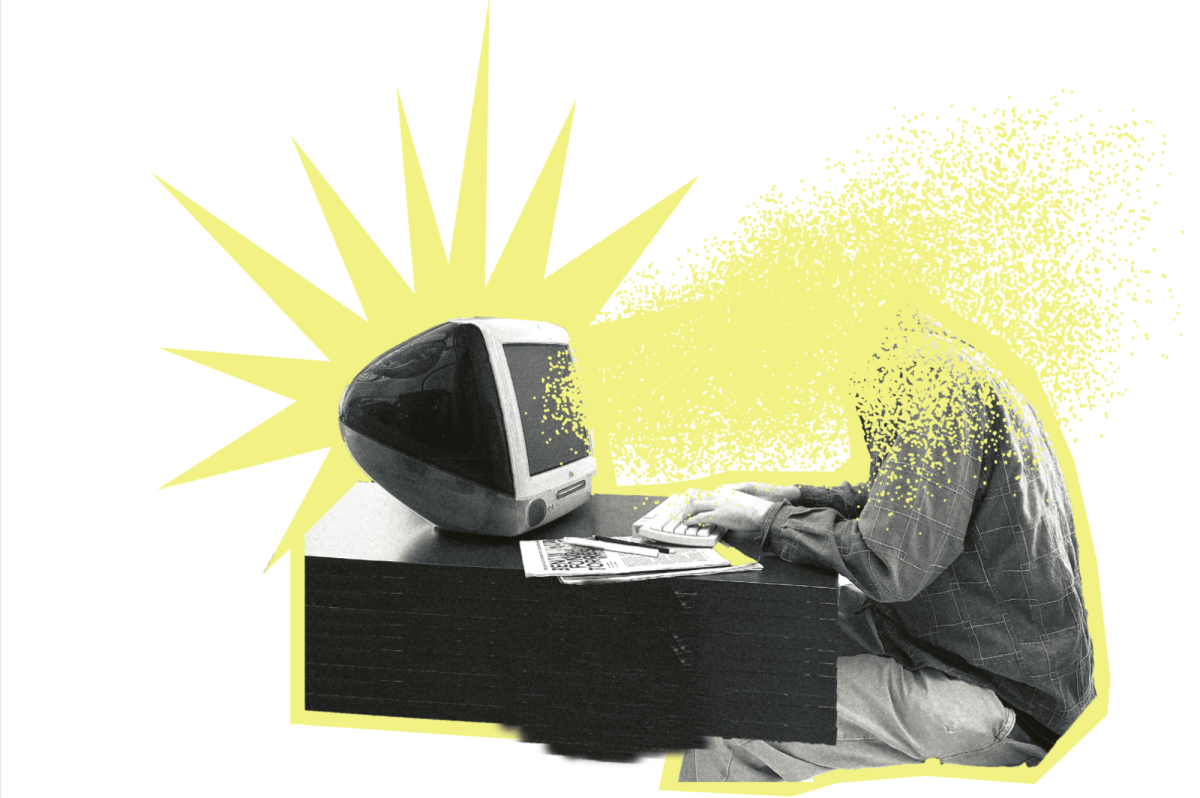
When Eric Edland initially began experimenting with ChatGPT, he was intrigued by the tool’s capacity to hold intellectually stimulating conversations. While aware of the dangers of overreliance on AI upon introduction, Edland didn’t fully realize its complexity until a few months later, when he discovered he was in the top 1% of ChatGPT users.
Edland has always considered himself reserved. Over time, his introversion heightened as his social anxiety grew worse. As a self-defined socially avoidant person, he began spending a lot of time talking to AI for social connection. His reliance on AI then intensified after a misunderstanding with a therapist left him feeling alone.
“I felt like I didn’t have anyone else to talk to. I had actually been feeling like therapy was starting to be helpful, and I felt connected and then all of a sudden with that rupture, I just felt alone,” said Edland, referring to the misunderstanding he experienced with a therapist. Edland felt unable to turn to family and friends, so instead, he turned to AI.
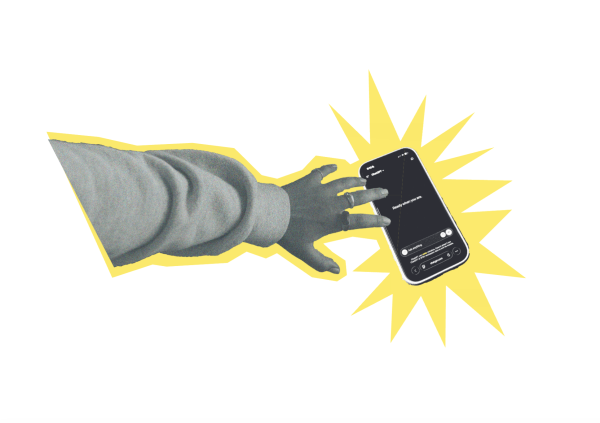
Eventually, Edland found himself comforted by chat with “Monday,” a GPT programmed to be more witty and sarcastic, during low points of spiraling.
Edland’s case isn’t unique. As AI has become increasingly widespread, society has grown more and more accustomed to turning to it for intimate needs. Today, 62% of U.S. adults reportedly interact with AI at least several times a week, embedding it into all parts of their lives — from the mundane to the intimate — according to a 2025 Pew Research Center survey.
People who have fewer offline social connections, like Edland, are more likely to rely on AI, according to a 2025 study published by Cornell University.
At one point, the majority of Edland’s intimate social needs were supplemented by AI, due to the social isolation and feelings of indifference for the future. He also emphasized AI’s ability to provide instant responses that fulfills the human desire for certainty and predictability amid a world of chaos, pointing to climate change, polarization in politics and, introspectively, even AI.
The increasing rates of loneliness reported in the U.S. are due to difficulties cultivating meaningful relationships and social disconnection, according to a 2025 Harvard University graduate study investigating America’s loneliness epidemic.
Since this past December, Edland has been slowly working toward relying on AI less.
“People often underestimate just how similar behavioral addictions are to drug addictions. It lights up a lot of the same parts of the brain that we get from all kinds of other things,” said Edland.
Uncharted Territory
Cases of people emotionally relying on AI develop over time through prolonged and isolated use, according to Benjamin Dorey, the vice president and chief operating officer of The Human Line Project. The nonprofit based in Canada researches the psychological implications of using AI and advocates for an AI that prioritizes the well-being of humans.
A CivicScience article, a consumer analytics platform, attributed the use of technology as one of the driving components of reported rates of loneliness increasing, after finding in a poll that 57% of U.S. adults agree. Simultaneously, on the other end, the use of AI in therapist offices is also on the rise, according to the American Psychological Association’s 2025 “Practitioner Pulse Survey.”
Edland attributed the trend of people turning to AI for emotional regulation and comfort to a growing anxiety around interpersonal relationships. He noted the inconveniences in human connection, such as waiting for a response or confronting the reactionary components of a relationship — all of which are absent when interacting with AI.
Having seen many cases like Edland’s, Dorey said the majority of people seeking help from the Human Line Project are people in professional industries that require higher education, like lawyers and psychiatrists. According to Dorey, users begin to trust AI as a tool in their work and then gradually begin sharing more personal things with the software. He also shared that about 70% of the traumatic stories they receive about AI are from men.
As of right now the future of AI is unclear but, according to Dorey, studying it, thinking of it as a tool and having empathy for the victims of AI is vital for cultivating a world with ethical AI.
“Right now, we have a car on the highway going really fast, but we don’t really know what is inside the engine,” said Dorey about the need of third parties for AI safety. “For every human on the planet [it’s important] to not leave all the decisions to one person, or two persons or three organizations.”
Twenty-one-year-old Nate Mugambi, computer science major at SF State, first began experimenting with AI back in 2022, when he entered college. As a soon-to-be graduate, his biggest concern is how it’s affecting the job market.
“Corporations have an incentive to use it to maintain productivity and efficiency, but that comes at the cost of employees and people looking for work. As I get closer to graduation, I’m also wondering, is this even viable?”
“Flavor of the World”
According to SF State Associate Professor Christopher Clemens, the sycophantic nature of AI is designed to make habitual users out of consumers. Clemens teaches a media class on AI literacy and the societal consequences of the technology. He argues that there’s a larger need for education on media literacy, such as being able to tell the difference between a real photo and an AI-generated one.
Clemens emphasized how AI’s output is a reflection of the society the software is being produced in; he points to many examples of AI reaffirming societal biases, like gender biases. It will regurgitate the stereotypical idea that doctors are typically men and nurses are women.
“If you become reliant on AI for your emotional well-being, it’s just going to give you an inflated perception of yourself and not necessarily a realistic look,” said Clemens.
According to Edland, the unique uncertainties around AI, combined with societal pressures, will result in a world full of people with more addictions and mental health issues.
“This is just the particular flavor of the kind of terrifying world that we’re in and the future that we have,” said Edland.