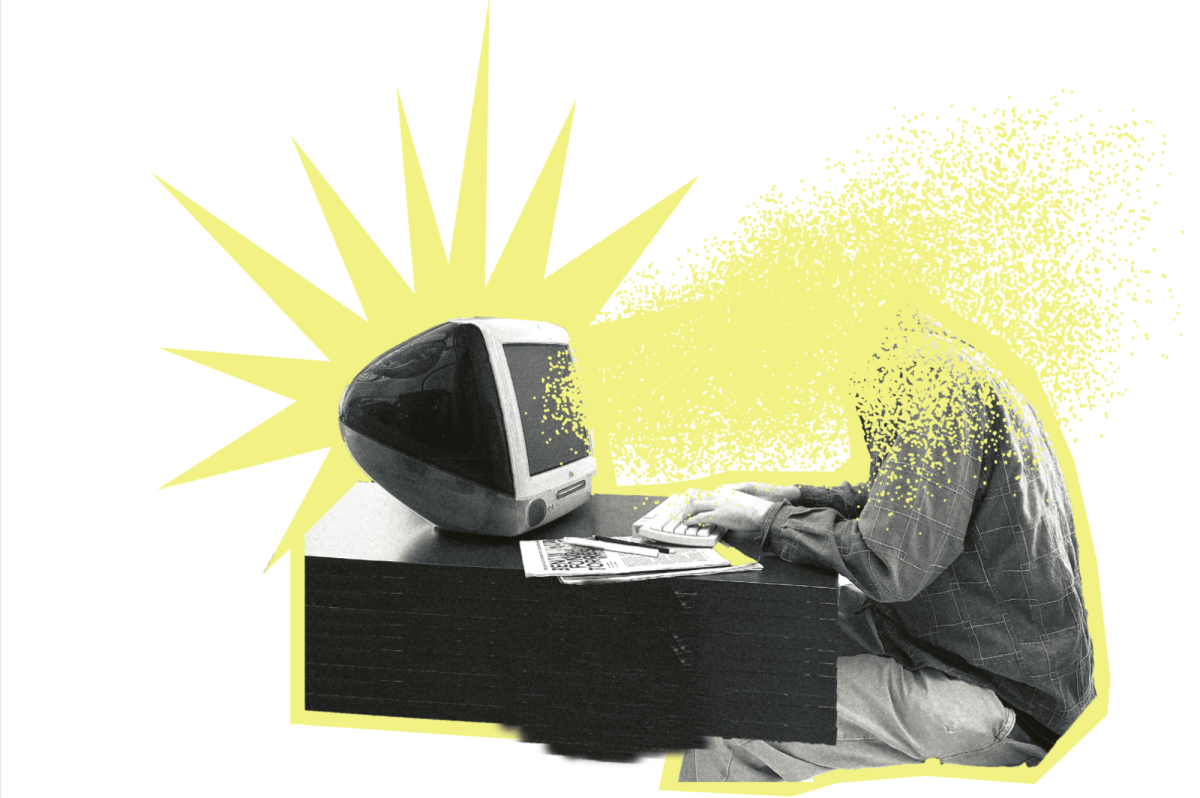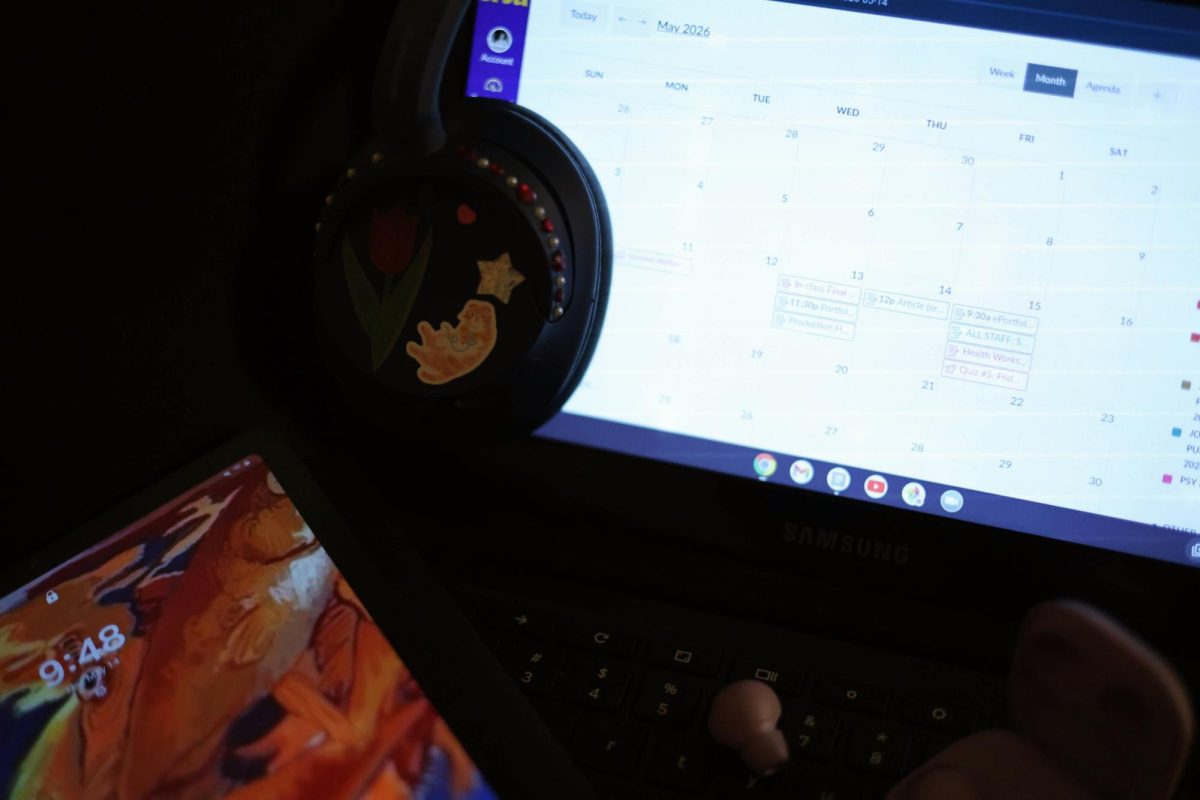
Between classes, homework and constant notifications, many college students are struggling to find a moment away from screens. What once felt like a happy distraction has started to feel overwhelming — a cycle of scrolling, overstimulation and emotional exhaustion is what students increasingly describe as digital burnout.
“Everything’s online,” Karina Ma, who majors in English education at SF State said. “My homework is online. My exams are online,” said Ma, noting that digital burnout has become unavoidable as both coursework and social life increasingly revolve around screens.
Ma estimates she spends nearly 14 to 15 hours a day looking at screens between schoolwork and social media. She said apps like Instagram and TikTok can feel addictive, creating what she described as a constant “dopamine rush” that makes it difficult to stop scrolling.
“It’s emotionally and mentally draining,” said Ma. “You keep scrolling and scrolling, and it becomes this weird cycle.”
For many college students, the emotional exhaustion comes from both academic demands and social media itself. A 2025 study published in Frontiers in Psychology, found excessive social media use among college students to be strongly associated with learning burnout, emotional exhaustion and increased anxiety. As that exhaustion grows, teachers, Bay Area residents and students begin rethinking the role social media plays in their daily lives.
Another 2025 study from the National Library of Medicine, examining social media burnout in college students, found that problematic social media use and online social anxiety contribute directly to emotional fatigue and “discontinuous use,” where users feel compelled to step away from platforms altogether.
Kimberly Cardenas, an SF State nursing student, said digital burnout has become tied to the long hours she spends staring at screens throughout the school day.
“I feel like when I’m in a long class and I’m staring at my computer a lot, I just feel tired, sleepy,” said Cardenas. “My eyes do start to hurt sometimes.”
She says the feeling is especially noticeable during her nearly two-hour-long biology class, where much of the learning happens through screens such as Canvas, PowerPoint slides and personal devices used in classrooms. To cope, she tries to step away from screens whenever possible, whether that means putting her laptop away, spending time with friends or experimenting with makeup looks.
“I like to go out with my friends, go shopping,” said Cardenas. “It gives you kind of, like, a relief.”
A 2022 study from The National Library of Medicine on college students and digital learning found that nearly three-quarters of students reported feeling burned out by classrooms overly reliant on digital teaching tools like PowerPoints and online instruction.
That digital burnout extends beyond just students.
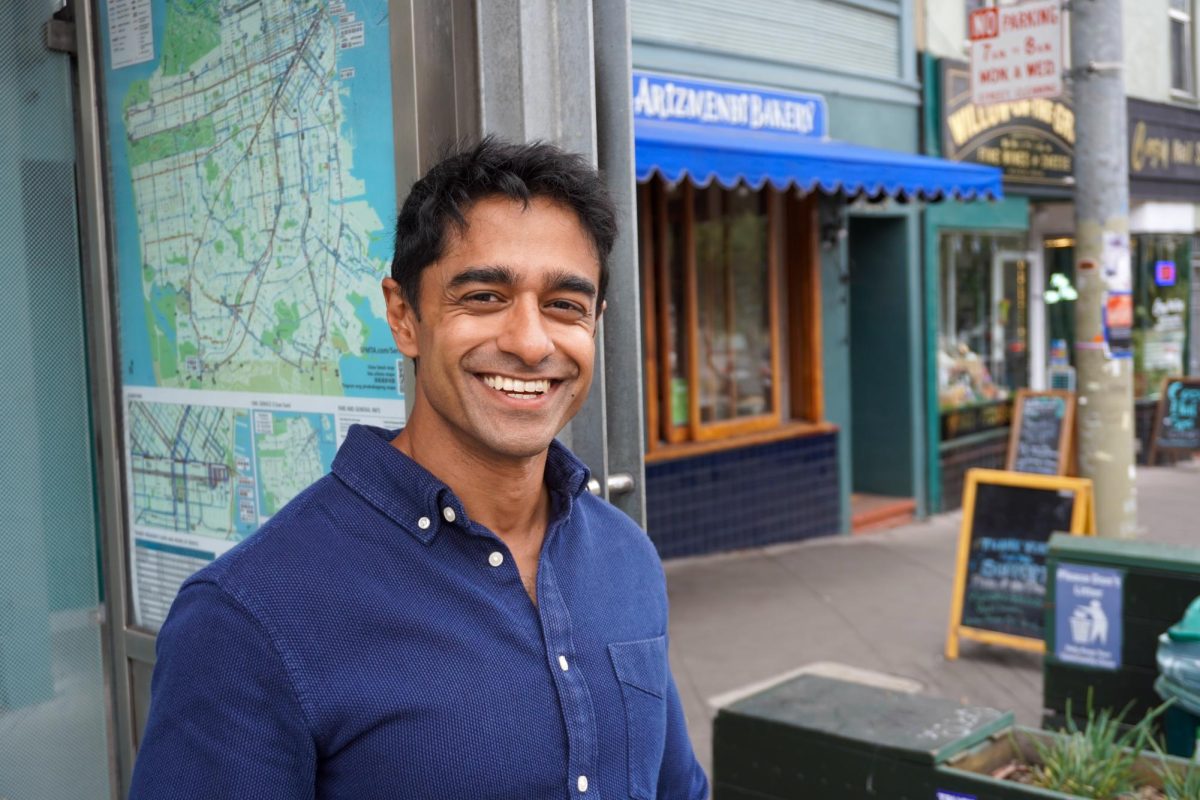
For Patrick Lindley, an engineer at an AI start-up, the constant presence of screens eventually pushed him to look for something different. During the week, he commutes nearly 90 minutes each way from San Francisco to his job in Palo Alto. But on weekends, he spends time at Unplug & Play, a Bay Area collective that hosts phone-free gatherings centered around analog activities and in-person connection.
“It really is an antidote for a lot of our overreliance on technology,” Lindley said. “Putting our phones away for a few hours and connecting with people brings balance to a very oversaturated digital world.”
Along with college students and Bay Area residents, younger students are also beginning to show signs of digital overload.
Some schools are beginning to rethink how technology belongs in the classroom altogether. At the elementary and high school levels, both San Francisco Waldorf schools use an alternative learning model that intentionally limits screen use in classrooms. Rather than relying heavily on laptops, phones or digital presentations, lessons emphasize hands-on learning, discussion, creativity and face-to-face interaction.
Executive Director Lauren Smith said the approach is meant to help students build a stronger connection to the world around them rather than relying heavily on digital tools. Teachers encourage activities that engage students physically and socially, from outdoor exploration to collaborative classroom work, instead of constant multitasking through screens.
“The transition can be difficult at first,” said Smith. “Especially for students already accustomed to always having a phone nearby.” She explained that over time, many Waldorf high schoolers and middle schoolers have become more comfortable engaging directly with classmates and teachers without the distraction of notifications or social media.
Director of San Francisco’s Waldorf Grade School Jamie Lloyd sees boredom itself as an important developmental skill in an era shaped by constant digital stimulation.
“It’s okay for a child to be bored for a moment,” said Lloyd. “Because if they’re bored for a moment, they’re going to seek something out.”
That balance may look different for everyone — putting the phone away during a walk, spending time outdoors, writing on paper instead of typing or carving out a few hours without notifications.
After long days working in tech, Lindley said spaces like Unplug & Play create room for more intentional, face-to-face connection. “My hope is that when people enjoy this, they will [feel] the benefit of it,” said Lindley. “And it will continue to contribute to this overall balance between using tech and the digital world and reverting, so to speak, to the analog world.”
The growing appeal of analog spaces in San Francisco — a city shaped by constant reinvention and accelerating technology — suggests that people are not necessarily rejecting technology altogether, but reconsidering how much of their lives they want it to occupy.
“Sometimes I just leave the house and leave my laptop behind … view nature, take a deep breather and just take a long break from it,” said Ma.
Additional reporting by Cole Fowler
Podcast Script:
[Cole Fowler] I’m Cole Fowler
[Grace Pastene] And I’m Grace Pastene. We’ve been curious about what happens when you start to step back from the screens that shape so much of our daily lives.
[Cole Fowler] In a city built on technological innovation, more people are starting to question their relationship to it. A recent Harris Poll found that nearly 70% of folks aged 18-79 wish it was easier to unplug.
[Grace Pastene] We’ve been noticing this emerging shift toward digital minimalism — an intentional approach to technology that treats it as a tool, not a distraction.
[Cole Fowler] It’s about loosening its grip and rethinking what it means to connect in a world where so much of it happens behind a screen.
[Grace Pastene] So Cole and I set out in search of ways to tread an increasingly digital world without sinking.
[Cole Fowler] Tucked away in the heart of Hayes Valley—the epicenter of San Francisco’s AI boom—is an underground common space aptly named SF Commons.
[Sasha Josephs] There’s no devices…no electronics, outside of maybe for your recorder there.
[Cole Fowler] Every other Sunday, Sasha Josephs hosts Unplug and Play, a device-free hangout collective meant to foster a shared culture of intentional tech use with low-stimulation analog activities.
[Patrick Lindley] Again, you can kind of step over here, do your own thing at any point. You’re also welcome to kind of move around a little bit as you like, whatever’s striking you at the moment. So, um, yeah, I think that’s sort of a foundation…
[Sasha Josephs] I noticed that there were not many spaces where I could go that were completely analog, where you could walk into a room and not see a single person connected or attached to some sort of device in some sort of way…and so as soon as I had the realization that this could be something that people want and need, I hit the ground running.
[Cole Fowler] That was a little over a year ago. With the help of volunteer hosts like Patrick Lindley, the collective has since expanded across the Bay with hangouts in Oakland, Silicon Valley, and even a weekend retreat in the California Redwoods.
[Patrick Lindley] I think I’ll just kind of start with a pretty casual icebreaker. Just a quick introduction, name, if you’d like to share your city or neighborhood in San Francisco, etc., feel free
[Patrick Lindley] This idea of intentionally putting our phones, our electronic devices out of sight and secured and not even worrying about them for a few hours and connecting with ourselves, connecting with people. The format really lends itself in its pure simplicity to disconnecting in a very healthy way to try to bring balance to a very tech-focused world.
[Grace Pastene] Lindley commutes 90 minutes each way to a small AI startup in Palo Alto during the week. On weekends, he started attending Unplug and Play before volunteering as a host, eager to find a third space to curb his screen addiction alongside like-minded people.
[Patrick Lindley] I could pick my best friend and say “Hey, let’s ditch our phones and hang out,” You know and sometimes that happens and it’s beautiful so to have this opportunity…It’s really much easier to really own it.
[Grace Pastene] 41-year-old Sophia Iqbal turned to Unplug and Play for a phone-free space to unwind and meet new people.
[Sophia Iqbal] I think that when we look at our phones, we have a sense of urgency, that we feel rushed. I know that I do, so I do feel slowed down in my mind, which is nice, when I go to these events.
[Cole Fowler] As a former middle school educator, she has seen firsthand just how much that “urgency” has the power to interfere with Gen Z and younger people’s ability to sit still and stay focused.
Sophia Iqbal] The girl that I tutored always wanted to look at her phone because her friends were texting her. I was just like, ‘I’m just, like, here for an hour or two.”
[Cole Fowler] According to the CDC, American teens are clocking in an average of 7 hours of screen time a day. That’s over 106 days out of the year. This alarming trend has even reached lawmakers in Sacramento, where Gov. Gavin Newsom has signed a bill requiring school districts statewide to adopt a phone-free policy by July 2026. But one private school system is already way ahead of the curve.
[Grace Pastene] To counter rising screen time, some schools are adopting alternative learning models that emphasize hands-on education over tech use. Waldorf schools, for example, limit phones and focus on creativity, nature and face-to-face interaction.
[Lauren Smith] We prefer to start the learning in nature.
[Grace Pastene] That’s Lauren Smith the Executive Director of the San Francisco Waldorf School
[Lauren Smith] We like students to have three dimensional experiences that fully engage their imagination, where they can be acting with full agency on the world around them, and experiencing the natural world and the truth that comes with those experiences.
[Grace Pastene] But even in a low-tech environment, that shift doesn’t happen overnight. For many students, stepping into a space with fewer digital distractions can feel unfamiliar at first.
[Lauren Smith] It’s a bit of a transition and students would certainly default to having the phone in their hand. but once they’ve made friendships and once they’re used to engaging with their teachers, you know, in a really direct and substantive way, they’re comfortable with that.
[Grace Pastene] Over at the Waldorf Grade School, Director Jamie Lloyd sees digital minimalism not as a barrier, but as a way to build independence.
[Jamie Lloyd] It’s okay for a child to be bored for a moment. Because if they’re bored for a moment, they’re going to seek something out. They’ll find a stick, a rock, a toy, whatever it is, and they’ll get themselves out of it. And that capacity alone is really important.
[Cole Fowler] In a region driving the future of AI, the push for digital minimalism might seem counterintuitive. But for the Bay’s digital minimalists, it’s not about rejecting technology, but learning how to live with it.
[Grace Pastene] In classrooms like Waldorf, that means teaching students how to sit with boredom, build focus and engage with the world without a screen.
[Cole Fowler] For members of Unplug and Play, that balance looks like carving out a few hours a week away from screens and being more intentional with how they use them.
[Patrick Lindley] My hope is that when people enjoy this, they will feel immediately the benefit of it and it will continue to contribute to this overall balance between using tech and the digital world and reverting so to speak to the analog world.
[Cole Fowler] So across the Bay, it feels like things are shifting — not fully disconnecting, just being more intentional with tech.
[Grace Pastene] So, how can you tread a digital world without sinking?
[Cole Fowler] Maybe you don’t have to get out of the water completely —
[Patrick Lindley] Just a couple of deep breaths, just a deep breath in through our nose.
[Grace Pastene] But you do have to know when to come up for air.
[Patrick Lindley] And exhale. Just one more. There we go.