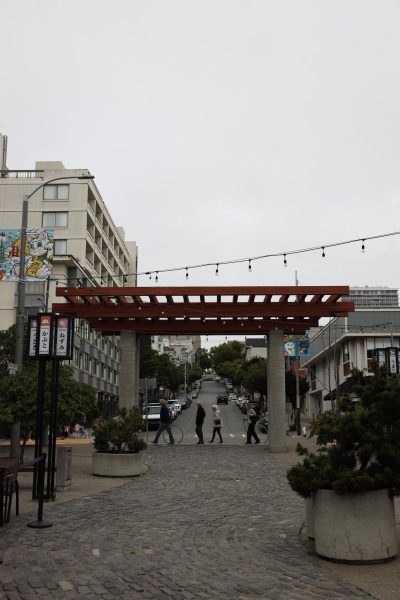
Cherry blossom trees, stone benches and bronze idle fountains surround the intersection of Post and Sutter Street — one of the many heartbeats of San Francisco’s Japantown. Historic businesses and institutions shape much of the neighborhood, including Osaka Way, formally called Buchanan Street Mall.
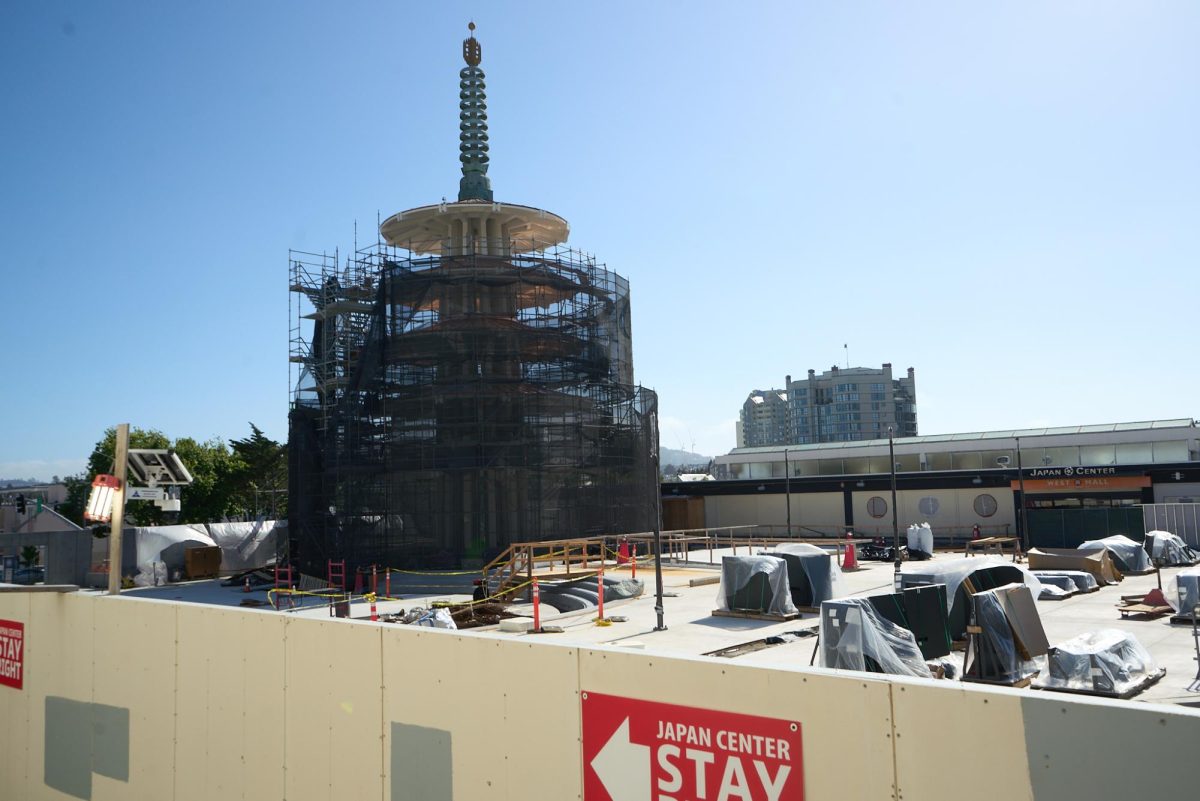
Just across the mall is Japantown Peace Plaza, the neighborhood’s hotspot for community events. Towering over is Peace Pagoda, a five-tier structure built in the 1960s. The plaza is currently undergoing renovations — an increase to Pagoda’s stage size and seating capacity — but aims to maintain its unique cultural features. Following its completion, Osaka Way will be Japantown’s next renovation project.
According to the San Francisco Planning Department, former California State Assembly member Phil Ting secured a $5 million grant for Osaka Way’s renovation from the California Natural Resources Agency at the end of 2021, after community leaders advocated for funding. The project’s a collaborative effort between multiple stakeholders, including the Japantown Community Benefit District (JCBD), Japantown Task Force, Nihonmachi Parking Corporation and Ruth Asawa Lanier, Inc.
Linda Mihara, co-owner of Paper Tree, has been in the area since before the fountains were installed in the 1970s.
“When the fountains were damaged and we couldn’t get them to run again, that was really depressing because that really added to this whole street,” said Mihara. “I’m excited that they’re going to fix them, and it’s going to be running again.”
According to SF Planning’s community briefing from January 2025, the new surfaces are approved under the Americans with Disabilities Act: a granite cobble river, exposed aggregate concrete, a new pole, catenary and garden gate lighting. Another key feature will be refurbishing the benches designed by Ruth Asawa.
Asawa, co-founder of the innovative Alvarado School Arts Workshop, is a major figure in San Francisco’s art community. Her art education program was in as many as 50 schools in the city in the 1970s, and she went on to serve on the California Arts Council and became a trustee at the Fine Arts Museum of San Francisco. Her vision also extended to SF State; her last public art work, the Garden of Remembrance, is located in the center of campus.
Mihara remembers Asawa inviting the local kids from the businesses to help her make the sculptures and benches when they were first established about 50 years ago. Mihara and her sister were two of those helping hands.
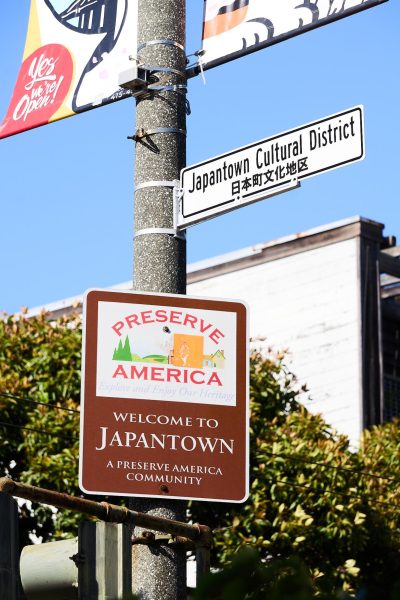
Amid community excitement, there’s concern from business owners. The construction will take place outside of their doorsteps, and the cobblestone ground will need to be dug up for underground pipe work.
In the latest community briefing, the project’s timeline estimates the construction to start in August and will take a year to complete. Mihara is apprehensive of the hurdles that will accompany the process, saying it will be a “dusty [12] months” if the project goes according to plan.
Ramen Yamadaya’s general manager, Abraham Sañez, is concerned about the accompanying amount of foot traffic and customer presence in the area; particularly when the project removes the origami fountains and forces passersby through smaller, plywood walkways.
“The potential for people to hang around in the area and just look around over here is less,” said Sañez. “But it’s working towards a greater good eventually. I’m just hoping that it’ll be a relatively quick, less painful route.”
Philip Ashizawa, one of the heads at Soko Hardware, a family-run hardware store that’s been in the area for over 100 years, is worried about Osaka Way’s businesses having to close their doors during the project’s construction process.
While doors may have to shut for a few days as construction is directly in front of businesses, Ashizawa was told that access will otherwise be maintained to all entrances and businesses.
Grace Horikiri, executive director of the JCBD, a nonprofit organization responsible for the cleanliness, safety and promotion of Japantown since it started in 2017, said they will come together with the neighborhood to encourage people to still visit Osaka Way.
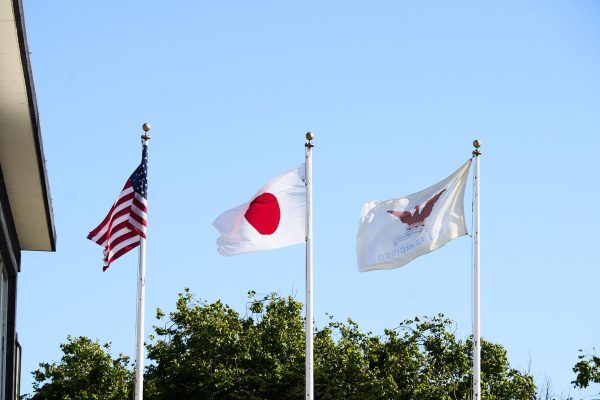
“What we want to do is make it more inviting for folks to come see it,” said Horikiri. “Hopefully, once construction begins, people will say ‘Oh, it’s under construction but we can still go in this area.’”
District 5 Supervisor Bilal Mahmood is supportive of the project. In an email, his legislative aide, Raynell Cooper stated it will make Osaka Way more attractive to visitors while maintaining the “one-of-a-kind feel” it gives to Japantown. They added that they have spoken with San Francisco Public Works to make sure the area remains appealing during its lengthy construction and ensure that restaurants along Osaka Way are featured in wayfinding signage.
“We are also working with Public Works to minimize the overlap in the work between the Osaka Way project and the Peace Plaza project across the street to maximize the benefit for the neighborhood. The best way we can help out is keep a close relationship with both the businesses and the project team to make sure that any concerns are quickly addressed,” wrote Cooper.
While construction may bring inconveniences for businesses, Sañez is excited for the mall’s authentic new look.
“It will pay itself in dividends in the future once it’s a lot more beautiful,” said Sañez. “Just looking at the plans, you’re trying to bridge this gap of trying to make the place as close as what: either A, imagine what Japan would look like, or B, ‘I’ve been to Japan this is exactly what it looks like.’”