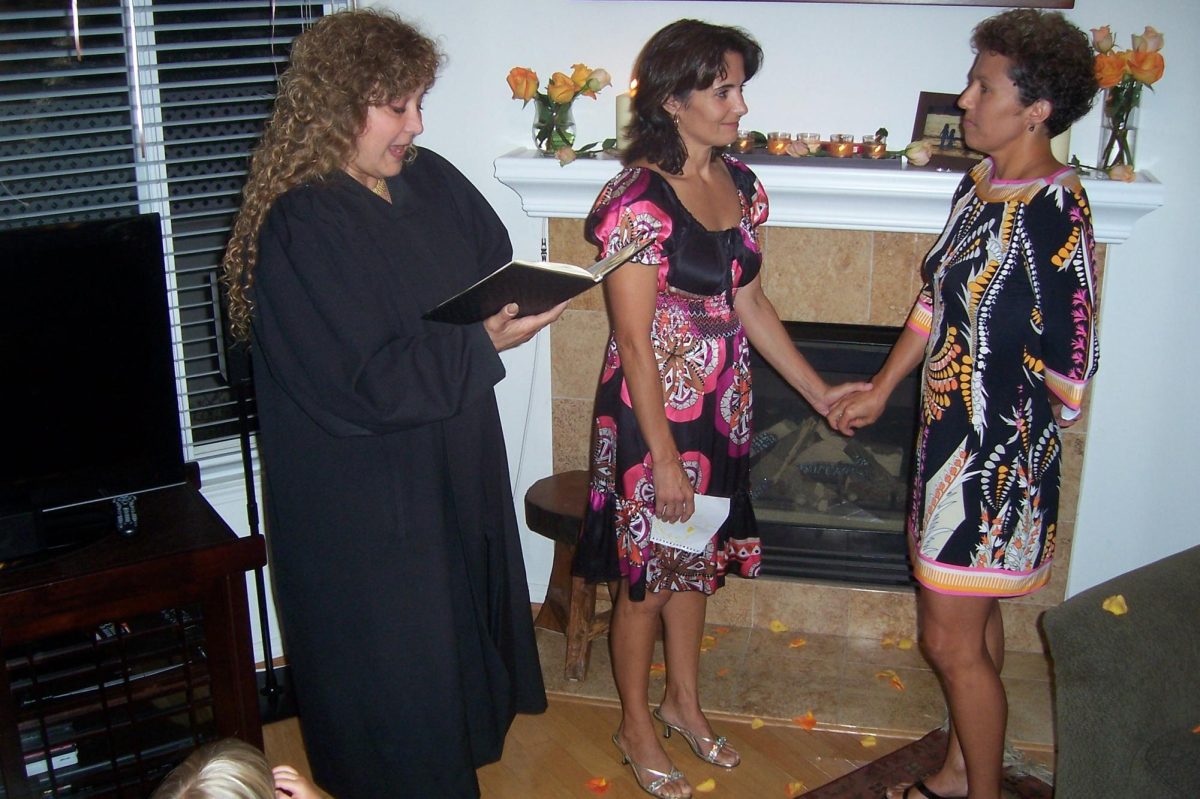
It’s 2008 and I’m sitting in my living room. Dressed in a nylon-polyester dress, I look toward my two moms standing hand-in-hand in front of our fireplace. My sisters, unable to sit still through the excitement, move around the room. But I stay perched, focusing on what my parents are reciting to each other, unable to fully register the weight their words carry until I got older.
I was four years old fixed on the faces of my next door neighbors, my mom’s best friends and a few of my cousins, all crowded into the living room of my home in California. Just moments earlier, they were all dancing to traditional Armenian music, a staple at my family gatherings. Unbeknownst to me at the time, this celebration was my parent’s wedding.
A traditional nuclear family — husband, wife, daughter, son — never matched the description of my family. A household with two moms always felt natural to me. Growing up, kids at school would be envious rather than judgmental. The reactions I received from my peers, however, were far different than the ones my parents experienced when they were younger.
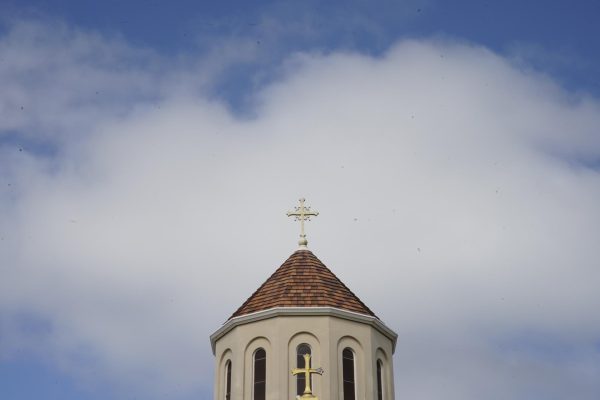
To most Armenians, the LGBTQ+ community is simply an unacknowledged, unaccepted concept.
In Armenia, the LGBTQ+ community is essentially invisible. The country places a large emphasis on Christianity and its churches, making homophobia a prevalent force. The Armenian Apostolic Church, the national church of Armenia, has also publicly rejected homosexuality as immoral. According to the Global Campus of Human Rights, in 2023 there were almost 50 recorded hate crimes against LGBTQ+ individuals in Armenia.
“I always kept it very hidden,” said my Mama, Anahid. “I was very scared for anybody to find out.”
From kindergarten to high school, both my moms went to traditional Armenian schools and were brought up immersed in the culture. My Mama, Anahid, and my Mommy, Ayline, met while playing basketball for Homenetmen, a private Armenian organization. Because of the small class sizes and the already conservative nature of Armenian culture, my parents assumed they were the only LGBTQ+ people at their schools.
“I didn’t let myself think about it,” said my Mommy. “Back then, if something gay was shown, it was like something was wrong with the person.”
Over the years, my parents lived their lives separately, hiding their sexualities. As they reached their twenties, they reconnected and started their relationship. During this time, they both decided to come out to their families. The negative reactions from their own mothers were what they expected and it strained their relationships with their families for a few years.
My Mama never officially came out to her father before he passed. “I wouldn’t want him to be hurt or disappointed that I was gay, so it was never talked about, and I’m happy with that,” she said. Luckily for my Mommy, her father was more accepting.
Eventually both of their own mothers came around. They realized their love for their children overpowered the emotions they felt about who their children chose to love.
It wasn’t until my parents started their family that I realized how largely their relationship influenced their community, despite the culture being not as accepting of their sexualities.
After my parents had me and my sisters, Ania and Karni, through an anonymous sperm donor, a close friend told them how they have impacted her and other queer Armenian women. “I remember thinking, ‘Wow, she called us trailblazers,’” said my Mama. In the Los Angeles Armenian community, my moms are well known as being one of the first openly gay couples to be married and have a family.
“We like that the community sees this because we know it’s going to help that younger aged Armenian who’s still in the closet,” said my Mommy. “I’ve raised these three daughters, and [now] they’re adults, and they’re meeting the people that I was hiding from for years.”
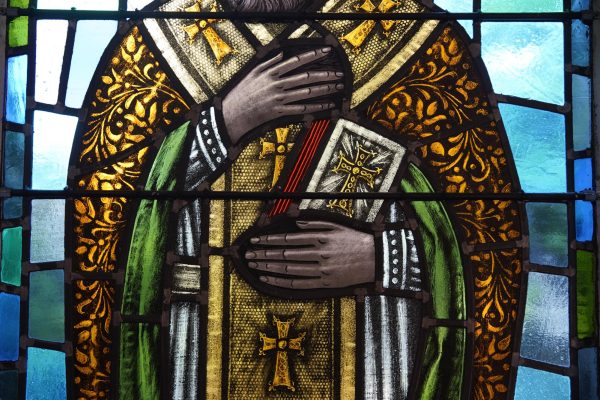
A New Era
Within the past decade, there have been more individuals coming out and becoming comfortable with being openly gay. According to the Public Policy Institute of California, 9.5% of individuals living in California identify as LGBTQ+, higher than any other nation.
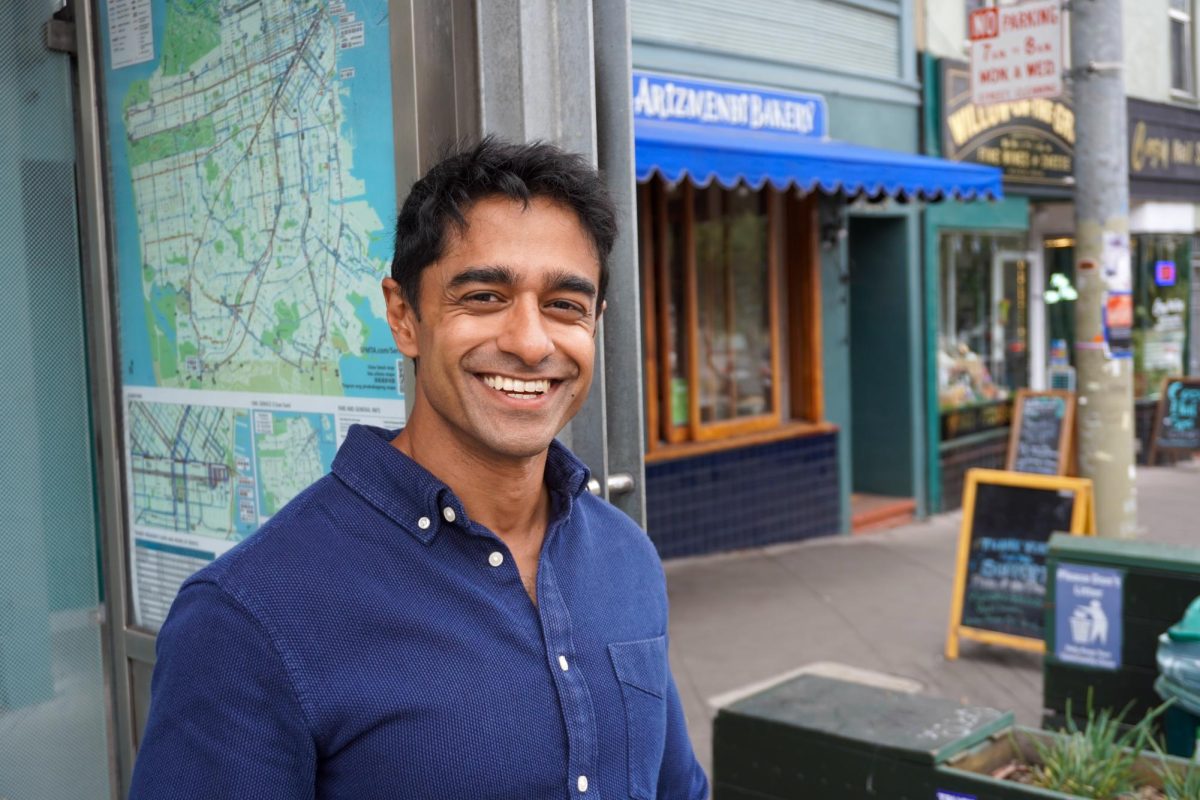
Garen Karnikian, a first-generation Armenian American, grew up in Los Angeles, where his experience growing up LGBTQ+ looked similar to my moms. From a young age, Karnikian had to learn how to blend in and navigate himself through a homophobic community.
“There were no [queer] role models within the community,” said Karnikian. “So there was no mirroring of the parts of myself that I noticed were not welcome.”
Karnikian was first introduced to the San Francisco LGBTQ+ community during college. While attending UC Berkeley, the openly-queer individuals were largely ostracized, despite how progressive the university’s reputation is.
After debating to step away from the Armenian community in college, Karnikian was instead led to UC Berkeley’s Armenian Student Association, where he became president. Despite reconnecting with his culture, it seemed to be just another curtain drawn over Karnikian’s true identity. “I think shame, in a convoluted way, kept me safe from outing myself or getting caught in any way,” he said.
It wasn’t until after college, when he moved to San Francisco, that Karnikian started to truly understand himself and his sexuality.
“San Francisco has a reputation of being incredibly progressive,” he said. “It’s not like the LA conservative communities.” Around his mid-twenties, Karnikian came out to his parents, where he felt their reactions were disrespectful to his identity. Over time, they have slowly begun to accept his sexuality.
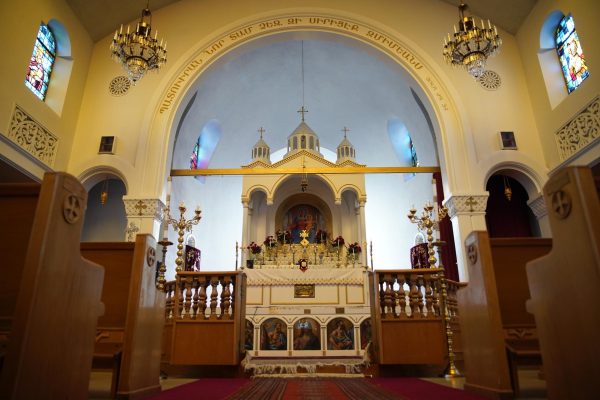
Culture at Face Value
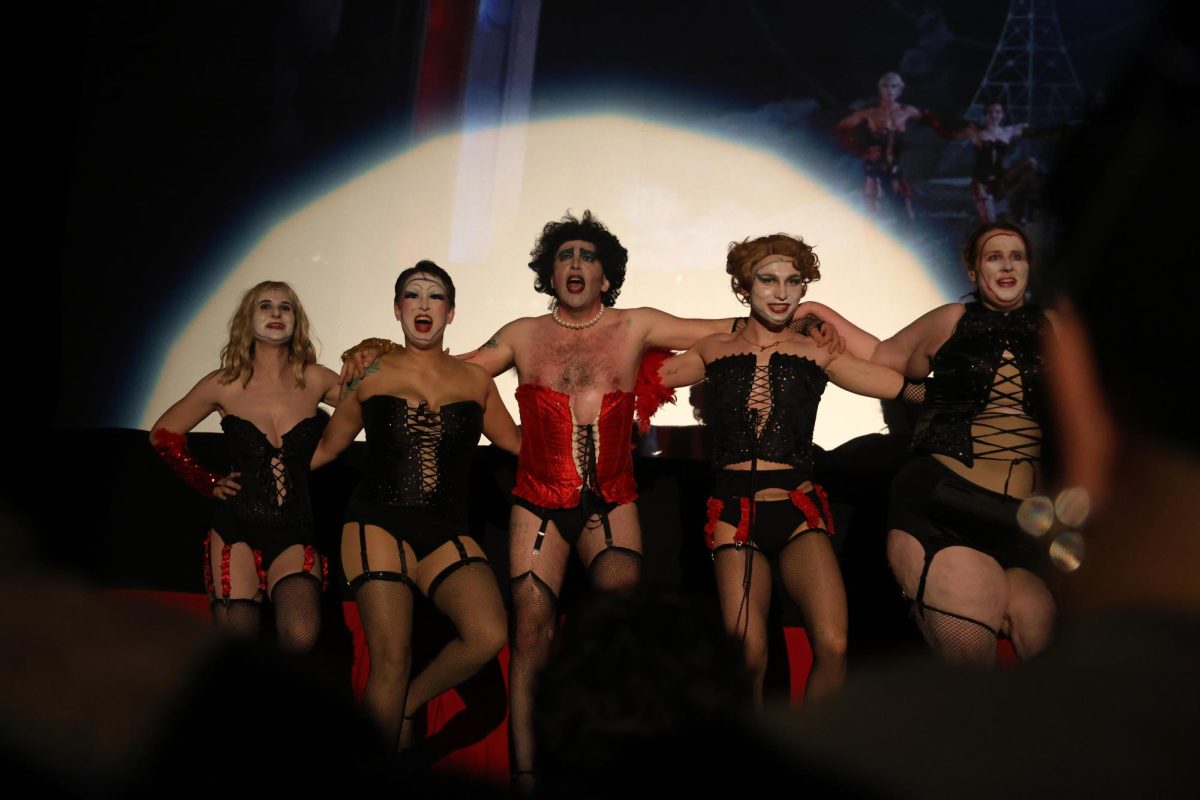
In the San Francisco drag community, bleaching and thinning hair are common procedures when getting ready to perform. But for VERA!, an Armenian American nonbinary drag king performer, they draw on thicker eyebrows and dark facial hair when getting into their drag — a tribute to their Armenian culture.
After discovering the Armenian LGBTQ+ community in San Francisco, they decided to incorporate their heritage into their performances.
“I feel like the Bay Area creates a more open space for a lot of cultures to be queer in their culture,” said VERA!.
Regardless of the fact that traditional Armenian beliefs characterize drag performers as “ungodly” or that they don’t exist in the culture, VERA! continues to do what they love. They believe this is what their ancestors would have wanted to see.
“Being Armenian, a drag performer and a queer-trans being, it is wonderful and normal and beautiful,” said VERA!.
A Tribute to Heritage
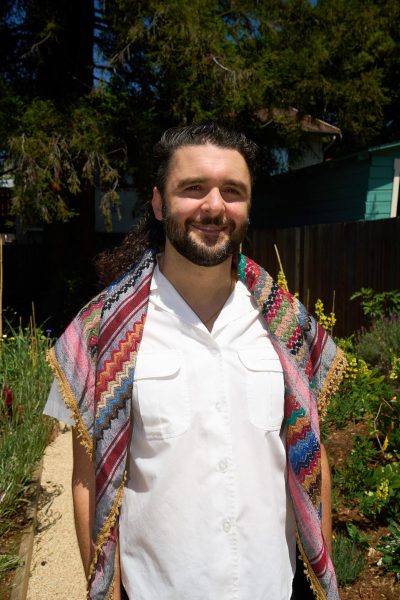
Aleen Ohannessian, an SF State alum who graduated in 2023, was raised in a household where traditional and religious Armenian culture were at the forefront of her family’s values. Overhearing the homophobic comments her mom made to others made it difficult for Ohannessian to share her sexuality with her family. Eventually, she did come out — but only to her mom. As Ohannessian grew older, she found her mom’s views on the queer community slowly changing.
“Instead of emphasizing that it’s you against the Bible,” said Ohannessian. “She changed it to, ‘Well, God loves all his children, so it doesn’t matter.’”
When Ohannessian started at SF State, she was able to dive deeper into the queer community and explore this aspect of her identity. “I feel like maybe I abandoned my Armenian-ness a little bit and was like, ‘I just want to be here and forget everyone else,’” she said.
Ohannessian wanted to present herself in an aesthetic she connected with, so she changed her appearance to look more punk. However, her mind was changed by her sister after telling Ohannessian that bleaching her dark-haired eyebrows was a huge disrespect to her Armenian ancestors..
Armenians typically all have resembling features: dark hair, thick eyebrows and a strong-arched nose. Following the 1915 Armenian Genocide — where over 1.5 million lives were lost, resulting in the Armenian Diaspora — the population of Armenians around the world today has dwindled to around seven million. In Armenian culture, keeping these features represents our ancestors and those who died for their heritage.
I’ve been lucky enough to live in Los Angeles and San Francisco, so I’ve seen what two ends of Armenian culture can look like. Witnessing my moms marry each other didn’t seem as profound as it does now, after understanding the orthodox beliefs of Armenians.
For my parents, I wish they had the opportunity to experience themselves growing up in a more open community, like many LGBTQ+ individuals do in the Bay Area. But for them, they wouldn’t change the way their lives have played out.
“I don’t feel like I lacked anything in my life as far as role models or anything,” said my Mommy. “I think it happened exactly the way it was supposed to happen for me to meet Mama and for me to have what I’ve always wanted, which is the family.”
Editor’s note: A previous version of this story has been updated to omit an accurate but sensitive account told by a source in an interview. The change was made to reflect an updated characterization of the source’s experience to minimize harm.