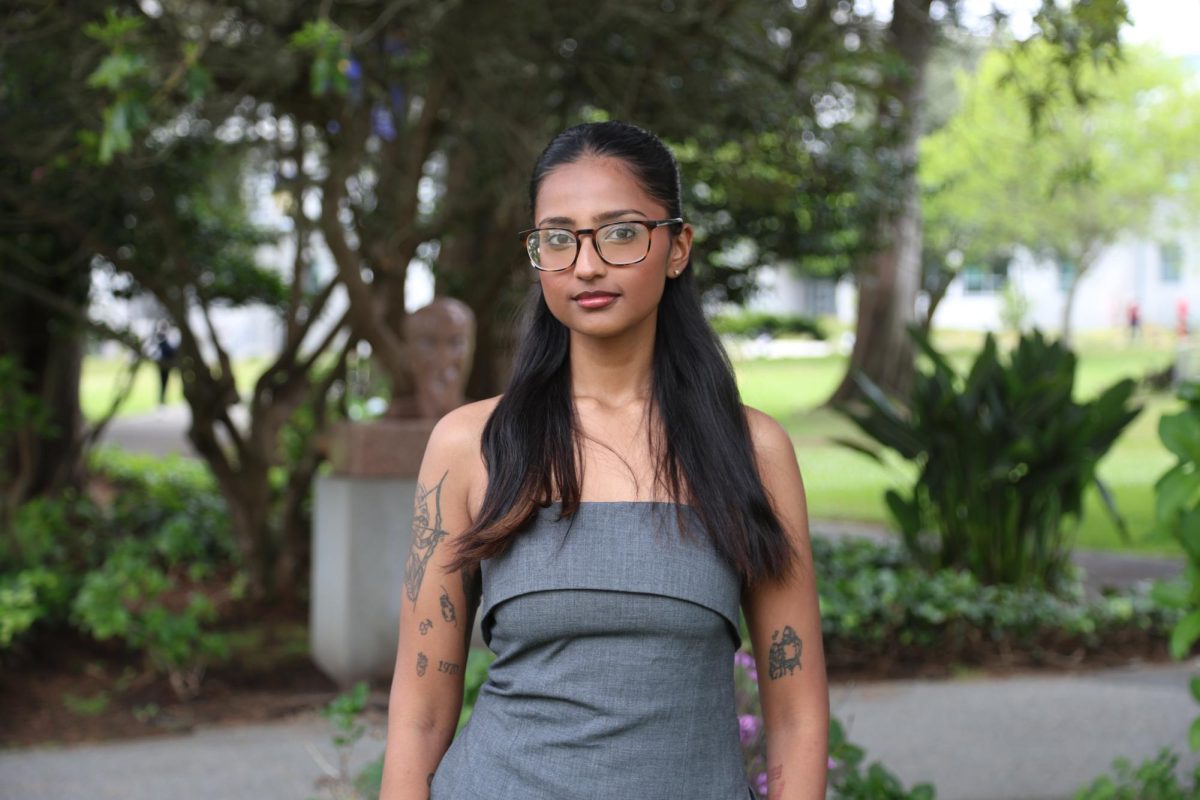
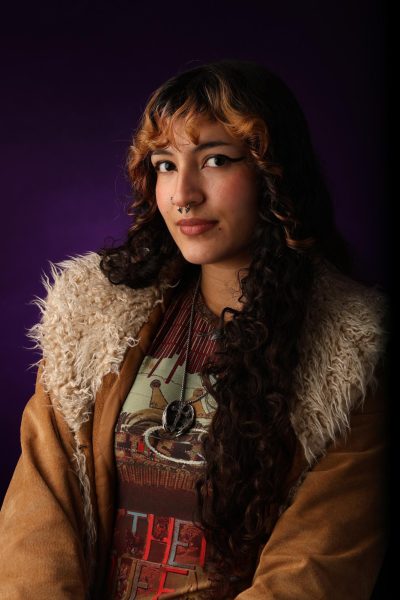
Sammy Solomons steps out in oversized T-shirts, studded and spiked cuffs, a long leopard-print coat and a bedazzled anarchy-symbol hair clip. For Solomons, personal style doubles as a statement of social and political beliefs from one article of clothing to the next.
In an era of polarization, clothing has become more than an expression of personal style. For Ryan Hill and Solomons — two students and members of the Fashion Network Association at SF State, a program created to give students experience in fashion industry-related skills — it’s a signal of identity and resistance.
As political and economic polarization continues to rise in the U.S., some SF State students are reshaping the daily act of getting dressed into a political statement. For them, outfits reflect small acts of resistance, such as refusing fast fashion, upcycling and aligning with specific subcultures that represent justice and renewal.

According to Science Advances, polarization is a social phenomenon where a population divides into groups with distinctively opposing beliefs, and identities clash and create conflict.
Fashion has historically been a mirror for civil unrest, where clothing choices can represent which side of history someone is on. In the 1910s, the suffragettes wore white gowns to present a unified force in their fight for the right to vote. People in the counterculture movement of the ’60s wore the peace symbol as pins and jewelry in protest of the Vietnam War. The punks of the ’70s used upcycling and bold aesthetics to reject a conformative society. In 2026, clothing still serves as a method of communication: The red MAGA hat, the Palestinian keffiyah and political slogan tees are all examples of how modern society chooses clothing to publicly display their beliefs and identity.
“What we wear always reflects the social or political movement of the time,” said Connie Ulasewicz, an apparel design and merchandising professor at SF State. “It’s wonderful that people are wearing clothing that they want to represent them and, by representing them, they’re representing a moment in time that they support.”
“Especially right now at a time when there is a lot of censoring, a lot of fear, I think clothing is one of these nonverbal ways of communicating identities,” said Javier Luna, a political fashion journalist. He’s observed a rise in conservative fashion, with necklines going up and hemlines going down.
While history and media highlight major movements through political fashion, some students at SF State are translating these broader trends into their own wardrobes.
“Dressing alternatively, and showing other people that you are tapped into that different subculture, is a way to signal to the people around you that you’re in support of certain social movements that can differentiate you from the masses,” said Luna Ornelas, a sociology major at SF State.
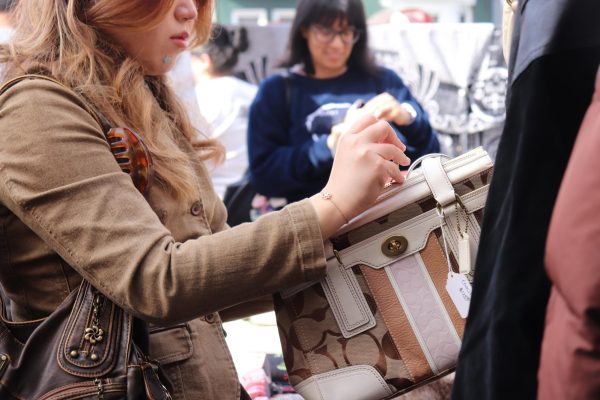
Luna Ornelas points to modern examples of politics in fashion she has seen in the media, such as the “ICE OUT” pins worn by celebrities at the 2026 Golden Globes and Grammy Awards. The simple message fastened to gowns and suits, signaled opposition to the U.S. Immigration and Customs Enforcement (ICE) policies responsible for 32 reported deaths, in 2025 alone.
“There is this idea of how powerful fashion is to communicate messages; to build bridges; to convey messages,” said Javier Luna.
Javier Luna said that social media is a factor in why more people are making statements through fashion. “People are starting to be more conscious about how they look and what they’re communicating.”
According to The Federal Reserve, economic polarization is on the rise in the U.S. The national average yearly wage of $69,846.57 in 2024, which is 4.84% higher than the index for 2023. For some celebrities such as Bad Bunny, Billie Eilish and Justin Bieber — with a combined net worth of around $370 million — speaking out against issues such as ICE was still necessary.
Hill said he believes that there has been a shift in fashion trends due to the current political state. “The world is kind of crumbling,” he said.
“A lot of different cultures are kind of having to really hold on to each other,” said Hill about the state of the world. Namely, he noted Bad Bunny’s Super Bowl halftime performance, one full of imagery and clothing symbolic of Puerto Rican culture, as an example of reclaiming identity and challenging colonial aesthetics.
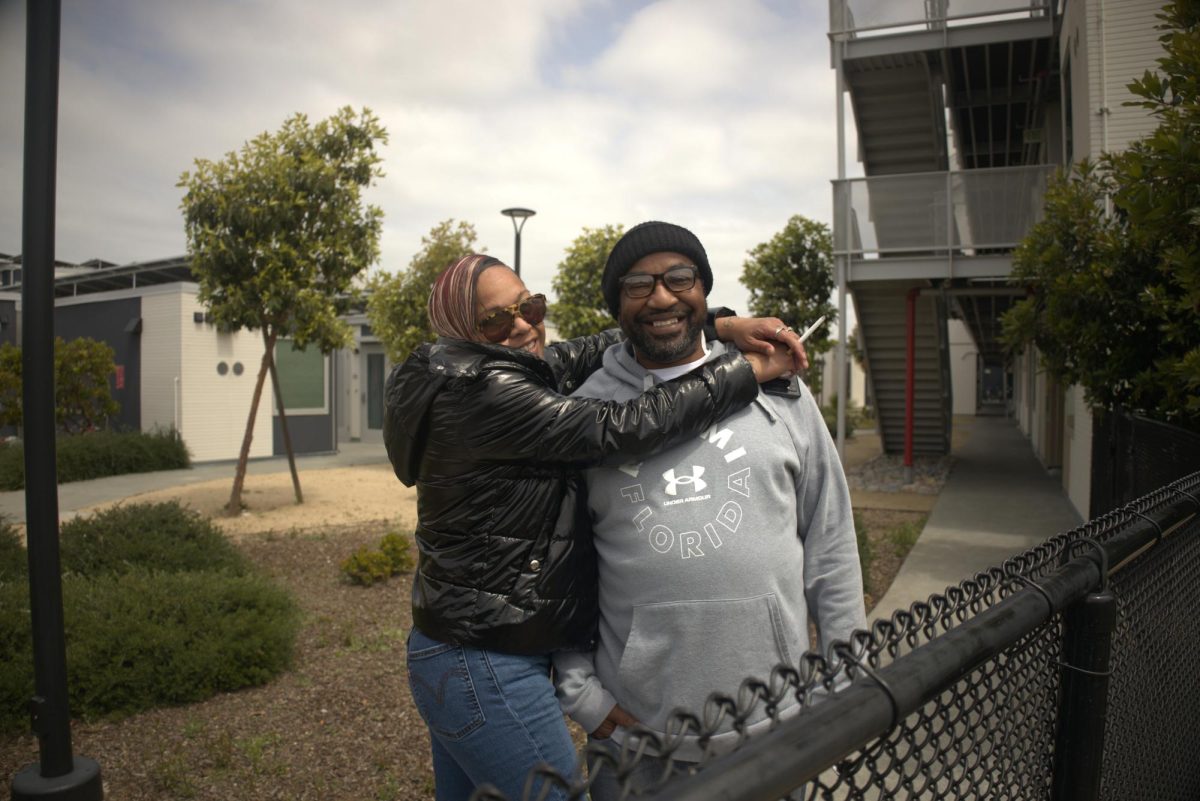
Growing up Black in Elk Grove, California, Hill felt confined to certain expectations and standards. Moving to the Bay Area provided a space for him to explore identity and resistance through fashion. Today, Hill’s style is shaped not just by his culture but also how he arrived to where he is now.
Derek Guy, a men’s fashion journalist and critic, said there’s an increasing disconnect from how people dress and their beliefs, explaining that those choices of expression are not always obvious.
“As soon as the celebrity wears something, it becomes a trend. I don’t think it can even be considered rebellious anymore,” said Guy.
Solomons’ personal style leans more punk-forward — a subculture formed through music, fashion and resistance — aligning with Solomons’ social and moral beliefs. Solomons highlights that certain trends often become associated with particular political groups, allowing people’s beliefs to be reflected in, and represented by, what they wear.
“I think that that’s also a way that people are attracted to each other and people can find community through that at times,” said Solomons, who believes it all starts with a person’s values and morals.
“The Boogaloo boy adopted the Aloha shirt, kind of in the way that skinheads, for a time, wore Fred Perry polos,” said Guy, pointing out a similarity between far-right subcultures co-opting garments not intended for the use of political dressing Often associated with far-right subcultures, the Fred Perry polo had been popularized by the skinheads, which initially was an anti-establishment group in the late 1950s. By the 1970s, however, skinheads dissevered into subsets which brandished fascism and racism. “Boogaloo boys” refers to followers of an organized far-right, anti-government extremist Boogaloo movement in the U.S. that emerged in the 2010s.
“Corporate class has co-opted every single inch of rebellious aesthetic,” said Guy.
Ulasewicz said tariffs are a political influence changing consumer’s attitudes towards clothing consumption shown through practices such as upcycling.
“Think before you buy. Look at what you have. Trade with someone — start something that way so that you can reuse what you have,” said Ulasewicz.
Data from the U.S. International Trade Commission and the U.S. Department of Commerce’s June 2025 Trade Data Release shows that the majority of clothing sold in the U.S. is imported and, based on data from the Bureau of Labor Statistics, this trend is increasing as employment for U.S.-based apparel manufacturers decline.
Ulasewicz hopes practices like reuse and repair, for example, aren’t just the latest fad but have a lasting impact on clothing choices, which continue to mirror political and social values.