The first time I realized how fragile my future in the U.S. was, I was filling out a job application. After four years of studying and building a life in San Francisco, I was reduced to a single checkbox: “Will you now or in the future require visa sponsorship?”
One click on “Yes” and the opportunities disappeared in front of my eyes. For thousands of international students attending American universities, this is not an exception. It is the system working as it was designed to.
The U.S. welcomes us when we pay the exorbitant tuition fees, but hesitates when we try to gain work experience — an essential resume line for anyone hoping to get a job. In doing so, the U.S. undermines not just our futures, but its own. Students with a non-STEM degree are allowed to work for one year while those with a STEM degree are allowed to work for three years. Why is the system built to make it impossible to use the benefits that come with the degree?
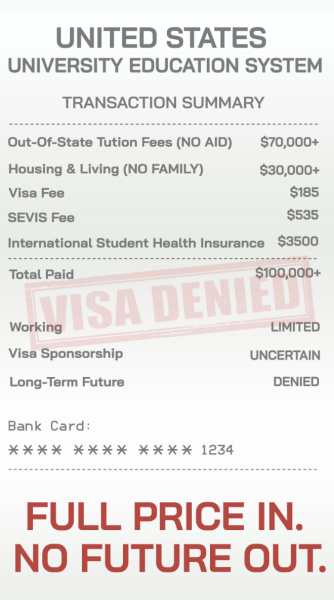
International students are not a marginal part of the American education system; they are central to it. We pay significantly higher tuition than domestic students, often with no access to financial support. While an in-state college student typically pays $11,950 a year in tuition at a public university, an international student often pays $31,880 or more — sometimes two to three times as much for the same education, according to 2026 data from the College Board.
In many universities, especially public institutions, that revenue helps subsidize programs, facilities and even domestic tuition costs. A 2025 Public Policy Institute of California research article by Valerie Lundy-Wagner shows that the higher tuition paid by international students can help offset costs for in-state students at public universities.
Beyond tuition, international students contribute millions, if not billions, of dollars to the U.S. economy through housing, food, transportation and everyday spending. Despite this, we are rarely treated as long-term contributors to the U.S. economy. We are framed as temporary visitors and at times are subject to heightened scrutiny by the federal government, even though the system relies heavily on our presence.
With declining domestic enrollment, universities increasingly rely on international students to stabilize their finances. Without that support of international students, institutions risk cutting programs that feed essential industries with highly trained professionals, weakening the very workforce pipeline the country depends on.
Yet, as the U.S. depends on this talent, the system makes it difficult for international graduates to stay after completing their education. The F-1 visa system allows limited work opportunities through programs like Optional Practical Training after graduation or Curricular Practical Training during school.
Despite these pathways, many U.S. companies remain reluctant to hire international graduates because of the uncertain and temporary nature of their visa status. Securing long-term employment often depends on employer sponsorship, which companies may avoid due to its cost and legal process.
The result is a bottleneck when qualified, educated graduates who are trained in American institutions are pushed out of the workforce. This is not just inefficient, it is strategically shortsighted. At a time when industries like healthcare and engineering face employment shortages, the U.S. is effectively exporting the very talent it has spent years developing.
The U.S. continues to position itself as a global leader in innovation. Yet, that leadership depends on a steady pipeline of skilled workers, many of whom are international students receiving their degrees in America. Restricting their ability to contribute to the U.S. economy is not just contradictory but also weakens the very advantage the country is trying to maintain.
Supporters of the current system often argue that immigration policies must prioritize American citizens, especially in a competitive job market. That concern is understandable, but it assumes that international students are simply competing for existing opportunities, rather than contributing to economic growth.
In reality, many international graduates enter high-skill sectors, start businesses, contribute to research, and drive innovation. Their presence expands industries rather than shrinking them. Moreover, forcing these students to leave does not eliminate competition; it relocates it. When international graduates take their skills to other countries, they strengthen those economies. In this sense, restrictive policies do not protect American workers — they diminish the country’s global position.
The U.S. has long positioned itself as a destination for opportunity. International students believe in that promise, which is why we come here. We invest in our education and build our lives around it. But a system that benefits from our presence while limiting our future sends a different message: We are only valuable as long as we are temporary. If the U.S. continues to treat international students as short-term revenue rather than long-term assets, it risks losing international talent altogether.
The question is no longer whether international students contribute, we already do, but whether the U.S. is willing to recognize that contribution and act on it.
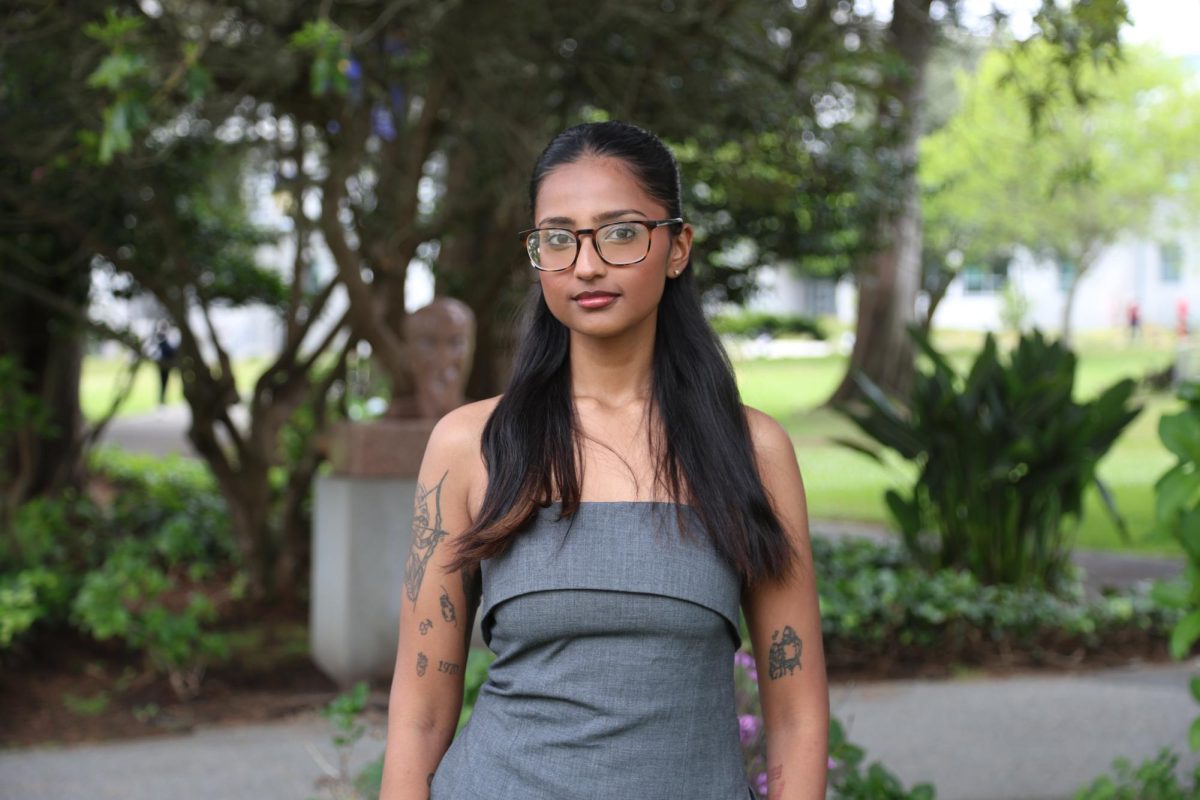
Short Bio of author: Tamanna Shirol is an international student at SF State, and is studying industrial design with a minor in marketing and visual communication design.