

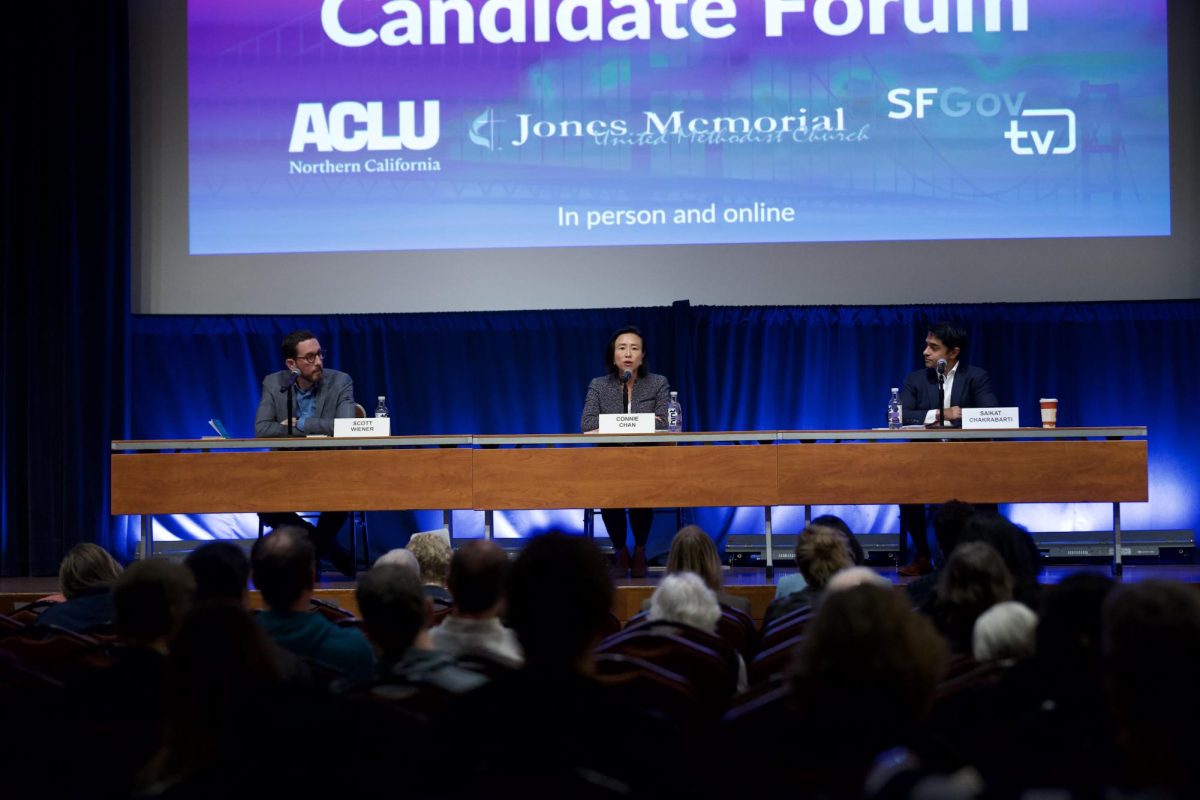
In June, San Francisco residents will vote in a top-two primary election for the 11th Congressional District to decide which two candidates will be on November’s general election ballot to replace former speaker of the house and current representative for the 11th District, Nancy Pelosi.
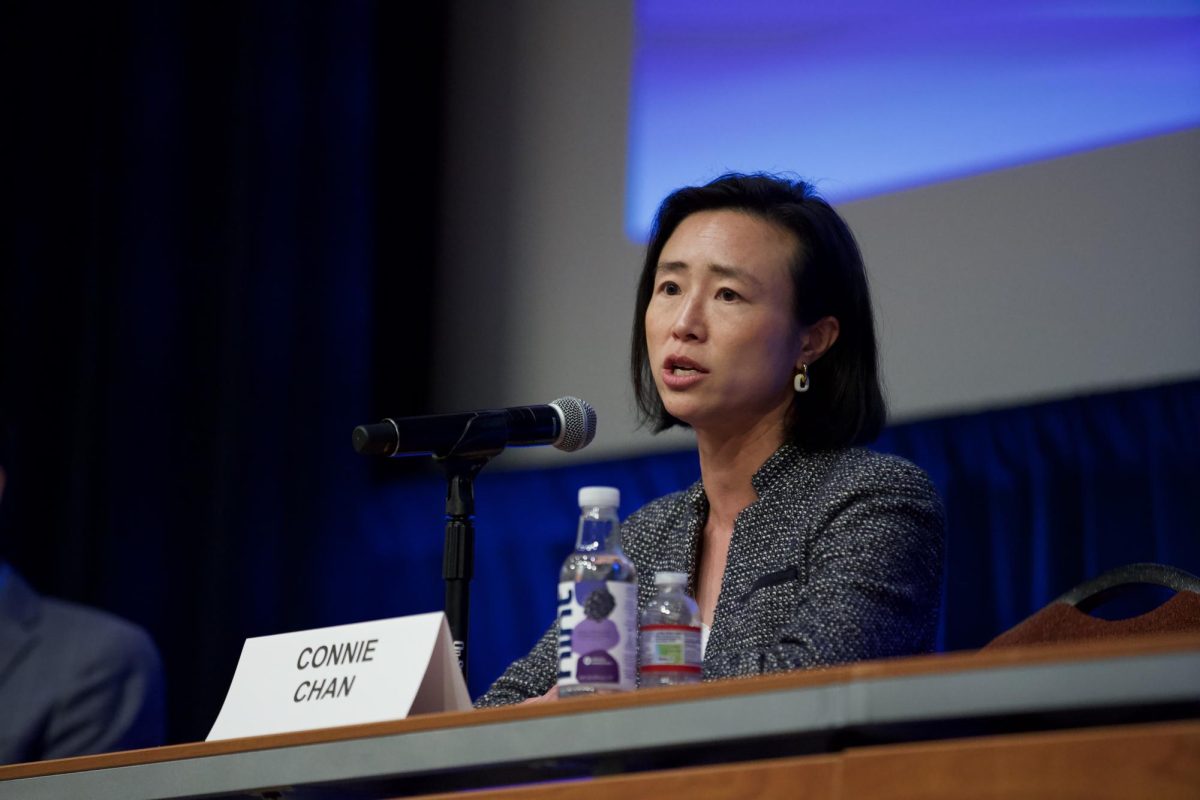
After Pelosi announced she would not be seeking reelection after 38 years in office, this election is one of the most competitive for the seat in decades. Among the top three candidates is District 1 Supervisor Connie Chan; Saikat Chakrabarti, former software engineer and campaign manager for Rep. Alexandria Ocasio-Cortez; and California State Sen. Scott Wiener.
Xpress sat down with Chan and Chakrabarti to discuss the issues affecting San Francisco residents and students, including: a rising cost of living, potential cuts to BART and Muni, divestment in public education, anxiety amid an uncertain job market and the role of AI. After multiple requests for an interview with Wiener, Xpress did not receive a response.
The following conversation has been edited and condensed for clarity.
Making San Francisco More Affordable

Chakrabarti: I believe we should move towards a fully national healthcare system, similar to what they have in the Nordic countries or in the U.K. with the National Health Service. It means universal childcare. It means tuition-free public colleges and trade schools and community colleges all across the country. … It also means moving to public power, so getting rid of PG&E. It means building affordable housing by having public financing and social housing in the mix. … And then we have to actually move to a fully publicly financed election system.

Chan: Medicare for All is absolutely something that we will be working on day one. … San Francisco’s housing is expensive because it’s part of the overall affordability crisis that I see not just in San Francisco but also throughout California, the regressive taxation that corporate politicians have imposed on everyday people instead of continuing to pursue a progressive taxation to fund our transit, to fund housing, to fund healthcare, to fund education. … We should also continue to push for better wages. I’ve been pushing for all the affordable housing bonds on a local level so that we can have the money to build the housing. I’m absolutely supportive of the regional housing bond as well as the state housing bond so that we can build more housing that people can afford.
Reshaping the U.S foreign Policy Toward Israel
 Chakrabarti: The first step is no more military funding to Israel — at all. I would vote to stop all military funding to Israel, but I’d also organize a caucus of us who are going to hold the line on major bills to make sure we don’t keep sending money there.
Chan: The U.S. should always be an agent for peace and prioritizing our resources to provide humanitarian aid, not just in Gaza, but everywhere around the world. It’s the reason why I would absolutely push back and reverse the cuts for the U.S. Agency for International Development. That should really be the U.S. government’s priority. And right now, specifically for the Israeli government, we ought to hold Israeli government accountable and for them to comply [with] the terms and conditions of the ceasefire, allowing the U.S. to prioritize humanitarian aid from here to Gaza.
Protecting Public Transportation
Chakrabarti: My plan calls for allowing us to use just a small fraction of highway expansion money to fully fund not just BART and Muni, but public transit all across the country. I also want to make sure we use that money not just for capital expenses, which is what’s legal right now, but for operating expenses as well.
Chan: We must fund public transit like we … advocate and invest in public education and public libraries. … I fundamentally believe in progressive taxation and that we should make billionaires and billionaires’ corporations pay their fair share.
Funding Higher Education
Chakrabarti: I think the federal government should directly fund CSU, and all public colleges and trade schools and community colleges. This would be somewhere between $60 and $80 billion a year. That is an amount that is often less than the amount that we increase the military budget by. So, we absolutely have the money to do it.
Chan: I do think that this is both a state and federal investment and responsibility. … We need to invest more in our education, and that is definitely for the state university. That is absolutely a question for our future governor and for our state legislature: that they ought to reprioritize our budget to invest in education.















Neal Wong • May 15, 2026 at 11:54 am
Did you call Scott Wiener’s office instead of just emailing? In my experience, they respond to calls.
Benjamin Rubin • May 15, 2026 at 9:06 pm
I met him in person. Still never got back to me about setting up an interview.