Inside Rikki’s in San Francisco’s Castro District, every screen is tuned to a game — but not the ones you might traditionally expect. Whether it’s women’s college basketball during March Madness or a National Women’s Soccer League (NWSL) match, each TV is dedicated to women’s sports.
Not long ago, a space like this didn’t exist.
Sara Yergovich and Danielle Thoe, co-owners of Rikki’s who met playing soccer, couldn’t find a place in the city that would regularly screen NWSL games.
“We were struggling to find a regular place in the city that would have them on,” said Yergovich.
What started as a solution to a problem the two were having — finding somewhere to watch women’s sports — has become something bigger: a reflection of a broader shift taking place across the Bay Area.
By January 2027, the Bay will be home to three major professional women’s teams marking an expansion of women’s professional sports: Bay Football Club, the Golden State Valkyries and a new League One Volleyball (LOVB) franchise.
The momentum behind women’s sports isn’t new. The Bay has seen it before, but this time, it feels sustainable.
Starts and Stops
Before Bay FC, the Bay’s team in the NWSL, set the attendance record for any match, with a sellout crowd of 40,091, at Oracle Park in August 2025, women’s professional sports in the Bay had bursts of momentum followed by a collapse.
The U.S. won the 1999 Women’s World Cup when Bay Area native Brandi Chastain stepped up and scored the decisive penalty kick — a moment that became a defining image in women’s sports, helping bring the game into the mainstream.
For Marlene Bjornsrud, former assistant athletic director at Santa Clara University and co-founder of the Bay Area Women’s Sports Initiative, that moment launched a different level of awareness and attention to women in sports.
“I always think sometimes in history, especially in sport, it’s a particular moment, a particular game, a particular person,” Bjornsrud said. “That just happened to be Brandi.”
Post-World Cup, both Bjornsrud and Chastain were working at Santa Clara University. Bjornsrud remembered Chastain running into her office with an idea: They were going to create a league of their own and wanted to know what role Bjornsrud would have in it.
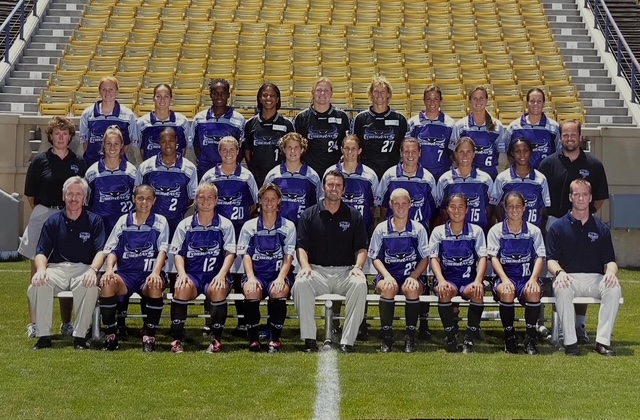
The Women’s United Soccer Association (WUSA) was founded in 2000 with an initial eight teams.
With no desire to leave the Bay, Bjornsrud agreed to take on a general manager role for the Bay’s team in the WUSA, the CyberRays. The team made history, clinching the first WUSA title.
While men’s leagues grew over decades, the WUSA was trying to establish itself almost overnight.
“We were asked to turn water into wine. We were given so little,” Bjornsrud said. “We didn’t have money to throw at marketing and promotions. What we did have was human beings.”
Women’s leagues weren’t just battling financial challenges to stay afloat; they were also operating in a culture that often failed to take women’s sports seriously. When attention finally turned to women’s sports, it was met with both excitement and backlash, Bjornsrud recalled.
Less than a month after winning a championship, external forces began to unravel the league.
Disaster struck the U.S. when the Twin Towers were attacked in 2001. The CyberRays were in talks with the Bush administration about a White House visit — a standard practice for champions. But in an instant, that went away.
At the time, the league was backed by large media corporations such as Time Warner, Comcast, AT&T and Discovery. Following 9/11, those companies pulled back from sports ownership, leading to the collapse of the WUSA in September 2003.
Six years later, the Bay’s team, in the Women’s Professional Soccer league (WPS), met a similar fate. After winning the 2010 WPS championship in September, the FC Gold Pride team folded in November due to financial constraints.
“In order to continue to get brand sponsors and partners and drive revenue, ticket sales matter,” said Leslie Osborne, former FC Gold Pride player and current co-founder of Bay FC.
This pattern wasn’t limited to soccer. Professional women’s basketball also has a start-and-stop history in the Bay. In 1979, the San Francisco Pioneers joined the Women’s Professional Basketball League and played for two seasons before folding in 1981.
Later, in 1996, Golden State Warriors and Valkyries principal owner Joe Lacob made an equity investment in the American Basketball League (ABL). In 1997, he purchased operating rights to the San Jose Lasers before the team’s second season.
But in the middle of the 1998-99 season, the ABL folded — the same year the Women’s National Basketball Association (WNBA) began to play. The two leagues competed that season, but ultimately the WNBA, backed by the National Basketball Association, survived while the ABL did not.
“It [ABL] couldn’t get the same amount of sponsorships and it struggled to get the media deals, the broadcast deals that the WNBA was getting,” said Maya Goldberg-Safir, who writes “Rough Notes,” a women’s basketball-focused Substack.
The Sacramento Monarchs were one of the eight original WNBA teams and won a WNBA championship in 2005 but folded in late 2009. According to ESPN, the Maloof family, which owned both the Monarchs and the Sacramento Kings, expressed desire to focus all their energy and effort on the Kings over the Monarchs.
After several teams came and went, the Bay went years without a professional women’s team. But when Los Angeles tried again with soccer, the Bay followed.
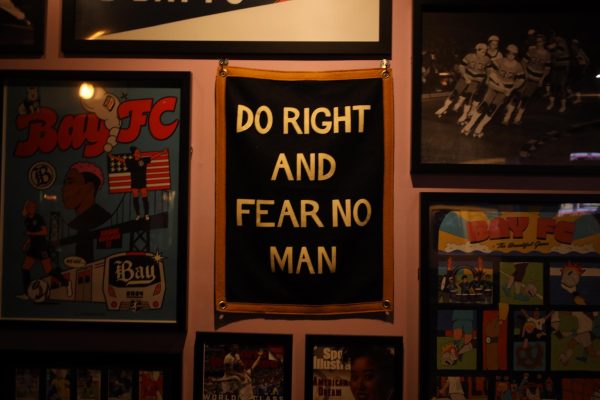
Everyone Watches Women’s Sports
In July 2020, Angel City FC, Los Angeles’ NWSL team, announced its return — prompting Bay FC co-founders to ask a simple question: “If LA is doing this, why aren’t we?”
Osborne wrote to their group chat: “LA had folded twice before as well. They’ve had two teams,” she said. “If they’re going for a third time, we got to do it too.”
Three years later, Bay FC was founded by Osborne alongside Chastain, Danielle Slaton and Aly Wagner, but not without skepticism.
“Of course, there were people that laughed and shook their heads at us and said, ‘You’re really going to go do this again?’” Osborne said. “But we believed in our mission and our values and we believe that if we did it right, we could have something magnificent here.”
As a former FC Gold Pride player, Osborne knew they needed a sustainable business model — and the right investors. However, investments were historically hard to come by. Women’s sports often lacked the visibility and cultural backing that attracted major sponsors and ownership groups.
For David Berri, professor of economics at Southern Utah University who has spent more than 25 years researching sports and economics, that perception was part of the problem.
In his book, “Slaying the Trolls! Why the Trolls are Very, Very Wrong about Women and Sports,” he challenges the idea that women’s sports lacked an audience, arguing instead that limited media coverage and investment masked their true potential.
In 2023, the investment group, Sixth Street Partners, made the largest initial investment ever in a global women’s professional sports franchise at Bay FC with $125 million — , including $53 million of which will pay the league’s expansion fee and funding a $40 million of which is funding a training facility at Treasure Island for the team. Bay FC is sponsored by Sutter Health, PNC Bank and Trader Joe’s.
On March 21, Bay FC honored the San Jose CyberRays, — the first domestic women’s professional championship team, — during halftime of the club’s Women’s Empowerment Match.
Bjornsrud remembers the first time she met with the CyberRays team: She bought each player a small, gold wagon wheel charm, acknowledging that they were doing something that had never been done before.
“Seventeen out of 23 players that came back for the ceremony, and almost all of them wore their wagon wheel,” Bjornsrud said. “That meant more than winning the championship.”
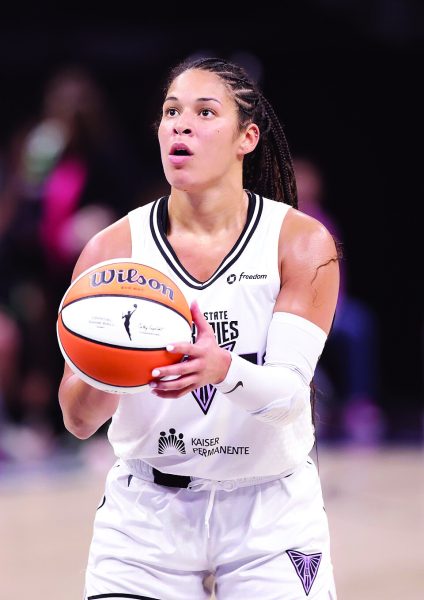
Demand isn’t limited to soccer. In the WNBA, the Golden State Valkyries have found instant success — both on and off the court. Last season, the Valkyries became the first WNBA expansion team ever to make the playoffs in its inaugural season.
Kevin Danna, the team’s radio play-by-play announcer, points to an article where league sources indicated that the Valkyries were averaging $200,000 in merchandise sales per home game.
“Everyone’s in Valkyrie gear. I haven’t seen a crowd at a professional game that’s like that,” Danna said. “Teams will do a whiteout or blueout for the playoffs or something. Outside of that, I haven’t seen a team so uniformly have their fans in their team’s gear.”
In a November 2025 article from The Athletic, the Bay Area was ranked first as the best women’s sports city in the country.
Jes Wolfe, CEO of Rebel Girls Volleyball and chairwoman for the new LOVB SF team, attributes this to the large, diverse and educated population of sports lovers in the Bay Area.
“The market is hungry for women’s sports,” Wolfe said.
For years, however, that demand wasn’t always taken seriously. As Goldberg-Safir explained, women’s basketball historically lacked the cultural recognition and relevance afforded to men’s leagues. As a result, women’s leagues were often expected to prove their viability in ways men’s leagues never had to.
Even so, demand alone doesn’t always equal success. Berri said the growth of women’s sports isn’t sudden — it was inevitable.
“The WNBA is in its fourth decade, almost there. And that’s right about when men’s leagues take off. And so we’re seeing them take off right now,” Berri said.
In the Bay Area, the growth of women’s sports is no longer theoretical — it’s already happening.
Leveling Up
On any given night at Rikki’s, the excitement is visible. For Valkyries games, Yergovich said the bar’s watch parties reach its 161-person capacity. She remembers the day of the Valkyries’ first home game, expecting the bar to be empty because everyone was going to be at the game.
“I was really surprised on that day to see that people would come here before the game. Then there was a whole different group of people who would come here to watch the game because they couldn’t get tickets, and there was another group who’d come here after the game to celebrate,” Yergovich said. “It’s a really exciting time for women’s sports in the Bay Area.”
That excitement extends beyond the Valkyries. Bay FC is in its third season and has already made the NWSL playoffs in their inaugural season. The Bay Area’s newest professional women’s volleyball team, set to debut in January 2027 in the LOVB, has yet to announce its name but is holding a “Name the Team” campaign for fans to submit and vote on ideas.
“I think one of the important things for volleyball, and why we’re all so excited about it, is we are going to attract multiple audiences. The volleyball season really rounds out the women’s sports seasons,” Wolfe said. “We’re going to be the only women’s sports team playing for winter. So we’re going to be able to give not just volleyball fans, but women’s sports fans a really cool thing to go to in the winter season.”
In addition to those three sports, the growth of women’s sports is expanding across the Bay. Sports like women’s rugby and professional baseball are also taking root.
For Harry Edwards, human and civil rights icon and American sociologist, this moment is bigger than sports.
“It’s important that women be involved in sports across the board because they’re so critical to the institutional functioning of society,” Edwards said. “I think it’s good that the Bay Area has long been open to elevating and supporting women in sports.”
The Bay Area has seen women’s professional teams rise and fall before. Now, they’re built to last.