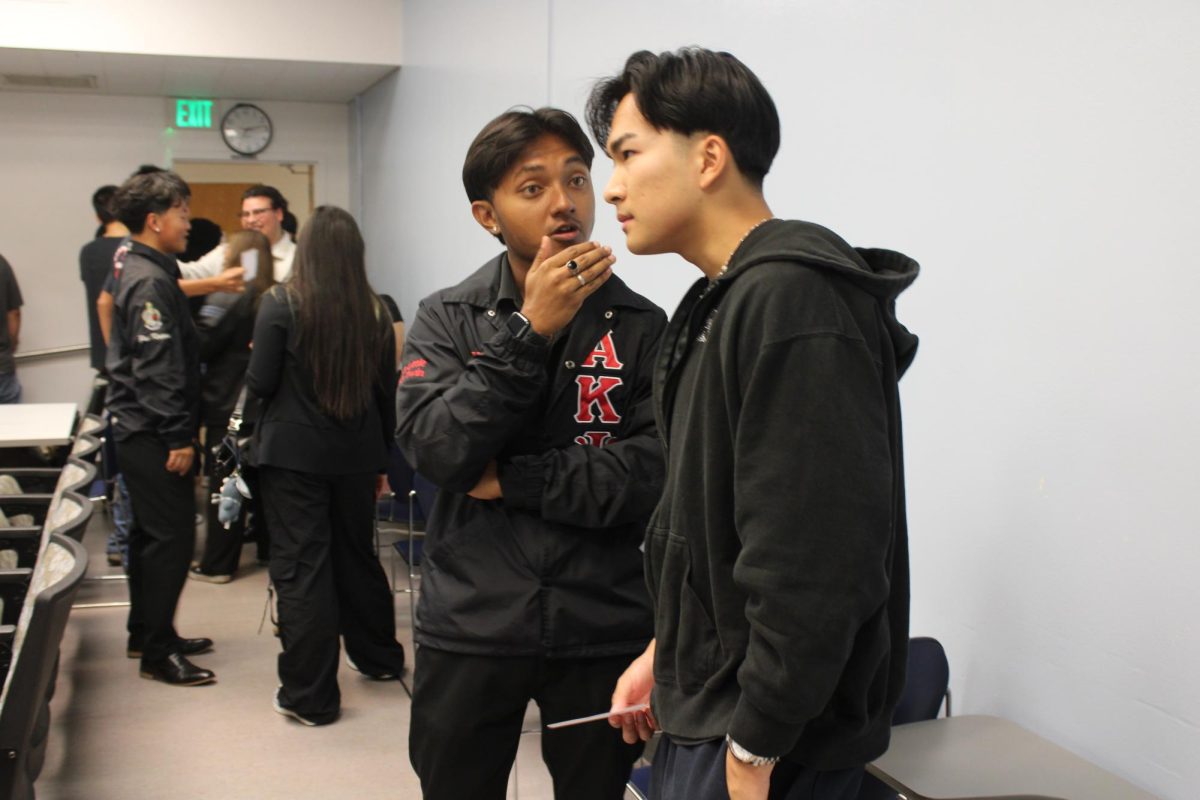
It’s senior year, and the anxiety of a post-graduation job search looms over students’ heads. The pressure in competing for internships is ever present and is only exacerbated with the emergence of AI and a slower job market. Knowing the right people, having a virtual profile dedicated to your career and achievements — that’s what will help you get farther than your competitors.
Helping each other grow, in terms of skills and confidence, is something Greg Walsh, president of SF State’s Alpha Kappa Psi chapter, prioritizes for his members. “Our goal is to kind of create a community of people that are looking to get jobs and be successful in the future,” said Walsh.
Organizations such as these aim to advocate for student’s professional futures. They provide LinkedIn workshops to help polish profiles and provide networking opportunities, both online and in person. Professional workplaces are looking for students whose skills are already adapted to ones ready for their careers. There are many organizations that aren’t considered Greek life whose goals are to help the students joining them in their given field. Due to many workplaces’ implementation of AI, it’s become uncertain whose careers are secure. With the help of these organizations, students’ skills become more adaptable to what the job market is looking for.
The vice president of AKPsi, Jasmine Lane-Garcia, reminisces about how she was drawn to the organization when she first transferred to SF State.
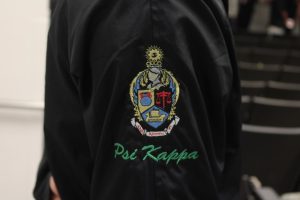
“This one caught my attention because it was like Greek life, but I had no idea what Greek life was,” said Lane-Garcia. “This one I really liked that it had the professional side because I always am trying to improve my public speaking because it is something that I really, really struggle with.”
SF State’s head of the Labor and Employment Studies program, John Logan, said that nowadays there’s no need to hire large teams of people when AI can do all the work. “We talk about integrating AI into what we teach, but we often don’t talk about, well, what does this mean for our students’ job prospects after they graduate?” said Logan.
A 2025 study published by Stanford University’s Digital Economy Lab examined changes in the labor market regarding jobs adoption to generative AI: Compared to other groups, younger workers, 22 to 25 year-olds have “experienced a 13% decline in employment,” specifically in the most AI-exposed careers.
“At the moment, where it’s having the biggest impact, is at sort of entry level, white-collar jobs that college graduates would normally be applying for,” said Logan.
President Lynn Mahoney, understands the uncertainty of such changes. She emphasized the difference in working spaces, in both a school and professional setting, has drastically changed compared to when she was in college. Her time in the library looked like long periods of quiet reading and writing papers, and to illustrate her support for AI at SF State, she points out how studying in the library now involves more screens than before. In other words, she wants college learning to be different for her students and pushes for adapting to AI. “If a major looks just like I did when I was in college … we have a problem,” said Mahoney.
Paulina Marmolejo-Brown and Sierra Beaver, who are both students taking dance, have joined the Student Dance Union: a student-led organization that provides additional learning experiences after budget cuts from the Associated Students left the department feeling inadequate.
“I feel like I don’t have the tools that I need to enter the dance world, and it’s hard, because it’s already hard to pursue the arts,” said Beaver. Marmolejo-Brown explains that the Dance Union comprises of “dancers who have been cut from recent classes who have decided to come together and create a space where we can include classes and teach them for ourselves.” Once the Dance Union is officially declared a club through the university, they are provided with a semester budget which they use on classes, attaining equipment and creating events.
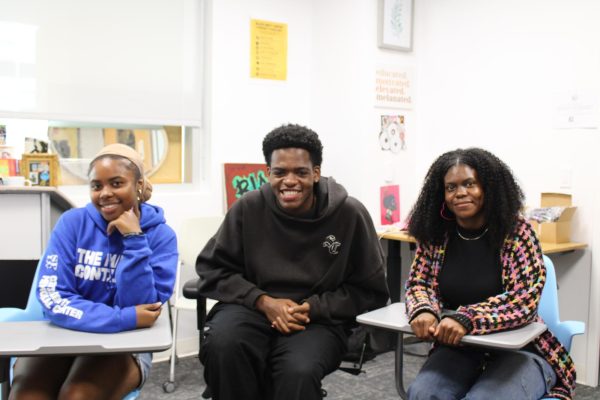
Many of the student-run organizations collaborate with university-run programs on campus to reach larger audiences. Dalyce Brown — outreach, recruitment and retention specialist at the Black Unity Center — is passionate about helping students and providing them with a better outlook on life. “I use a lot of the student orgs — my relationships with them — to outreach to other students,” she said.
While the clubs and organizations on campus provide students with the career-driven skillsets they need, The Equity and Community Inclusion Center provides students of color more specific resources. Not only do they provide educational advice, but emotional support as well. “Black students need support, Latinx students need support, undocumented students need support, Jewish student life, Muslim student life” said Brown.
Some students may believe that, in regards to their major, career development resources won’t provide anything additional to what they already know and can teach themselves. “I feel like it’s not something I’m super interested in … I also feel like I can do, like, the research better on my own” said Jia Heer, a third-year kinesiology major. She shares that although these services are available, in her field, education is more of the deciding anchor. “I do feel like there’s more job security in healthcare, but I also never know what’s gonna happen.” While it may not be ideal for every student, these clubs and organizations on campus ultimately provide their services and skills to students who want and need them.
“I always look at my own daughter, who has a UC degree, but she got her job because of the skills she learned in her sorority,” said Mahoney. These organizations want students to expand their use of new tools that workplaces are starting to use, such as AI, despite the contentious implications behind it. “We have to kind of critically embrace it [AI] and figure out what to do with it, and I think who better to do that than San Francisco State.”
In their 2024 Student Voice survey, Inside Higher Ed conducted a study which looked at around 5,025 college students, specifically two- and four-year students, to examine current patterns in post-graduation career choices. The chart showcases the different paths students have taken after they graduated. Some of the less popular responses are joining and participating in organizations, at 48%, and taking additional courses, at 36% . (Graphic made with Flourish)