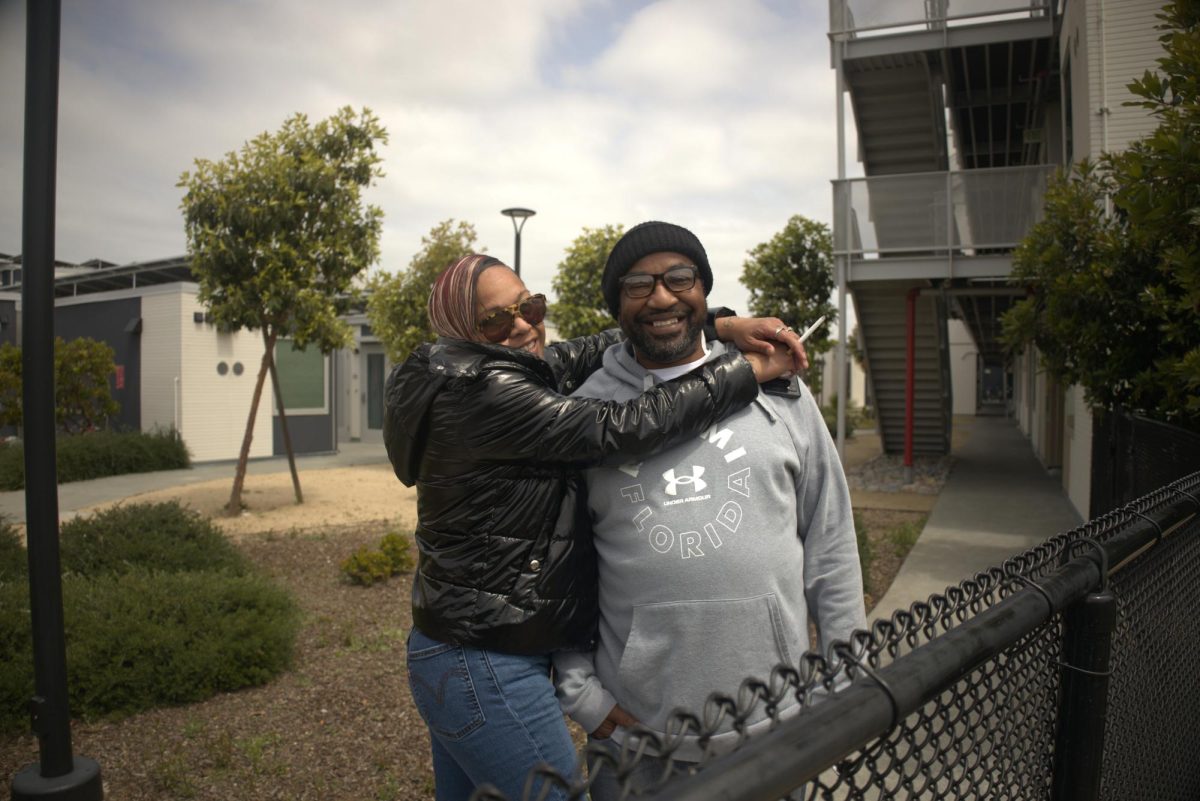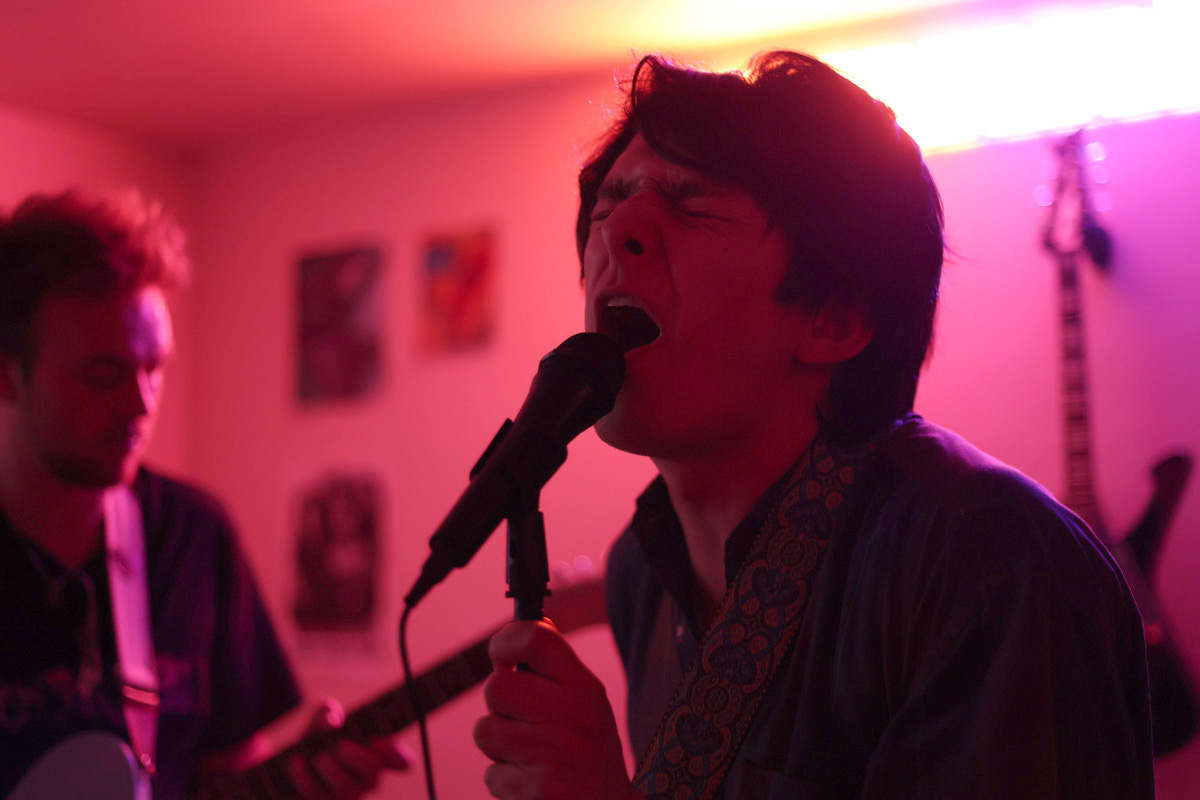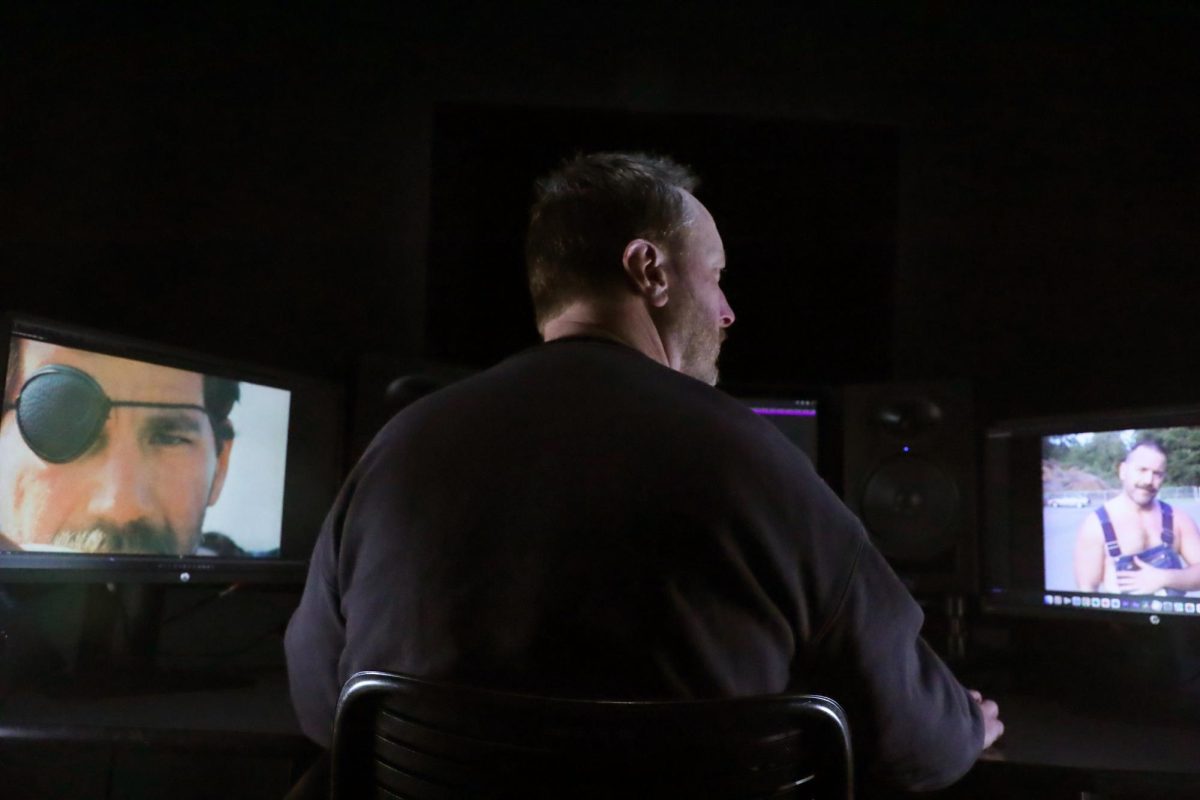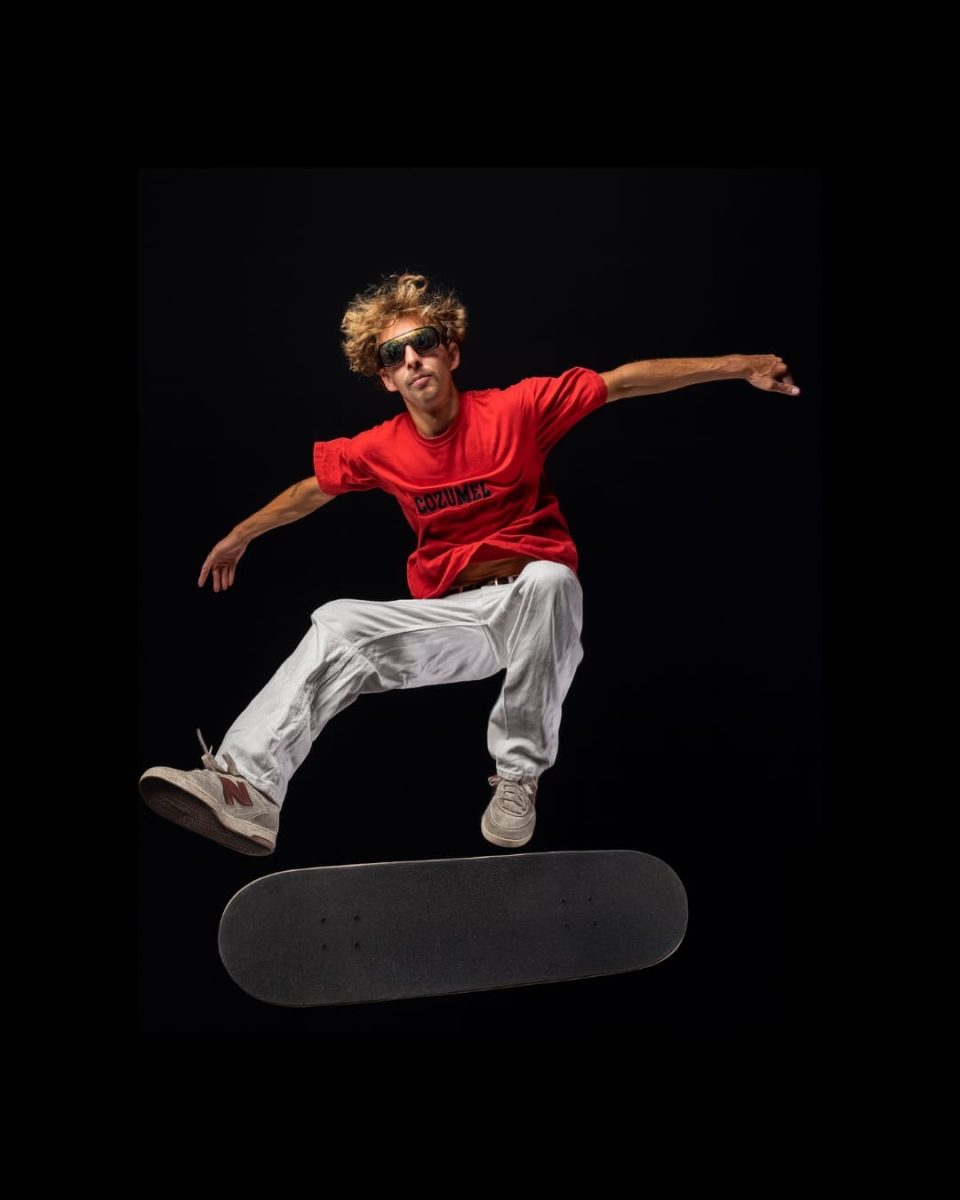
Wearing thick polarized sunglasses and a “guess who has a boner” shirt, Jimmy Sundays stood in his room as America’s next success story, building generational wealth and having fun doing it.
“I would describe my career as the best fricken thing ever: I literally just get to rizz up huzz [slang for women] on the daily trying to find my wife, while people watch me and make hella bread,” Sundays said. “How can I complain?”
His content typically consists of him approaching girls on the street before proposing a deal: If he lands a flip on his skateboard, the girl has to go on a date with him. Each of his reels gets hundreds of thousands of views with his most watched reel reaching over 18 million.
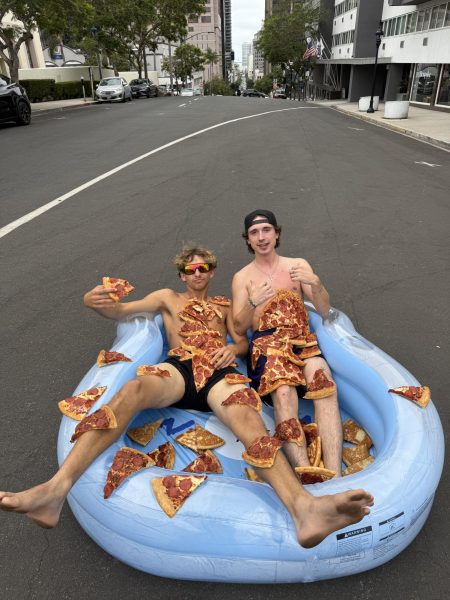
Social media monetization has made it possible for people to change their lives with something that fits in their pocket. With over 135,000 followers, Sundays is among countless social media influencers who have turned online clout into fully fledged careers, converting clicks and attention into successful businesses.
The psychological impact that comes with being an influencer is actively being studied, but findings remain inconclusive. The influencers interviewed by Xpress reported negative effects signalling there’s a catch to the dream.
The New Frontier
Not too long ago, the average kid dreamed of being an astronaut, an actor, a rockstar. Today, a new dream is king: social media influencer. According to a Media Watch study, which surveyed 599 Canadian women and 170 Canadian men ages 16 to 30, 75% of young adults reported that they wanted to be an influencer. The reasons why? Fame, money and, while being far from a perfect profession, the enjoyable nature of the work.
Social media influencers aren’t limited to skateboarding and “rizzing up” — slang for charming somebody. Amanda Beeler, a longtime golfer turned coach, produces short golf tutorials on Instagram as a way to advertise her business.
Beeler said producing content provides passive income and gives access to otherwise out-of-reach clients. The virtual aspect of her business also allows her the freedom to travel and be with her family across the country.
“I know [I’ve become] a better coach because I am putting these videos out online,” said Beeler, who has reached 22,000 followers since she began creating content last year. “I did not see that coming, but it is definitely true.”
A Life-changing Medium
At one point, Sam Norris was homeless and sleeping on people’s floors, before getting to 167,000 followers and sustaining himself through modeling, styling and producing music videos for artists like Trippie Redd.
“There was always doubt, but it was always kind of like a guiding light for me.” Norris said, discussing social media’s role in his life. “It’s everything I ever wanted.”

In certain worlds like Los Angeles’ entertainment industry, an online presence can be what makes the difference in getting a call-back from an employer.
“If it’s any sort of digital company, you’re essentially going to get beat out by somebody with like 10k on Instagram,” said Gogo Zoger, a podcast producer whose led projects like “Talk Tuah” — hosted by Haliey Welch whose “Hawk Tuah, spit on that thang” video clip was unavoidably viral in 2023.
“They can have no qualifications, but it is what it is,” said Zoger.
Dream or Nightmare?
Social media’s flashy lifestyle has attracted people to aspire to be the next big thing. Norris warns however, that entering the field simply for money or fame is a dangerous trap.
“The burnout is harsh.” Norris said, emphasizing the importance of authentic passion. “I see so many people just come and go because they don’t like what they’re doing.”
Norris said being an influencer is a blessing. But he acknowledges it can be a bit stressful.
The online world moves on quickly, with 15 minutes of fame feeling more like 15 seconds. Keeping up with the pace results in stress and anxieties of “falling off” — slang for losing popularity. Influencers end up pigeonholing themselves as a means to preserve their viewership.
“I totally do think I’m in a box, as almost every creator is,” Sundays said. “In order to get followers you have to have the same style of content as the stuff that blows up … and if you don’t have that same similar stuff, they’re not going to want to follow you.”
Sundays mentioned he gets anxious whenever a video underperforms. When a reel doesn’t get good engagement, Sundays turns to “X factors” — “hot girls” being one of his examples.
Sundays said becoming an influencer has somewhat “cured” his social anxiety, but he says it has also introduced a new thirst for attention.
“You just are always stressed with keeping up. You don’t want to plateau,” said Sundays.
Zoger echoes this sentiment, adding that reaching the peak of popularity doesn’t ease the mind either. Instead, it introduces a fear of losing it all.
“[Being at the top is] actually the least comfortable spot to be because it means you have the highest cliff to fall off of.” Zoger said.
Imani Rodney, who works in the tech industry, had been enamored with social media since the early 2000s. She’s always kept up with her favorite content creators for over 10 years and had thought about becoming one herself.
Rodney finally took a crack at content creation last year as a way to fund her homeschooling nonprofit. She had fun but, by the end of 2025, she quit. The workload overburdened Rodney and she disliked the insincere feeling that came with recording everything.
She was also concerned over people forming parasocial attachments with her children. Despite having less than 1,000 followers, Rodney recalled a user who exhibited stalker-like behavior, tracking her activity through multiple apps and asking her where she lives.
“Yeah, you may be getting money. It’s cool to have partnerships; it feels really good for people to like you and all that — there’s no denying that,” Rodney said. “But you have to think about how that can impact the quality of [a child’s] life, and for me, it just wasn’t worth it.”

Living Happy
Sundays says he receives thousands of hate comments, including comments criticizing him for promoting toxic masculinity or making the girls he approaches uncomfortable.
“My most viewed video is like 4,000 comments and almost all of them are hating on me, but you just got to find entertainment on it,” Sundays said. “Keep the hate coming; it fuels me. I think it’s hilarious,” he said.
When asked about the long term, Sundays said his style of content would definitely change, but he’s unsure how his life will pan out five years from now. Sundays embraces the uncertainty.
“That’s really what social media is all about, it’s just one day on to the next.” Sundays said.
Zoger believes the younger generation’s allure to social media comes from not only its fast lifestyle, but from the doors it opens toward a successful career that would otherwise be closed in a traditional route, especially as hiring markets dry up for recent college graduates.
“You might as well try to find a path to happiness rather than what other people think you should do,” Norris said. “Be everything that you want to be.”