In the late 19th century the depiction of a white man on a horse bearing a rope dressed in chaps and spurs was commonly seen within Hollywood, artwork, and early advertisements but that is historically inaccurate. Mexican cowboys, known as vaqueros, who are documented since the early 1500’s, along with Native Americans who, after their introduction to Spanish cattle and horses in North America. Tribes like the Apache, Navajo, and Ute were also documented in mid to late 1500’s. In the late 1800’s to 1900’s one in four cowboys were Black formerly enslaved men due to the lack of job opportunities post Civil War.
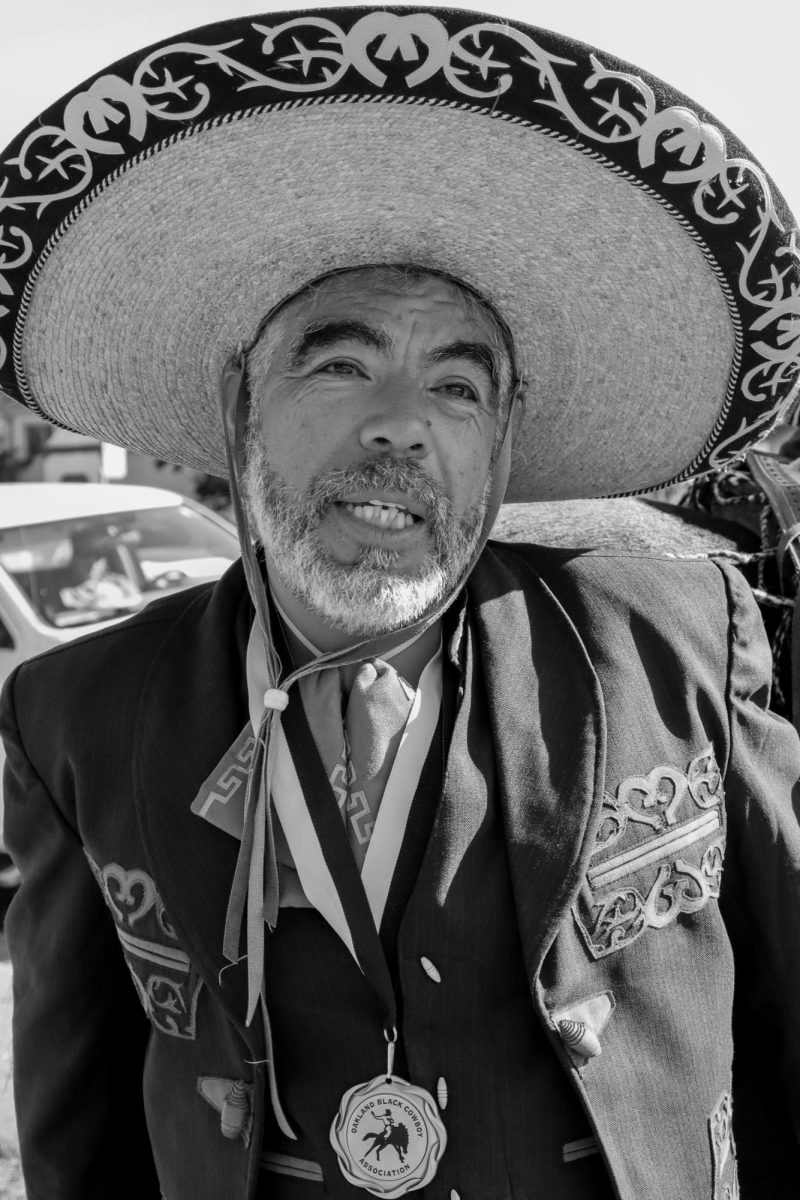
Art pieces like The Fall of the Cowboy (1895) and The Bronco Buster (1895) rewrote the vast diversity and history of cowboys to only show rugged white faces. Racism within the media led to cowboys of color being ignored and unacknowledged. Wild west movies often focused on romanticizing white heroes and refused to hire actors of color allowing the erasure of the diversity within the cowboy community. With help from the Oakland Black Cowboy Association, this photo essay not only highlights the cowboys of color in the California Bay Area, but emphasizes their joy, fashion, and lifestyle, which has been shadowed for years by the media.