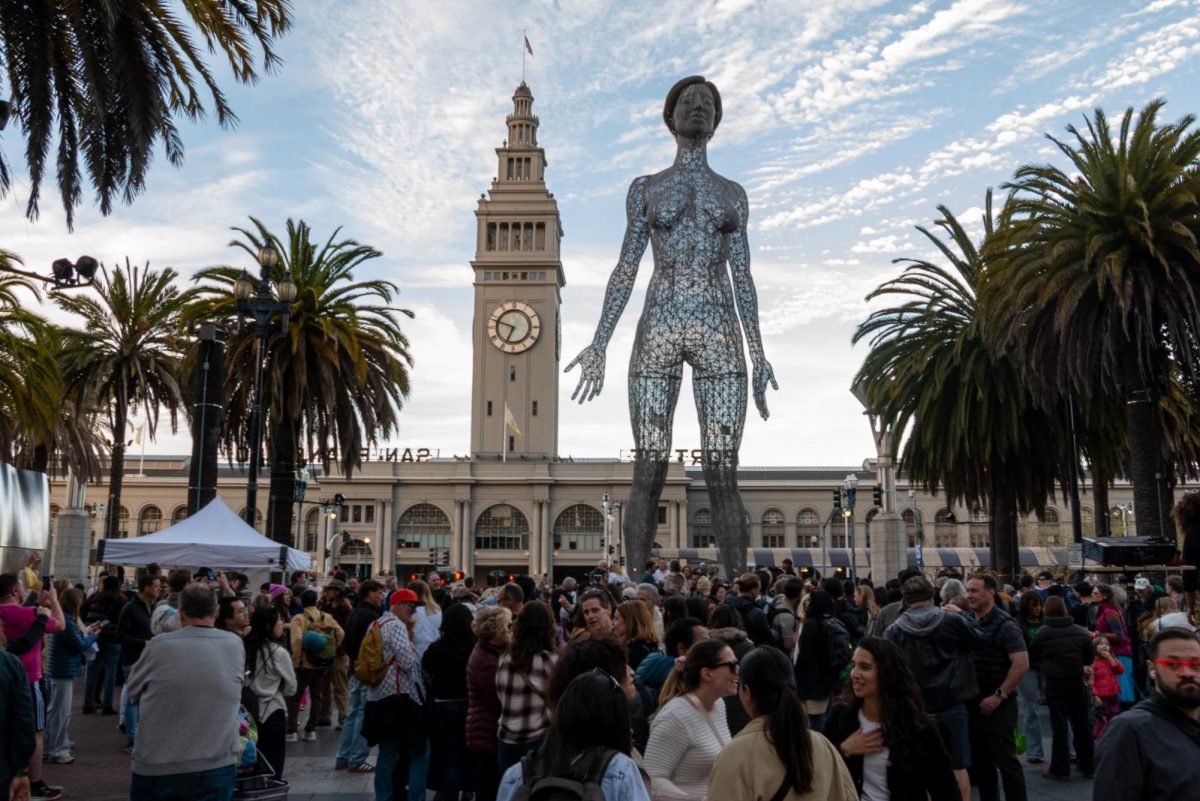
A new pair of boots. A trending jacket. A late-night online order that promises personal reinvention with two-day shipping. Overconsumption feeds on the quick emotional reward of something new which mirrors the fast-fashion model of trend-driven, disposable clothing. It reaches into closets, checkout carts and the impulses that shape what San Franciscans choose to buy.
San Francisco has pledged to reach net-zero by 2040, but meeting that goal may require looking beyond compost bins or biking to work on something far more personal: consumption. While the city has long measured waste through what ends up in landfills, expert officials and researchers say that approach captures only part of the climate impact. Cool Climate Network — a research consortium based at UC Berkeley — studies show nearly one-fifth of local greenhouse gas emissions are tied to the goods people buy.
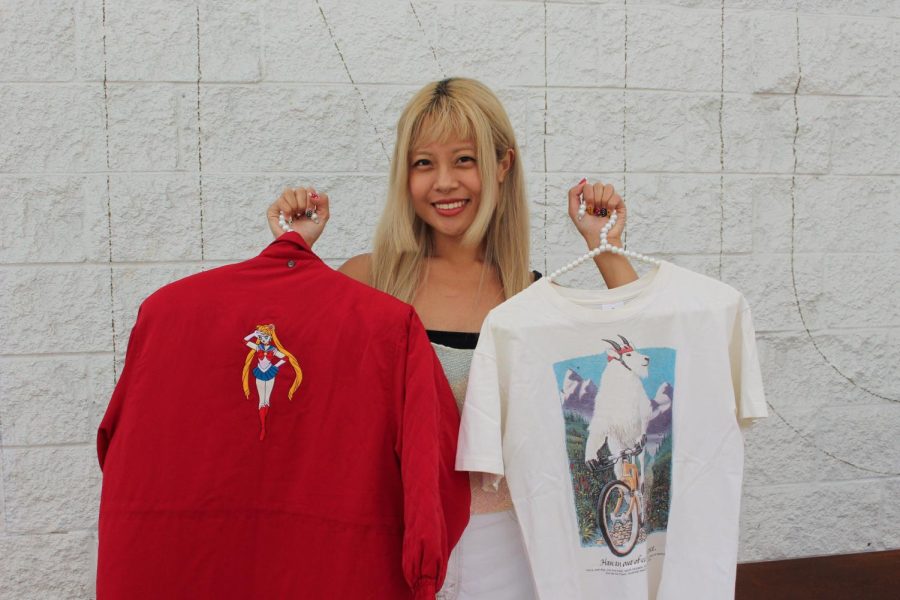
Kendall Fry, a San Francisco resident who regularly shops secondhand, said choosing thrift stores is both an environmental and ethical decision for her.

When it comes to fast fashion, thrifting offers a way to keep clothing in circulation without supporting the companies that produce it. “I don’t give money to those companies, and I just thrift them because they still exist,” said Fry. “They’re still out there and they still need to be used, like any other clothes. No matter where they come from, they need to be used.”
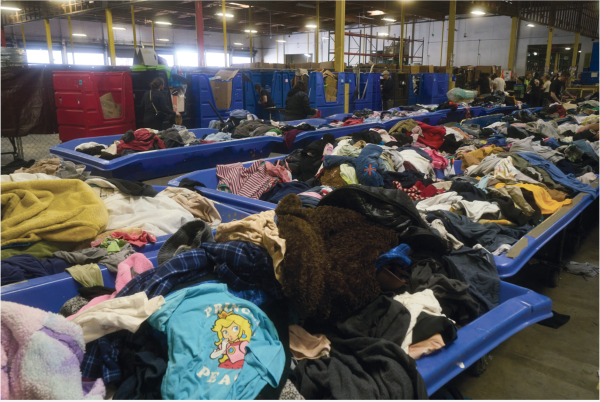
Alexa Kielty, Residential Zero Waste senior coordinator at the San Francisco Department of the Environment, said the city is moving toward a “repair-and-reuse mindset” as everyday life becomes more expensive. “We landfill 400,000 tons of material annually,” said Kielty. “And of that about roughly 20,000 tons is textiles.”
While city data does not show whether textile waste is increasing, the numbers still point to the same reality: Clothing and fabric continue to make up a large share of what is thrown away each year. According to 2018 data from the U.S. Environmental Protection Agency, Americans generate about 17 million tons of textile municipal solid waste in a year.
In the past, the city mainly counted emissions based on what was rotting in landfills — especially food scraps and yard waste that release methane as they break down. This landfill-focused method, which Kielty calls “end-of-pipe,” focuses on pollution at the final stage of disposal.
Rather than measuring only what ends up in landfills, the city is shifting toward consumption-based emissions — accounting for greenhouse gases emitted during production, transport and use of goods, long before disposal.
Kielty said the landfill-focused method overlooks a significant portion of emissions — particularly the pollution generated during a garment’s production and transportation, long before it is ever discarded.
Joseph Piasecki, the policy and public affairs coordinator at San Francisco Environment Department, said that consumption has become easier, faster and more psychologically rewarding.
Piasecki said that San Franciscans are aware and recognize the impacts associated with overconsumption. “I think you can contribute this to our longstanding history as a zero-waste leader,” said Piasecki. “We have a very robust culture of reuse here, whether that’s repairing textiles and clothing to bringing reusable mugs to coffee shops.”
Still, awareness may not necessarily interrupt behavior. Shawn Ella Rosenmoss, a lecturer of environmental science at SF State, said the deeper issue is how recycling has been framed as permission to continue consuming. After nearly 25 years at the San Francisco Environment Department, she doesn’t believe recycling alone can offset the scale of production and disposal.
In 2005, Rosenmoss helped launch The Compact, a project challenging herself and others to not buy anything new for a year except the absolute essentials.
The project became a media sensation, encouraging people to share rather than shop[9]. Rosenmoss said it prompted her to rethink her buying habits, like choosing to ask a neighbor for an electric drill instead of going out and buying one herself.
“We get a little ping dopamine push when we get like, ‘oh my god, these new pair of black boots, they’re fabulous,’” said Rosenmoss. Fast fashion mirrors this fast-paced, buy-and-toss pattern as it produces inexpensive, trend-driven clothing that is often designed for short-term use rather than long-term durability.
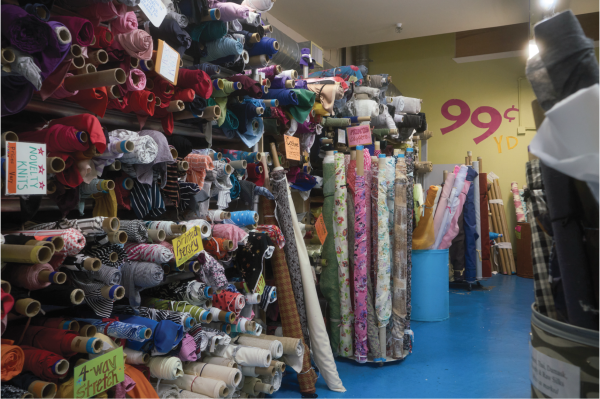
Keelin Reddy is the owner of Fabrix, a long-running San Francisco fabric store that specializes in deadstock and upcycled materials. As a former fast-fashion and high-end retail employee, she took over the neighborhood fabric shop in 2021 and focuses on sourcing surplus and leftover materials locally.
“I think when you work in a fast fashion, and you see the amount of overproduction — it’s kind of nice to kind of just step away from that,” said Reddy.
Reddy picks up leftover yardage from upholsterers, drapery makers and small manufacturers to keep materials circulating within the Bay Area rather than have it head to landfills.
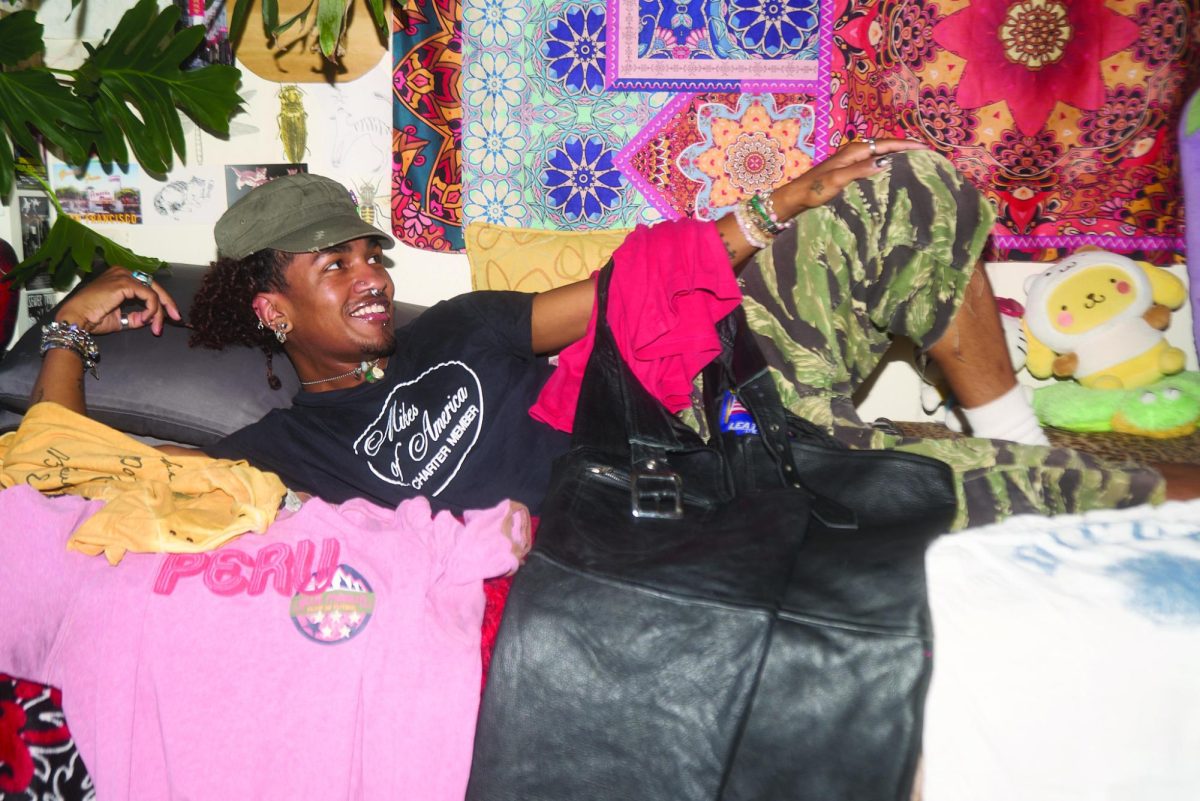
The shift toward reuse is also visible among young shoppers. Jayden Larios, a student at SF State, grew up thrifting and sees it as both practical and environmental.
Larios says thrifting is a practical way to cut down on waste while still keeping up with style. “I’ve been realizing that I’m actually kind of saving stuff from going to the landfill.”
Recology, the company that manages San Francisco’s waste system, operates at the final stage of the city’s consumption cycle, collecting what residents throw away each week. In places like Shoreline, Washington, Recology offers programs like CleanScapes, which provides free curbside pickup of clean clothing and household textiles, including sheets and towels, to help keep them out of landfills. Recology spoke with Xpress but after further evaluation, did not choose to respond to a follow up email when requested to comment about how textile waste is handled locally or whether similar collection efforts exist in San Francisco.
San Francisco’s textile waste may not be rising on paper, but the system behind it — trend cycles, impulsive buying and mass clothing production — shows little sign of slowing.