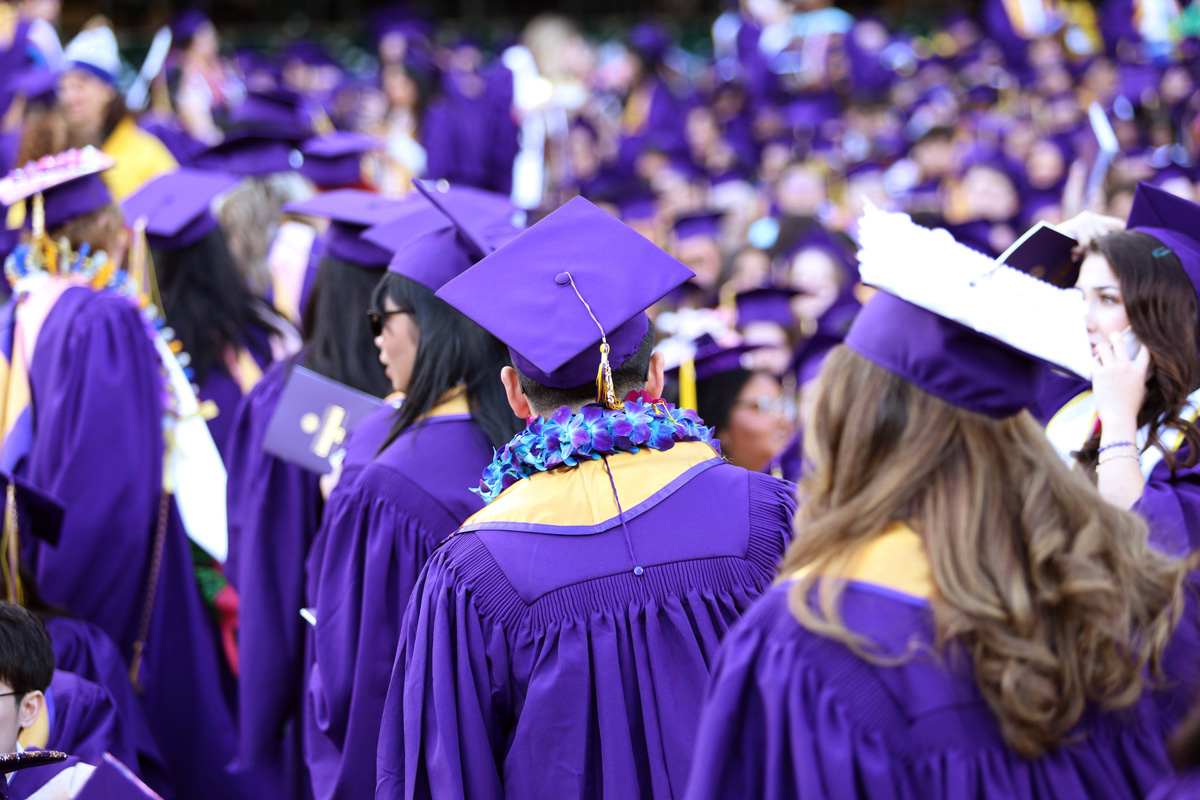
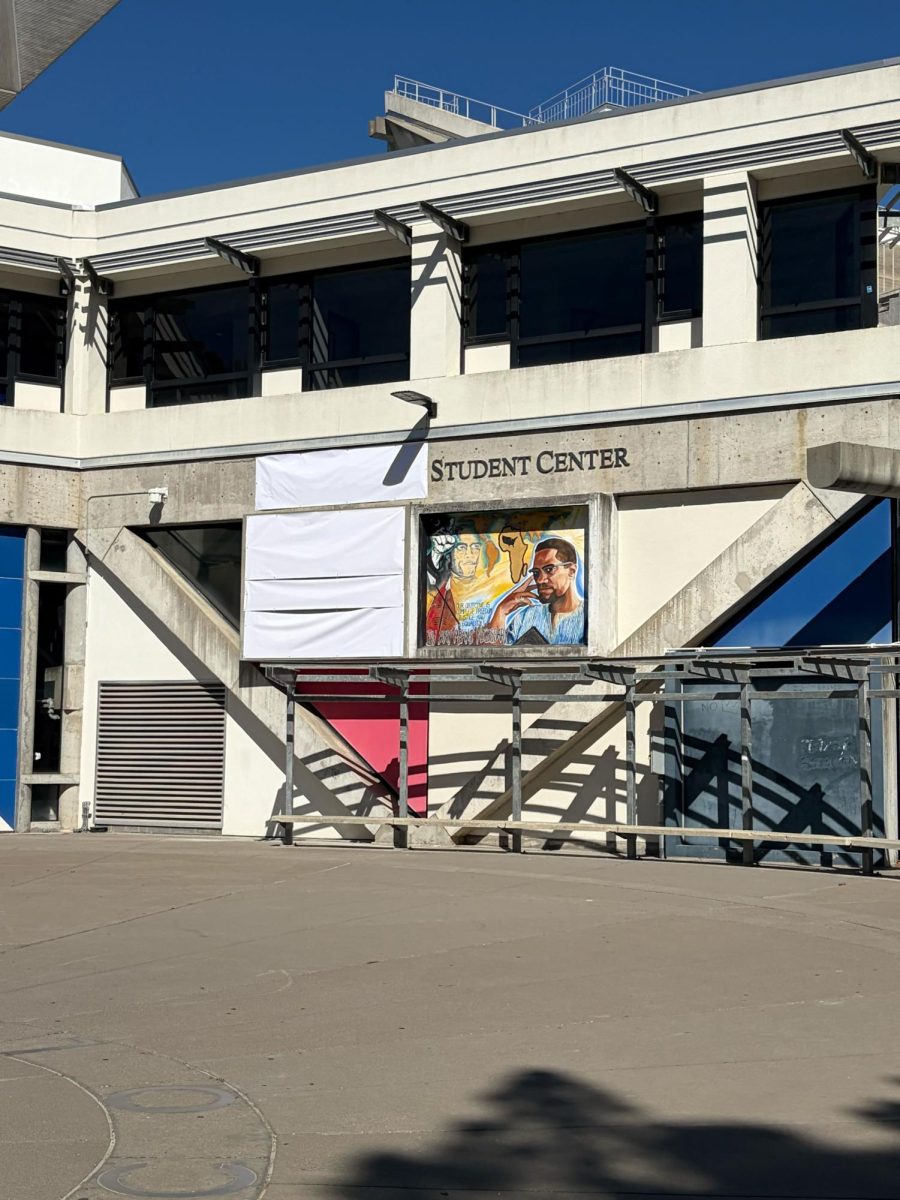
Students occupying SF State’s administration building, new departments emerging and tuition being “essentially free” — this was SF State’s reality in 1968 during the height of the flower-power era. By the turn of the century, that dream was dead.
Students in the 1960s still had to pay yearly student fees, which amounted to approximately $3,000 after being adjusted to inflation. Nowadays, year-round undergrad tuition is approximately $4,000 more — nearly a 140% increase.
There are many reasons for the difference between SF State today and in 1968, but a 1978 California proposition marks a flashpoint where the free higher education wave began to crash.
The Impact Today
The California State University (CSU), is experiencing an unprecedented $2.3 billion deficit. According to SF State’s Convocation Remarks, SF State is projected to be $7 million under budget. Hundreds of lecturer faculty have been laid off, and most recently, SF State has discontinued its German, Italian and online Ethnic Studies majors. Likewise, all of Sonoma State University’s athletic programs were cut last year.
While partially explained by current under-enrollment, funding cuts have been present in the CSU — as well as the University of California system — since the late 20th century, following the passing of Proposition 13.
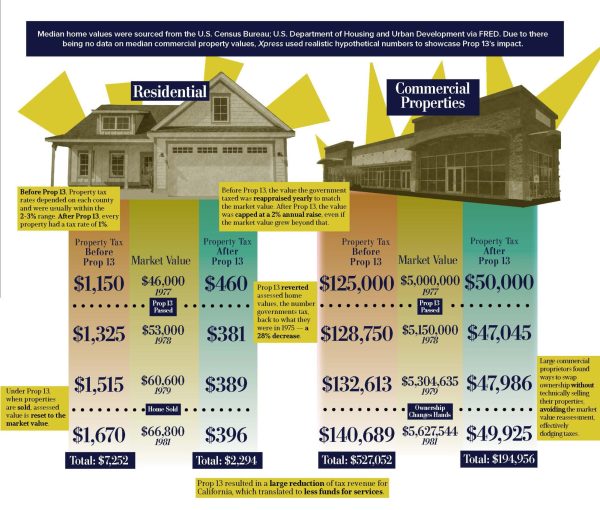
Prop 13 lowered property taxes in the state to 1%. As a result, property tax revenue fell by 60% and left many counties with less money to fund K-12 and community colleges.
Proposition 98, passed in 1988, requires a minimum level of funding for K-12 and community colleges. State funds must fill in county budget gaps, leaving less money in the overall budget, resulting in reduced funding for the CSU.
“[The decline in state funding] lies with national and state trends since the late 1970s, which focused on reducing state expenses, reducing tax rates (mostly for the wealthy) and shifting costs to users like students,” wrote the university’s Director of Communications Bobby King in an email. “This change has impacted all of public higher education.”
Ben Grieff, executive director of Evolve California, a political organization seeking to reform Prop 13, points to how the California budget became reliant on income and capital gains tax following the 1978 proposition. He says it has led to a boom-and-bust system where California can experience a surplus, only to face a deficit soon after.
“It’s hard to make a budget, especially for something as important as education, when you’re relying on volatile revenue streams,” Grieff said. “That has not been a good thing for education or anything else in California.”
The Beginning of an End
Prop 13 passed in a landslide while California was in the midst of a crisis where home prices catapulted at unsustainable rates.
Felicia Angeja Viator, a history professor at SF State, explains that, while the increasing values benefitted owners, their property tax bills also skyrocketed. As a result, people — especially retirees on fixed incomes — began to lose their homes.
Lawmakers also included caps on commercial properties, despite the main support for Proposition 13 coming from homeowners concerned about residential rates.
“[L]arge corporations especially stood to gain the most from Prop 13,” Viator wrote in an email. “[C]ommercial property values, in many cases, were increasing … 5, 10, 15-fold. Property taxes of course were increasing.”
Viator explains that, with some help from government leaders and corporations, Prop 13 voters believed it would attract big business and benefit the economy.
“This was a huge change — bigger in fact, in terms of the windfall for property owners, than I’d guess anyone back then anticipated,” Viator wrote.
James Martel, the vice president of SF State’s California Faculty Association chapter, said Prop 13 is an example of a white middle-class “tax revolt,” which took wealth away from social services, like affordable higher education — which was leading to social progress, exemplified by the 1968 San Francisco State College Strike led by the Black Student Union (BSU).
“Prop 13 was the beginning of the right-wing takeover,” Martel said.
Knowledge is Power
Student-led strikes didn’t just happen overnight, says Mark Allen Davis, Africana Studies professor at SF State.
“I don’t think that would ever have happened if it wasn’t for the audacity and the stalwartness of these incredible, incredible young people,” Davis said about the emergence of ethnic studies departments across universities following the student strikes.
When asked if he believed academic institutions would eventually have founded ethnic studies departments under their own volition, Davis was steadfast.
“Absolutely not,” Davis said. “When pigs fly.”
Unlike the student strikes, which were fueled by community-wide awareness built up by the BSU, Grieff says most people don’t know how “detrimental” Prop 13 is.
“A critical mass of people don’t even realize this is that big of an issue,” Grieff said. “It’s really up to us.”