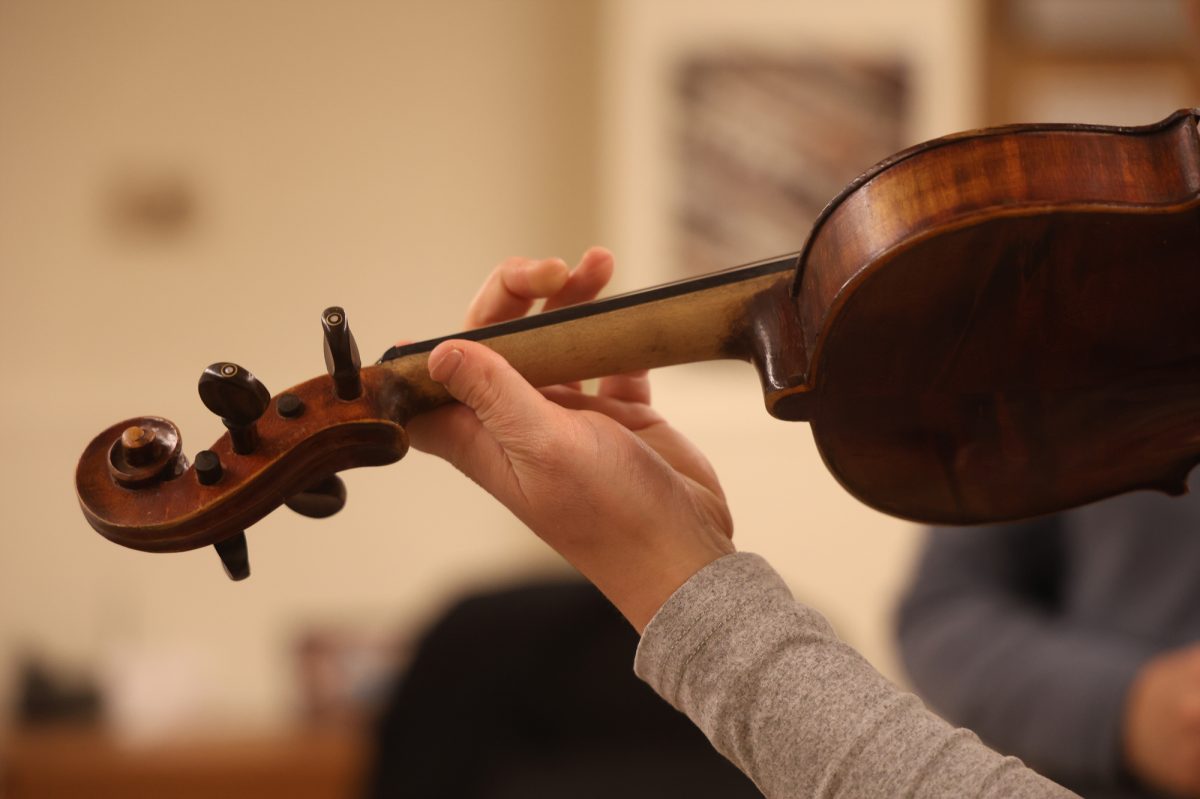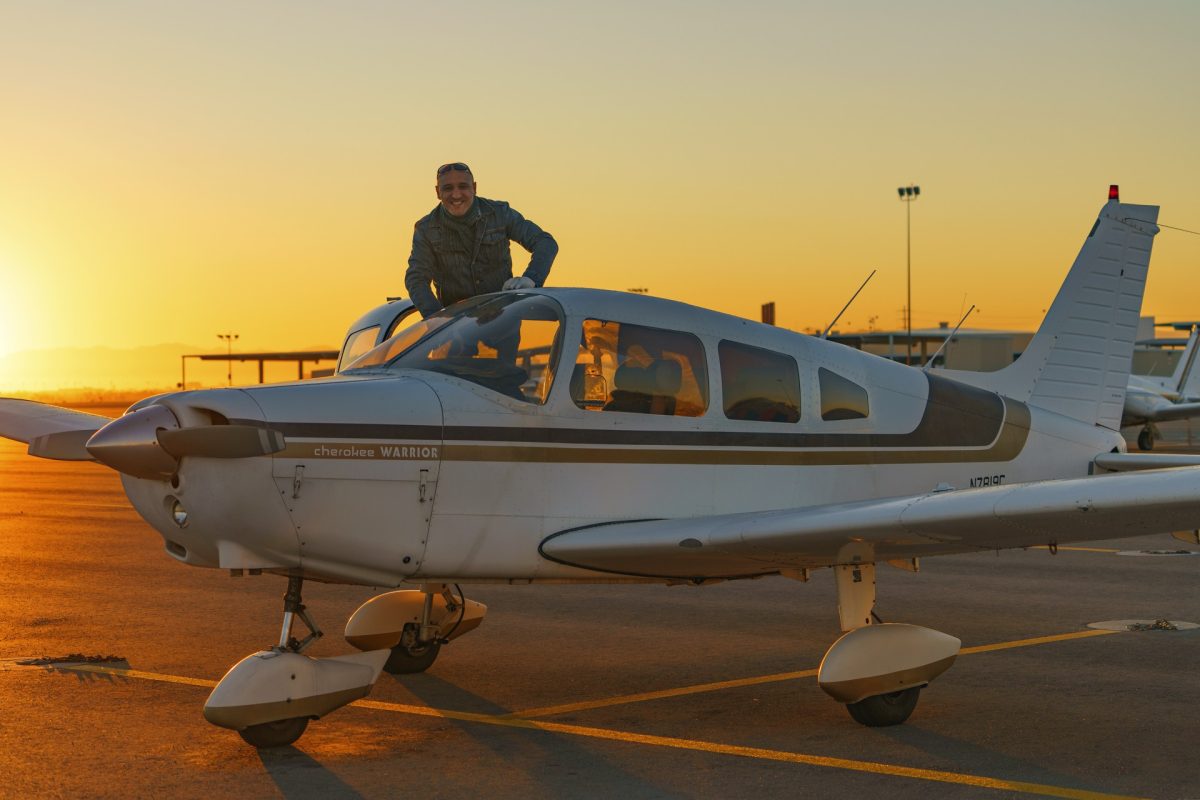
Playing violin in front of a sold-out-crowd and flying thousands of miles in the sky to capture the perfect photo — there may not be two more differing jobs to have. But for SF State music professor Jassen Todorov, the two go hand-in-hand.
Todorov has been playing violin since he was five, performing all over the world. While getting his master’s and doctrine in music at the University of Rochester, he realized he needed balance in his life.
“I felt that everyone around me was constantly talking about music, and that was becoming overwhelming for not only me, but for the people around me,” Todorov said. “I started thinking, I started brainstorming, and I thought that I’ve always had passion for planes, aviation, travel. And I thought, ‘Okay, I’d like to learn how to fly planes.’”
Spending thousands of hours in the sky as a commercial pilot and flight instructor, Todorov began taking photos of what he described as “wonderful views” on his phone before he decided to invest in his first DSLR camera about a decade ago.
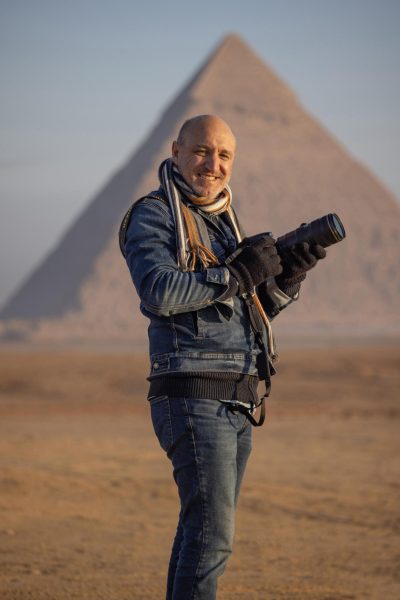
The wonderful views he captured traversed beyond his phone screen and entered the public eye: In 2020, National Geographic named him “Your Shot Photographer of the Year.”
“The photos that I capture pay for the flights and so it kind of pays for itself. I’m not making money out of it, but it’s okay. I’m loving what I’m doing,” said Todorov.
Todorov spoke to Xpress about teaching in the School of Music, sharing what he still wants to achieve in his career as both a violinist and aerial photographer.
The following conversation has been edited and condensed for clarity.
How did you start playing violin?
My father was a very distinguished professor of music in Bulgaria, and he was a violinist. He was also a concertmaster of the orchestra. So, I pretty much didn’t have much choice. It was given to me, and I liked it, and I enjoyed it. My older sister played the piano. My mom also played the piano. I have been practicing playing the violin now for the past 45 years. I’m 50.
Where’s your favorite place you’ve ever performed?
Oh, there’s too many to list. I enjoy playing in Germany a lot, the audiences are fantastic there. Very quiet. And the same with Russia. Really cultivated, very educated audiences. When you perform, everyone in the audience is very, very silent. And they really respect musicians. They realize the difficult work that goes into the craft.
What does music mean to you?
It’s a spiritual experience. You go with the flow of your energy. I want to be playing the violin. I want to do it today, I want to do it tomorrow, I know that’s my calling. That’s my passion. That’s my mission . . . The more you learn, the more you realize that we are just little, tiny humans here, little tiny souls trying to serve a greater purpose. And that greater purpose has a spiritual meaning. Why am I driven so much to go and communicate with audiences through my violin? I don’t have that answer.
How is the School of Music coping with SF State’s budget cuts?
Oh, we’ve been decimated. When I came here 22 years ago, we were about 20 full-time professors. Now, think about this. Today, we’re four.
I’m holding the administration accountable up to a point, of course, a certain point, some things are beyond their control, of course. But for administrators, whenever there is a budget crisis, the first thing for them is cut, cut, cut. Why not go solicit private funds? Why not work with sponsors? Why not be creative to expand rather than always cut and eliminate programs?
What’s the process of getting a pilot’s license?
There are different steps. You start flying, you learn a lot. There are a number of exams that you have to take, different levels. You start with private pilot and you go for instrument rating, you go for commercial license, you go for flight instructor certificate, you can expand, fly other aircraft, bigger, smaller. I also tried some helicopters as well. So you know you expand in the area of aviation. Now I have about 5,000 flight hours.
Are there any transferable skills from playing violin to flying planes and taking photos?
Absolutely, all of it. And not only that, but when you’re thinking about music, when I’m teaching my students, what do I talk about in the classroom? I talk about patterns, notes. I talk about lines. I talk about colors. I talk about composition. Isn’t that the same language in photography? That’s exactly what we talk about in photography. So the language actually is quite similar.
What’s the future for you in violin, teaching and photography?
The future looks bright. There are many concerts coming up. … So I do these kinds of collaborative experiences. The first half of the performance is a concert, music, and the second half is a photo presentation. Why do I do that? Well, for one thing, I enjoy connecting with people and young people. It’s really wonderful to inspire students and younger kids especially so they can think big, no limits. I can do whatever I want to do, just as long as you focus your energies in creativity, something that’s not only challenging, but worthwhile.